April 2026 | 1080 words | 4-minute read


Empower a woman, and you empower a community. This belief forms the core of the bouquet of programmes run by Tata Communications that address poverty. The programmes emerged as a response to the gendered, and often invisible, dimension of poverty, where women are hemmed in by cultural, digital, and mobility constraints. The programmes, therefore, position women not merely as beneficiaries of social programmes, but as decision-makers.
Through initiatives such as MPowered Plus, the company is working to strengthen skills, enable entrepreneurship, and improve income stability among women from diverse socio-economic backgrounds.
MPOWERED Plus Scale-UP
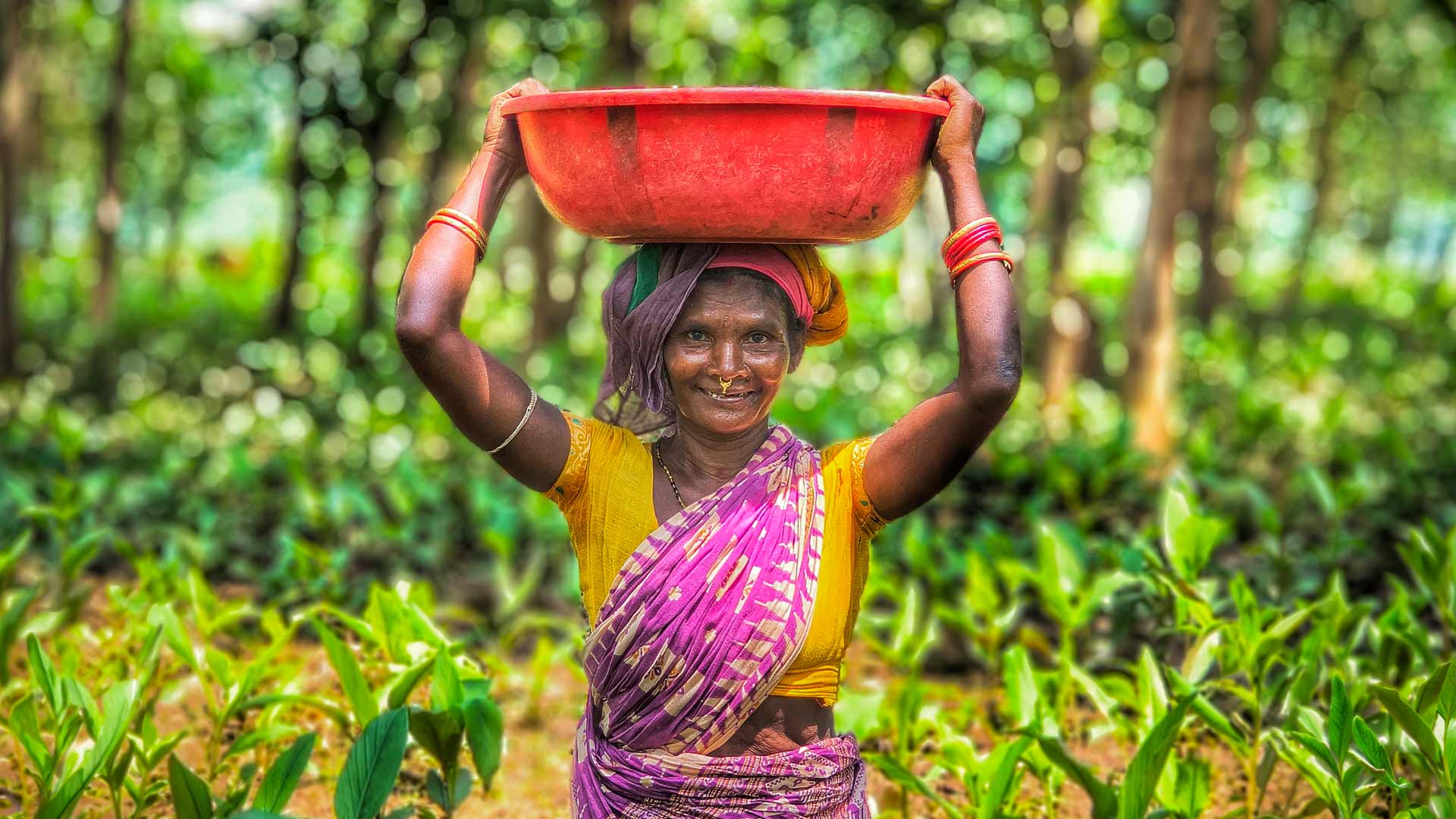
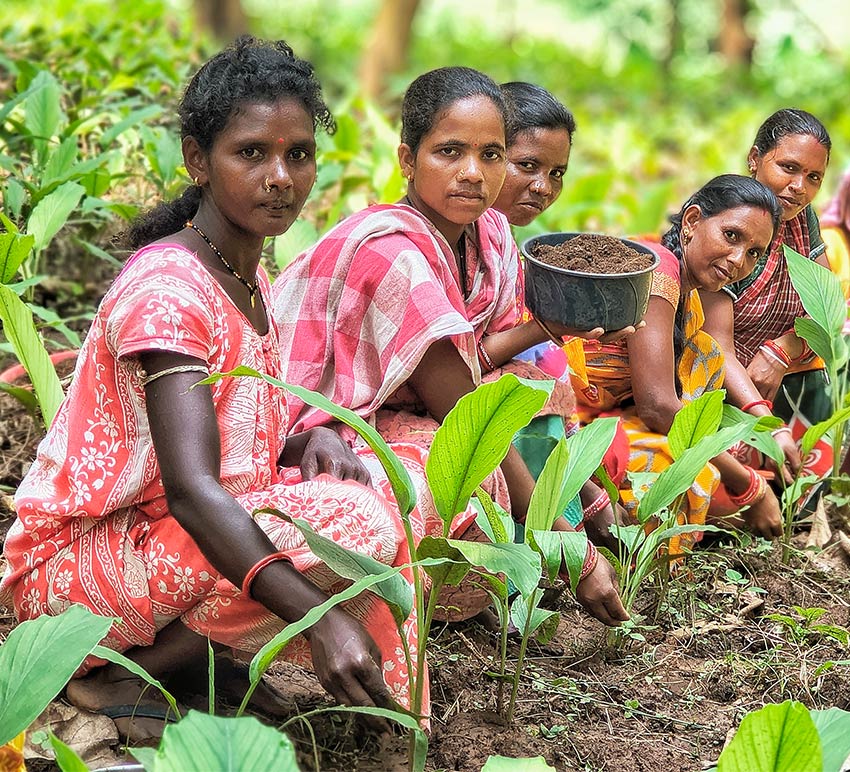
The MPOWERED Plus Scale‑Up Project is implemented by Trickle Up India Foundation to strengthen women‑led micro‑enterprises in remote districts of Odisha (Rayagada and Kandhamal) and Jharkhand (Dumka). The project serves predominantly Scheduled Tribe and Scheduled Caste communities facing high poverty and limited market access.
Adopting a long‑term, ecosystem‑based approach, MPOWERED positions ultra‑poor women as entrepreneurs and community leaders. The intervention focuses on strengthening Self‑Help Groups (SHGs) through governance support, market‑linked enterprise development, seed capital, and intensive handholding by trained community resource persons known as Smart Sakhis. Capacity building spans production, pricing, branding, financial management, digital tool adoption, and convergence with government schemes.
The project has reached 154 villages across 26 Gram Panchayats, strengthened 440 SHGs, and directly benefited 4,871 women, nearly 98% from SC/ST communities. Outcomes include increased incomes and savings, improved production capacity, widespread adoption of digital tools, enhanced confidence, and stronger decision‑making power. Beyond economic gains, MPOWERED has enabled women to transition from irregular labour to sustainable enterprise ownership, fostering community leadership and long‑term resilience.
Building on these achievements, the next phase of MPOWERED will focus on scaling impact by strengthening enterprise ecosystems, and institutionalising women-led systems for long-term sustainability and market competitiveness.
UDAYA
UDAYA, in collaboration with the Entrepreneurship Development Institute of India, focuses on the economic empowerment of women and persons with disabilities by enabling them to establish and grow micro-enterprises.
Launched in FY2020, the programme addresses these gaps through a three-stage approach encompassing outreach and mobilisation, capacity building, and enterprise establishment with sustained handholding.
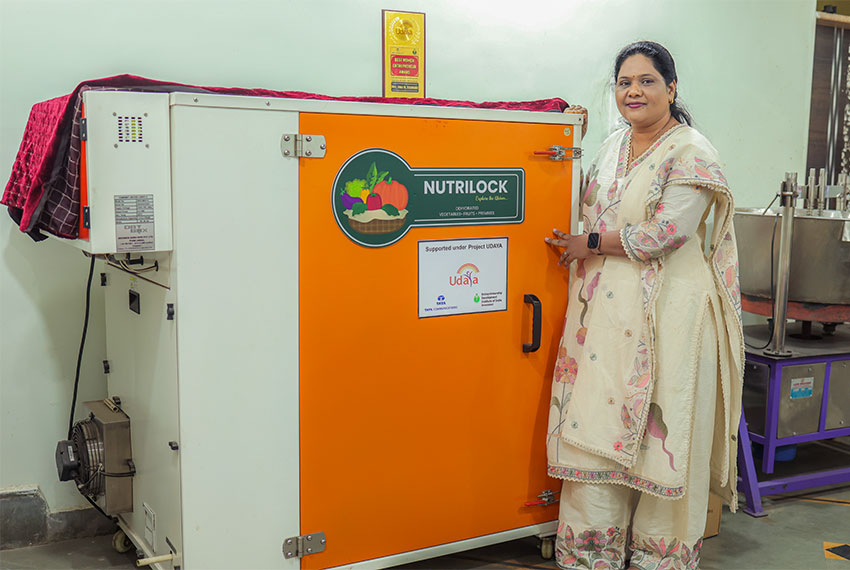
Beneficiary Uma Mahesh Kusmude’s journey from Raigad district reflects UDAYA’s impact. A 12th-pass, she had unsuccessfully attempted entrepreneurship twice. After enrolling in UDAYA’s Women Entrepreneurship Development Programme, Uma received guidance on selecting viable business ideas, managing finances, and navigating branding, technology, and funding.
Today, Uma runs a fruits and vegetable dehydrated products manufacturing unit, established with an initial investment of ₹13 lakh of which ₹10 lakh was through a bank loan under the Chief Minister Employment Generation Program and ₹3 lakh of self-investment, and earns a steady monthly income of ₹50,000. She aspires to build a national-level brand.
Umang
Launched in 2015 in collaboration with the IDEA Foundation, Umang was a response to women’s persistent lack of viable livelihoods in urban areas. It began as a vocational training initiative for women from low-income backgrounds living in urban slums near Tata Communications’ office in Dighi, Pune.
What started as a vocational initiative soon evolved into a multi-dimensional empowerment programme. Today, women are trained in skills such as tailoring, beauty services, and digital literacy, capabilities aligned with the realities and needs of their communities.
While women were producing high-quality products and services, many continued to face challenges due to fragmented urban markets. Without a unified identity, their reach remained limited.
The answer came in November 2021 with the launch of the Umang Livelihood Centre. This marked a shift from individual empowerment to collective enterprise. Local exhibitions, participation in urban fairs, and forays into e-commerce dramatically expanded market access. Exposure visits to successful brands such as Tata Power’s Anokha Dhaaga and Tata Chemicals’ Okhai offered further business insights.
The project has established 50 SHGs, organised into clusters and federations. These groups provide a financial safety net, access to seed capital, and a support network for scaling businesses. Over a decade, the initiative has directly impacted 4.69 lakh lives across 27 communities.
Through these scalable, community-driven programmes that integrate skills, entrepreneurship and digital access, Tata Communications is enabling economic independence as well as social agency for women.
The Economic Inclusion Programme
In Gujarat, Tata Communications works with Nudge Life Skills Foundation to support women from households experiencing persistent poverty. The Economic Inclusion Program provides training in goat and poultry farming, livelihood grants, psychosocial support, and integration into SHGs. The Nudge Institute serves as the technical implementation partner for the Government of Gujarat’s G SAFAL (Gujarat – Scheme for Antyodaya Families for Augmenting Livelihoods) project.
Women beneficiaries typically support families of five members living on extremely low annual incomes. Launched in 2024, the programme adopts a three-year, evidence-based “graduation approach”. This includes targeted grants aligned with chosen income activities, handholding through weekly mentoring, livelihood diversification and linkages to government schemes.
A case in point is Vasava Kusumben Vijaybhai, a beneficiary from Jesalpore village in Nandod block of Narmada district. Prior to the programme, she worked as a daily-wage labourer earning approximately ₹200 per day, struggled to provide for her three children, and owned half an acre of land but lacked inputs, capital, and technical knowledge.
Selected under the programme, she received a ₹15,000 asset grant via a ring-fenced digital wallet, along with seeds, fertilisers, irrigation tools, and pesticides, and continuous mentoring on land preparation, sowing, and crop management. Through this support, Ms Vasava successfully cultivated brinjal during the Kharif season, selling the produce through local vendor networks in Vadodara and Surat and earning approximately ₹30,000 annually across multiple harvests. She has since gained confidence, improved decision-making abilities, and emerged as a leader in SHG meetings. She now plans to diversify crops to ensure year-round income.
But first, mental health
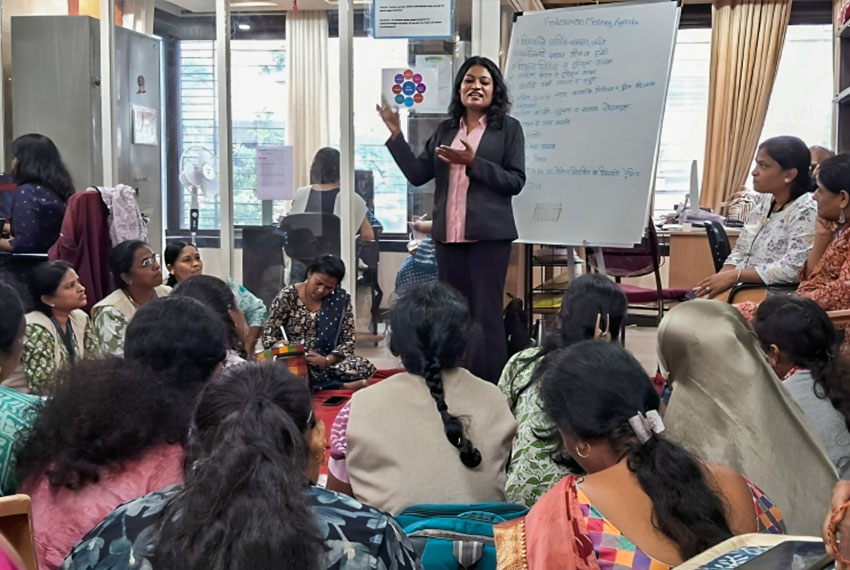
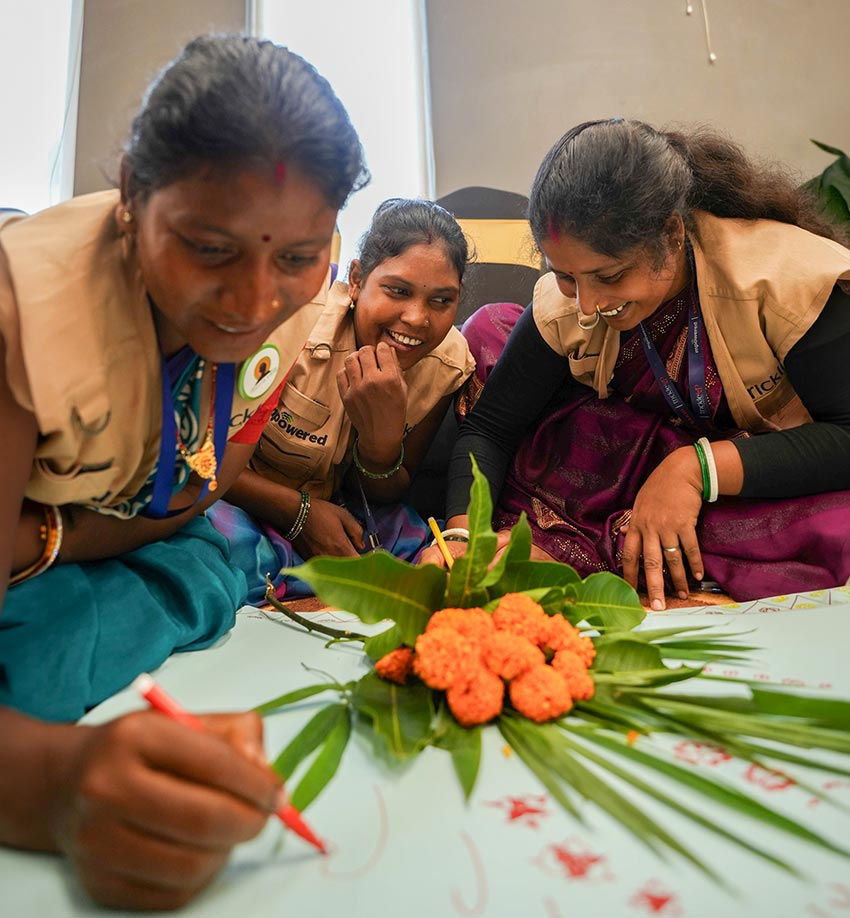
Zehn Ki Lehar is a healing-centred leadership programme designed for marginalised women who are often introduced to skilling and livelihood initiatives without first addressing their emotional and social wellbeing. The programme is a trauma-informed, multi-day intervention with continued engagement, designed for marginalised women and integrates emotional wellbeing, gender consciousness, legal literacy, and leadership development through expressive, culturally rooted practices. Using dialogue, storytelling, body-based reflection, art, and collective inquiry, women are guided to examine identity beyond prescribed roles, understand violence and rights, and build emotional regulation and confidence. Participants are supported to translate learning into peer engagement and community action, creating ripple effects through shared knowledge, healing circles, and emerging grassroots leadership.
- Anju Maskeri