December 2025 | 663 words | 2-minute read


Purushotham Palla, a youth from Moragudi village in Kadapa, Andhra Pradesh, grew up watching his father toil 15–17 hours a day on a power loom for meagre wages. Determined to change their fortunes, Purushotham completed his B Tech in Mechanical Engineering in 2023. But when it came to landing a job, he hit one roadblock after another.
The answer came through the TCS Youth Employment Program (YEP). Joining YEP’s Battle of Wits debate competition became a turning point. A bundle of nerves initially, Purushotham pushed past his fears with guidance from mentors. His confidence soared, and soon he cleared TCS’ eligibility test — eventually clinching a job that transformed his life and his family’s future.
Purushotham’s story mirrors that of countless Indian youth who hold immense potential but face a persistent gap between education and employability. The India Skills Report 2025 reveals that only about 50% of the graduates are employable, underscoring a critical disconnect between academic learning and industry needs. TCS launched YEP in 2010 to address this challenge.
Familiarity bred content
YEP began with a mission to make graduates from marginalised communities employable, starting with roles in the Business Process Services sector.
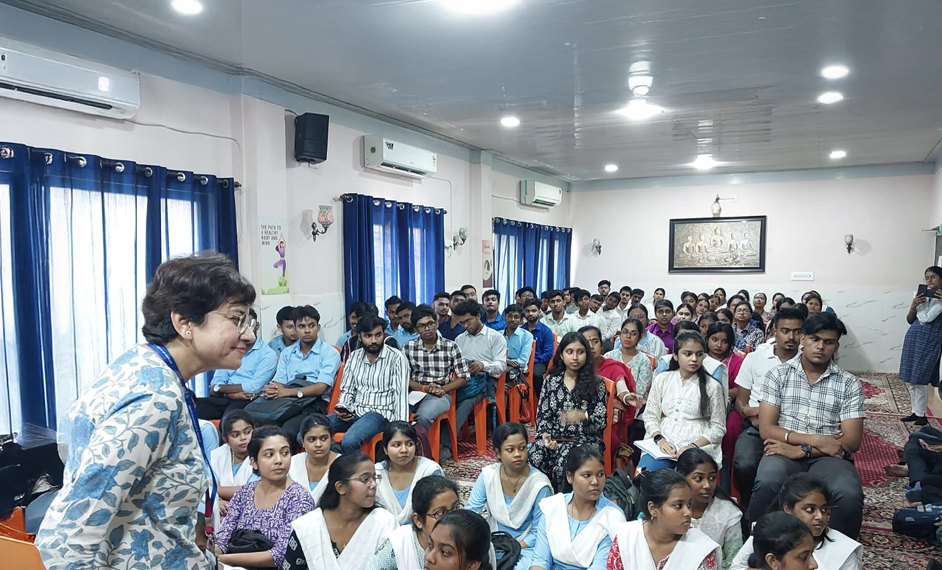
Guided by TCS’ CSR principle of ‘where we serve’, YEP has, since inception, focused on regions where the resources are the lowest and the need is the highest. Colleges and institutions in these areas are selected through defined eligibility criteria, ensuring inclusivity. Student eligibility aligns with the Tata Affirmative Action Programme, reinforcing equitable access.
Building the blueprint
Launching it wasn’t without hurdles — aligning the curriculum with fast-changing industry trends, tracking placements, and delivering in-person sessions in remote regions. Aspirations of beneficiaries often varied, requiring personalised interventions. The absence of a digital platform for onboarding and reporting added to the complexity.
TCS responded with agility. The programme introduced certifications from a cohort of partners, which included industry bodies and companies, and adopted an Integrated Demand-Led Curriculum defining job roles and competency ladders for priority sectors.
The pandemic brought another hurdle. TCS once again responded with agility, pivoting YEP to a hybrid model, enabling anytime-anywhere learning.
Entry and exit assessments, along with one-on-one mentoring, now take place in both online and offline formats. A robust digital portal streamlines partner and student onboarding, making YEP scalable and impactful.
But TCS realised that training alone wasn’t enough — students needed access to real opportunities. This insight transformed YEP into a holistic model that not only builds skills but also connects candidates to meaningful careers.
TCS designs the curriculum, engages trainers fluent in regional languages, and manages the entire delivery — from orientation to job placement.
15 years on...
Today, YEP has expanded beyond IT/ITeS to sectors such as banking & financial services, education, retail, construction, and manufacturing. The curriculum is being redesigned to address green jobs, sustainability-driven industries, and the digital economy. Core modules like business communication now integrate 21st-century skills — critical thinking, problem-solving, and adaptability — preparing youth for an era shaped by AI and automation. The programme is also targeting ITI and diploma students to build specialised technical capabilities.
Going forward, YEP plans to expand into 30+ high-growth sectors such as healthcare, fintech, renewable energy, tourism and hospitality and e-commerce, in keeping with its commitment to continuously evolve content and delivery models.
Teach, Coach, Mentor, Place model
At the heart of YEP lies its unique four-step approach:
- Teach: 100 hours of trainer-led core learning
- Coach: SME-led sessions for domain-specific insights
- Mentor: Thought leader interactions, masterclasses, and fireside chats
- Place: Resume building, mock interviews, and placement orientation
Impact*
- 1,85,000+ youth and families enhanced their socio-economic status
- 43,800+ students placed in jobs in sectors like IT, hospitality, banking, and retail.
- 35 states and union territories covered
- 41,800+ young women and 12,500+ Dalit and tribal youth empowered
*Data since inception
- Anju Maskeri