March 2026 | 1327 words | 5-minute read


What will your job look like 20 years from now? The future of work, as it turns out, is full of possibilities. According to the World Economic Forum’s Future of Jobs Report 2025, nearly 17 crore new roles are expected to emerge in this decade alone. Technological skills, in particular, are projected to gain prominence faster than any other category, led by AI and big data, and followed by networks, cybersecurity, and digital literacy. The opportunities are immense, provided the Indian workforce is ready.
This is where initiatives like the Tata Group’s skilling programmes come in. By targeting communities where digital literacy is minimal, these programmes are helping bridge the gap between education and employment, ensuring that the underserved are prepared for the demands of a new world.
From BFSI and hospitality to automotive and green energy, here’s how Tata companies are shaping future-ready talent.
RENEWABLES

A new chapter in energy
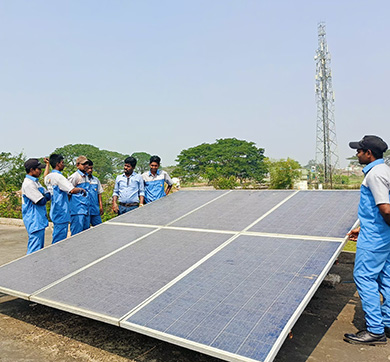
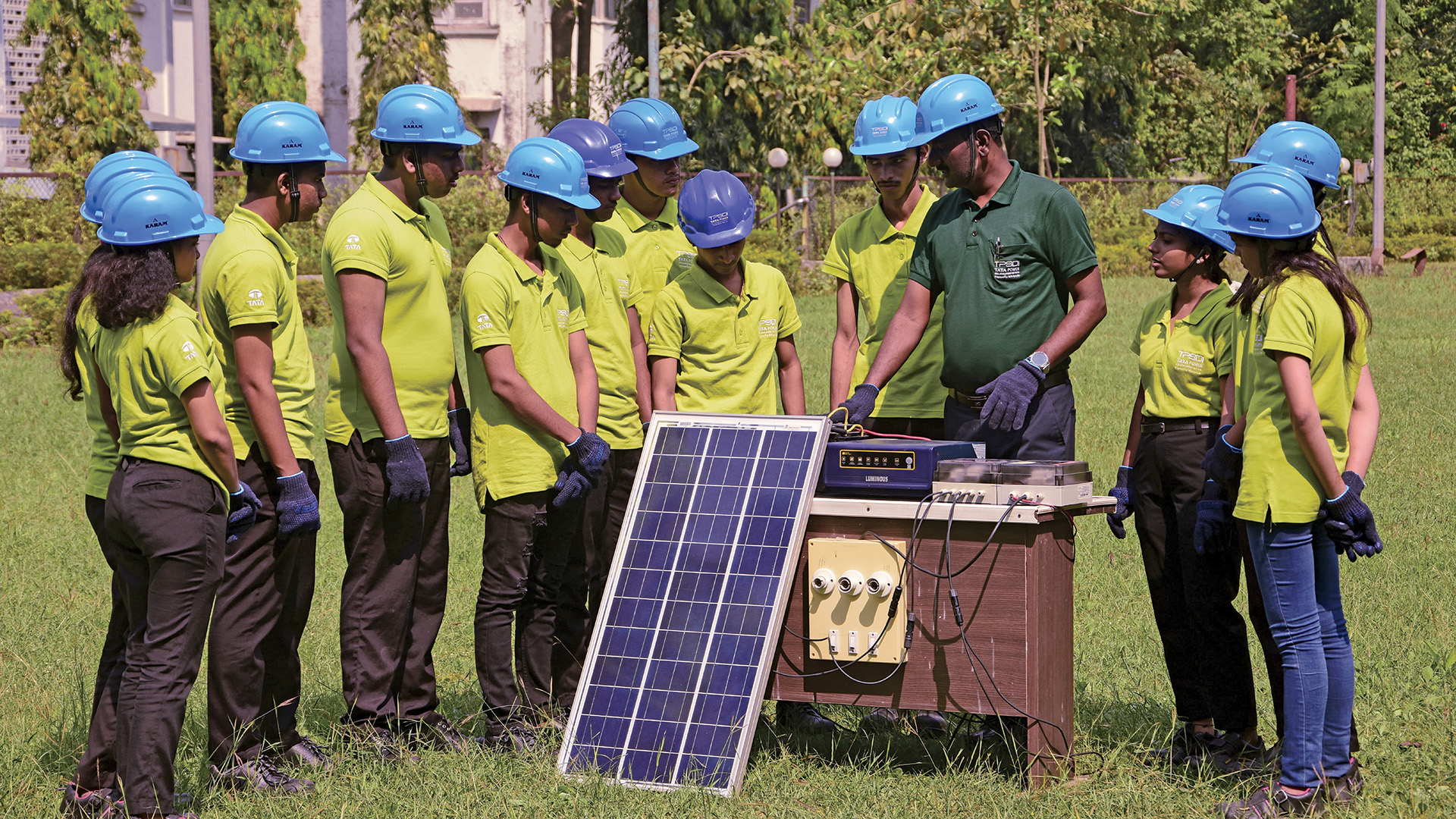
As the clean energy sector rapidly evolves, green energy roles today demand multidisciplinary expertise — integrating solar PV with hybrid systems, battery storage, and grid connectivity. The Tata Power Skill Development Institute (TPSDI) aligns learners with industry needs by combining National Skills Qualification Framework (NSQF) standards with real-world expertise, industry trainers, and hands-on training. Its scenario-driven exercises prepare technicians for fault diagnosis and data interpretation, while modules cover solar PV design principles, safety orientation, and cross-functional exposure. By mirroring real operating conditions, TPSDI ensures trainees gain the agility and problem solving skills demanded by modern green energy roles.
The programmes seek to inculcate a project-based, quality-focused culture that results in trainees who understand quality installation practices, the need to follow documentation for audits and subsidies, as well as DISCOM and other regulatory procedures, such as net metering and inspections.
Aparna Kumari from Jharkhand is one of many TPSDI trainees who have gone on to become change agents. After training at TPSDI, she launched a solar solutions business, innovating with recycled materials. She now aims to transform her village into a model solar village. Her work in renewable energy earned her a spot at the 2024 World Skills Competition and recognition from the United Nations.
ARTIFICIAL INTELLIGENCE
Unlocking the digital economy
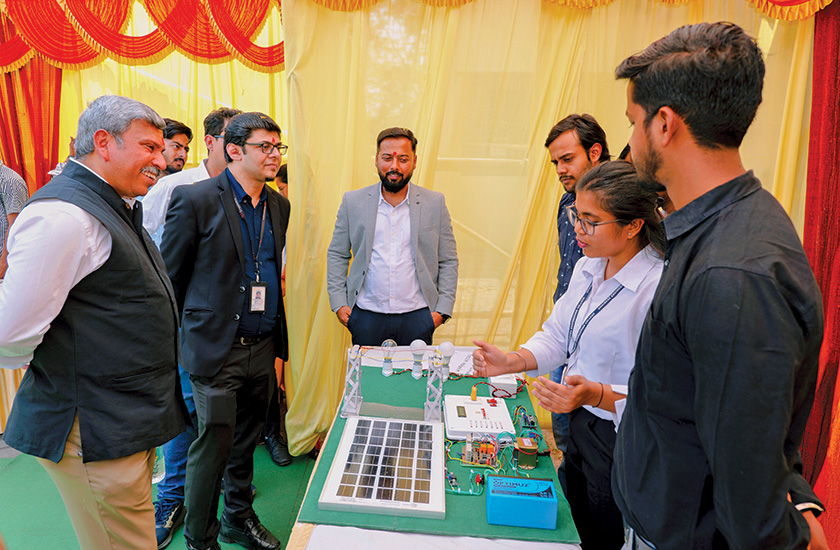
Emerging technologies are at the heart of Tata Consultancy Services’ Youth Employment Program (YEP), which aims to resolve one of India’s biggest challenges — providing access to quality jobs for youth from socio-economically and geographically disadvantaged communities. Through YEP, undergraduates and unemployed graduates from rural communities gain marketable skills, industry-recognised certifications, and credentials that enhance their employability.
To make this possible, the company has teamed up with industry partners to offer courses like NASSCOM Digital 101, which provides an overview of AI and other cutting-edge technologies, and CISCO Cybersecurity, which trains students to be cybersecurity analysts. Students are also coached in key corporate skills such as critical thinking and problem-solving and receive career guidance and mentoring through virtual masterclasses and leadership connects. YEP is designed to align with state and national skill development agendas, ensuring that emerging skill requirements match the aspirations of the learners and government priorities.
HOSPITALITY

Rethinking service
Indian Hotels Company Ltd (IHCL) is shaping the next generation of hospitality professionals through skilling initiatives that combine core domain expertise — F&B service, food production, housekeeping, and front office — with digital literacy, communication, problem-solving, and interview readiness. To deliver this, IHCL runs Centres of Excellence in partnership with grassroots organisations and local governments. These centres feature IHCL-curated labs that replicate real hotel environments, offering hands-on training through workplace simulations and mandatory on-the-job experience at IHCL properties.
The impact is reflected in stories like that of Rudaya Maqsood, from Jammu and Kashmir’s Hiller Peerniya village. The daughter of a daily wage labourer, Ms Maqsood walked 10km every day to attend training under the Chinar Nau Jawan Club in Boniyar, which is supported by IHCL, the Indian Army, and the Research and Extension Association for Conservation Horticulture and Agro-forestry (REACHA). Ms Maqsood’s perseverance paid off — she completed her training, gained confidence and professional skills, and is now starting her career in hospitality.
AUTOMOTIVE
Steering a new future
As automotive roles become increasingly complex, Tata Motors is ensuring that its Kaushalya skilling programme keeps pace with industry demands.
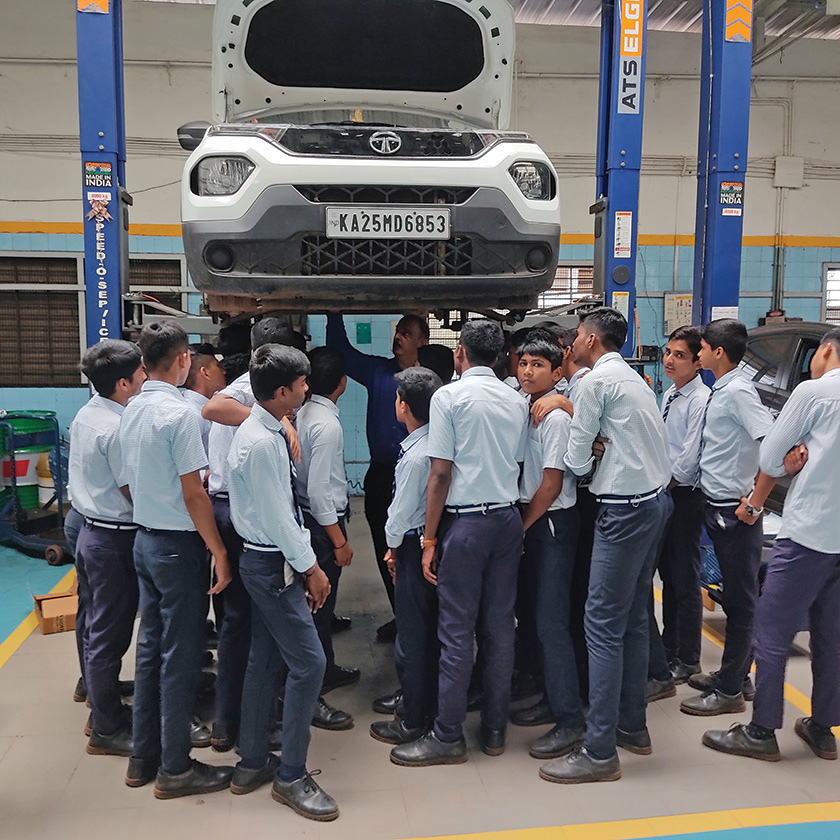
A key initiative is the Learn and Earn Programme (LEAP), which trains underprivileged, school-dropout youth through three months of theory followed by nine months of on-the-job training (OJT) at Tata Authorised Service Stations. This way, trainees can earn while gaining experience in the real world. LEAP also provides certification, placement and post-placement support. It even has an entrepreneurship module for those aspiring to be micro-entrepreneurs.
To address job-readiness, Kaushalya builds OJT into most courses, giving students hands-on, practical experience, bridging the gap between classroom learning and industry expectations.
Another key initiative involves setting up Automotive Skill Labs, in partnership with Navodaya Vidyalaya Samiti, at Jawahar Navodaya Vidyalayas (central government-run residential schools). So far, 25 labs have been established in alignment with vocational courses outlined in the National Education Policy. They equip students from Std 9 to 12 with foundational knowledge, technical skills, and hands-on industry exposure — all within the school premises. Their learning is further strengthened through visits to Tata Motors dealerships and service centres, offering real-world training experience. Most students are first-time learners, often supporting their families, and, in some cases, the wider community.
The future is electric
The Indian automobile industry needs two lakh EV-skilled professionals by 2030 to meet the government’s target of 30% EV adoption by 2030. To bridge this gap, Tata AutoComp Systems is training youth and girls from marginalised communities in industry-relevant EV servicing, alongside traditional automotive skills.
The initiative, in collaboration with Tata STRIVE, has been active in Pune for three years and continues to grow. In FY24, feasibility assessments in Sanand, Gujarat, and Chakan, Maharashtra, culminated in a pilot launch in Chakan. Learners benefited from hands-on training and shop-floor exposure at the Tata AutoComp facility.
To strengthen the initiative, the company partnered with Symbiosis Skills and Professional University in FY24 to introduce EV sales training, with a focus on increasing participation from girls. The curriculum integrates classroom instruction, lab work, and experiential learning at the company’s EV facility, with graduates supported through placement opportunities across the EV industry.
BFSI
Banking on digital skills
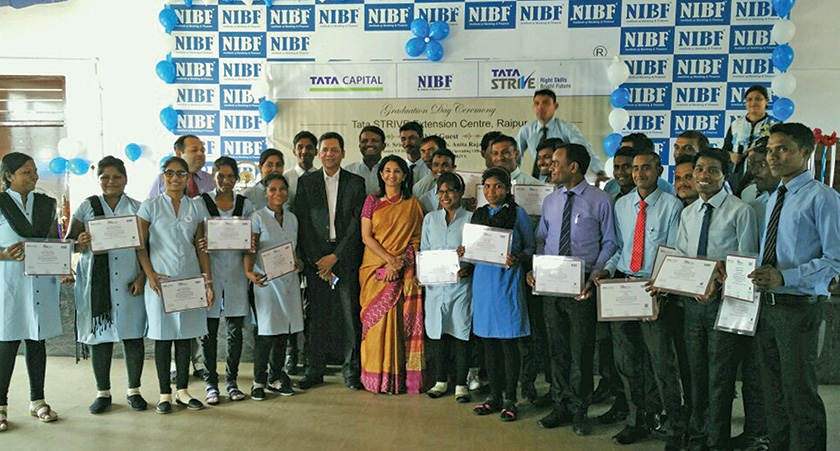
With digitisation and customer-centric models transforming the BFSI sector, Tata Capital’s ProAspire programme addresses critical skill gaps by training youth in digital lending processes, fintech tools, cyber safety, as well as foundational skills in sales, lead management, and relationship building.
The programme combines classroom instruction, digital learning modules, and hands-on simulations to ensure practical readiness. Candidates undergo mock interviews, role plays, and customer interaction exercises to prepare for high volume, customer-facing roles. Post-placement tracking over 6-12 months supports retention and long-term success.
Beyond functional competencies, ProAspire focuses on personality development, communication, and interview preparedness, areas where underprivileged youth often have limited exposure, enabling them to confidently enter and thrive in the financial services sector.
— Anju Maskeri