January 2026 | 1552 words | 6-minute read


Tata group companies unlock citizen entitlements
Heena Praveen, like many rural Indian women, left her education due to social pressures but transformed her life through Tata Consultancy Services’ BridgeIT programme, becoming a digital entrepreneur who now serves over 3,000 villagers. TCS and Tata Power initiatives, including Adhikaar, have empowered marginalized groups, aiding millions in accessing welfare and digital services. Tata Steel Foundation’s MANSI+ programme has significantly reduced maternal and infant mortality in Jharkhand and Odisha. Grassroots governance efforts have strengthened local leadership and welfare access, while Tata Communications’ ANEW has improved foundational learning for thousands, collectively advancing digital inclusion, healthcare, and education nationwide.
Tata group companies unlock citizen entitlements
Across rural India, women like Heena Praveen often sacrifice their dreams due to societal pressures. Forced to abandon her education after Std 12, Heena seized the opportunity offered by Tata Consultancy Services’ BridgeIT programme, which provides digital training to rural youth. After a 10-day intensive course, she launched a digital service hub, serving over 3,000 community members and significantly increasing her income. Her story reflects a broader paradox: vast welfare funds remain unused while millions lack basic services. To address this, Tata companies have initiated programmes to bridge gaps in digital access, financial entitlements, healthcare, and education. Since 2014, BridgeIT has created 1,866 rural digital entrepreneurs—88% women—serving 21.4 lakh people across 4,457 villages.
Tata Power’s Adhikaar programme, started in 2017, helps marginalized groups access welfare by overcoming documentation barriers; it has benefited 21.8 lakh people in 15 states. In healthcare, Tata Steel Foundation’s MANSI initiative has reduced neonatal and infant mortality rates by training health workers and leveraging digital tools, reaching 27 lakh women and children in Jharkhand and Odisha. Grassroots Governance and Decentralised Planning, launched in 2019, empowers local communities through leadership development, linking 1.39 lakh people to government schemes. In education, Tata Communications’ ANEW programme transforms foundational learning in Haryana’s public schools, impacting 90,000 students and 5 lakh community members through holistic, tech-integrated approaches. Together, these initiatives bridge the gap between citizens and government, unlocking dignity, rights, and inclusion, and equipping marginalized communities for meaningful participation in India’s growth story.
Tata group companies unlock citizen entitlements
Across rural India, women like Heena Praveen face the challenge of societal expectations that often hinder their dreams. Forced to abandon her education after Std 12, Heena found new purpose through Tata Consultancy Services’ BridgeIT programme, which trains rural youth in digital skills. After a 10-day intensive course, she launched a digital service hub in Madhuniya, Jharkhand, serving over 3,000 community members and increasing her monthly earnings from ₹1,600 to ₹12,000 in just ten months. Her story reflects a broader paradox: despite vast welfare funds, millions struggle with poverty and limited access to public services. With rural unemployment at 4.3% in August 2025, Tata companies are working to bridge this gap by improving access to financial entitlements, digital tools, livelihoods, healthcare, and education.
BridgeIT, started in 2014, aims to create rural digital entrepreneurs who connect their villages to the digital economy. These “digipreneurs” facilitate enrolment in government schemes, banking, Aadhaar updates, tele-law, tele-health, and student registrations, driving digital and social inclusion. By FY25, 1,400 women in 14 districts were empowered, with a goal of 1 million digipreneurs by 2030. To date, 1,866 rural digipreneurs (88% women, 52% from marginalized communities) have served 2.14 million people across 4,457 villages in 10 states.
Recognizing documentation as a barrier to welfare, Tata Power launched Adhikaar in 2017 to help marginalized groups access government benefits. Adhikaarpreneurs now champion awareness and change, benefiting 2.18 million citizens in 15 states, with 400+ literacy centres and 900+ trained Adhikaarpreneurs. The initiative has unlocked over ₹400 crore in public entitlements, with increasing focus on affirmative action groups, especially persons with disabilities.
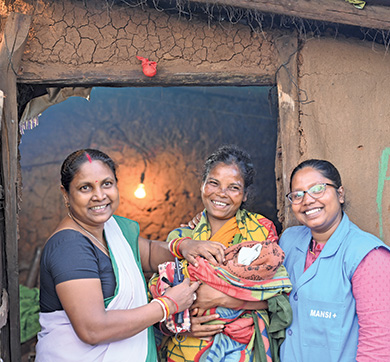
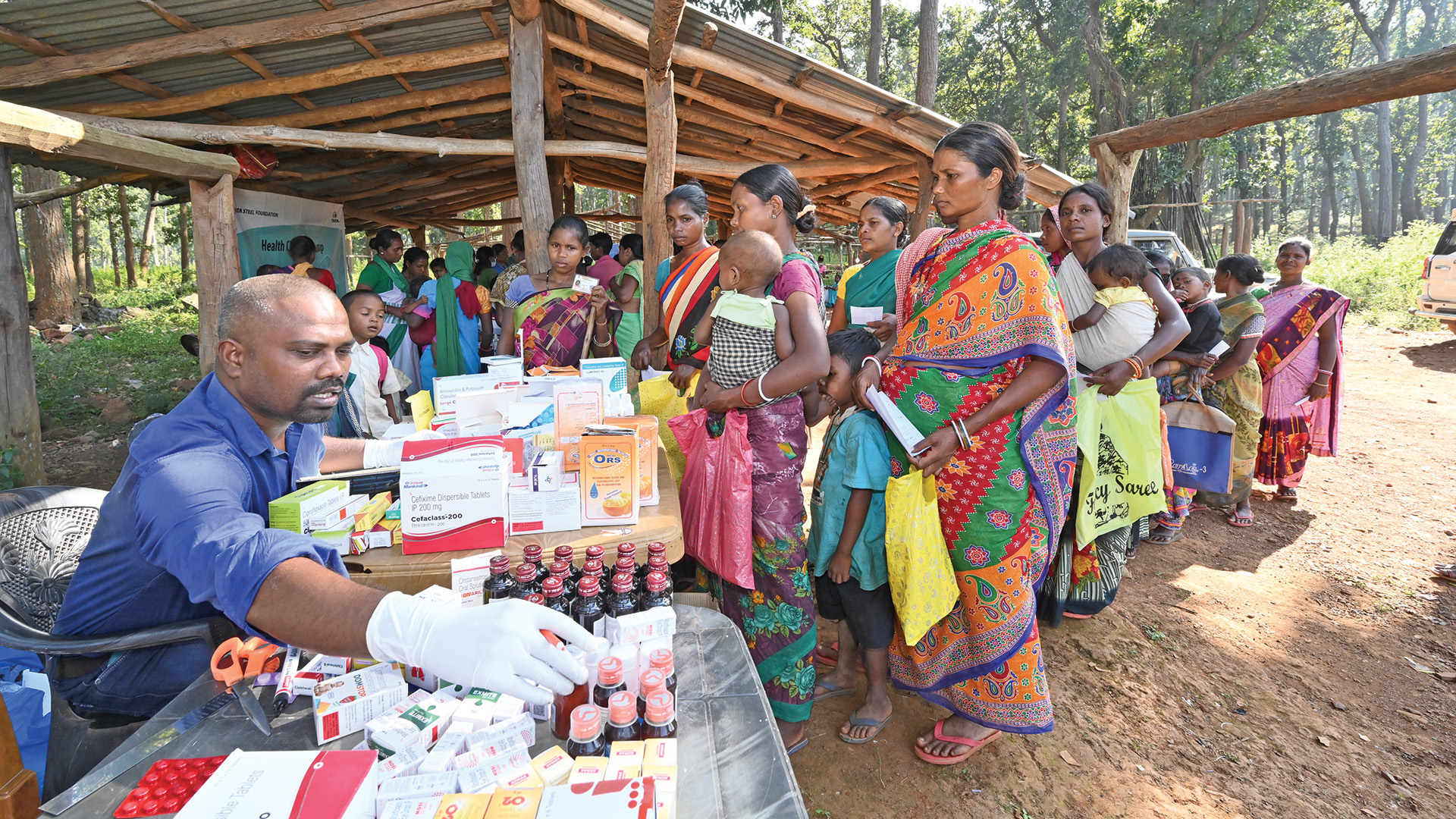
In healthcare, Tata Steel Foundation’s Maternal and Newborn Survival Initiative (MANSI) began in 2009 to address high infant mortality in Jharkhand’s Seraikela block. Phase 1 (2010-15) upskilled ASHAs in home-based newborn care, while Phase 2 (2015-20) expanded the programme and introduced Operation Sunshine, a digital system for tracking high-risk pregnancies. The current phase, MANSI+ (2021-26), adopts a life cycle approach, tackling complex issues like underage marriages and malnutrition, aiming to halve maternal, newborn, and under-five mortality. MANSI+ now operates in 52 blocks in Jharkhand and Odisha, reaching 2.7 million women and children and achieving significant reductions in neonatal and infant mortality rates.
To strengthen local governance, TSF and Tata Trusts launched the Grassroots Governance and Decentralised Planning programme in 2019, fostering leadership and participatory planning in 124 gram panchayats across Jharkhand and Odisha. Corridor Fellows combine fieldwork with academic training, transforming governance and linking 139,000 people to government schemes, unlocking ₹570 crore in entitlements. Women’s participation in gram sabhas has reached 50%.
In education, Tata Communications’ A New Education Worldview (ANEW), launched in 2016, transforms foundational learning in 503 government schools in Nuh, Haryana. ANEW builds holistic learning ecosystems, trains school leaders, energizes classrooms, and fosters community engagement through Sanginis. It aligns with NIPUN Bharat Mission and has empowered over 500,000 people, improved learning outcomes by 18% annually, and trained 10,000 students and 200 teachers in digital skills.


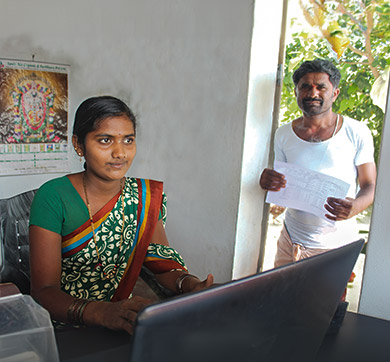
Madhuniya, Jharkhand. Like countless women across rural India whose dreams quietly wither away under the weight of societal expectations, 27-year-old Heena Praveen was compelled to abandon her education after Std 12, to attend to the household. But when a glimmer of opportunity presented itself in the form of Tata Consultancy Services’ BridgeIT programme, Ms Praveen was quick to seize the day.
She underwent a gruelling, 10-day training programme, acquainting herself with unfamiliar technology, including the intricacies of operating a laptop. Armed with new-found knowledge and a sense of purpose, Ms Praveen embarked on her entrepreneurial journey, opening a digital service hub to address the critical digital needs of over 3,000 underserved members of her community. Within 10 months, her earnings soared from Rs 1,600 to Rs 12,000.
Ms Praveen’s story is an example of the unique paradox prevalent across India: Rs 1 lakh crore in welfare funds lie unused, while lakhs grapple with poverty and inadequate public services. According to the Periodic Labour Force Survey, India’s rural unemployment rate was 4.3% in August 2025. It is against this backdrop that Tata companies have launched concerted efforts to bridge this gap by improving access to financial entitlements, digital tools, livelihoods, healthcare, and education.
The digital highway
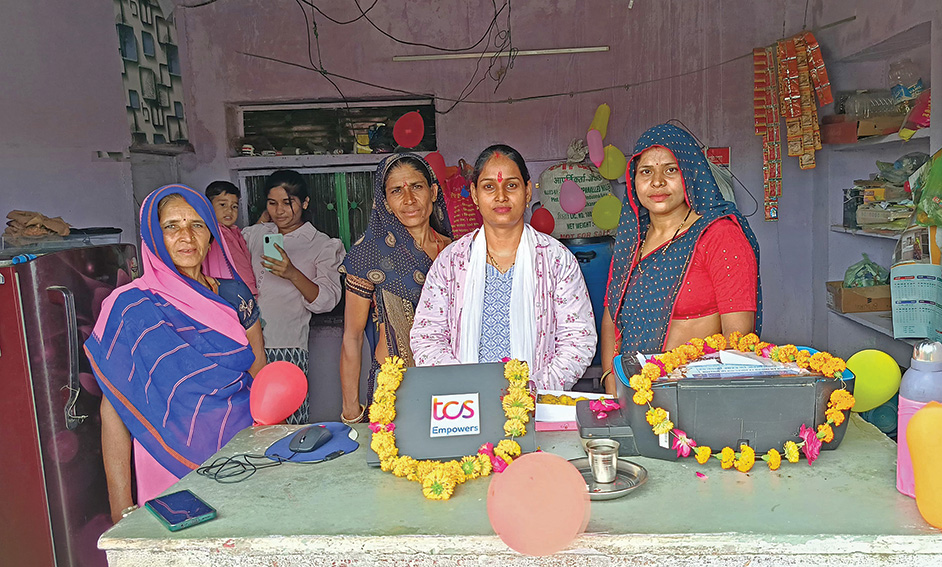
Started in 2014, TCS’ BridgeIT programme, for instance, seeks to cultivate a cadre of rural digital entrepreneurs like Ms Praveen, who harness the power of information technology, serving as the last mile connect for others in their villages. “Our vision is to make these young men and women agents of integration, connecting deep rural India with the rest of digital India,” says Joseph Sunil Nallapalli, Global Head, Corporate Social Responsibility (CSR), TCS. “We believe digital empowerment is India’s pathway to inclusion. These communities, long left behind, can now leapfrog into the digital economy — bridging gaps, advancing with confidence, and contributing meaningfully to nation-building.”
These digipreneurs deliver essential services — from enrolment in government schemes to enabling local banking access, updating Aadhaar, facilitating tele-law and tele-health services, and even helping students register for Olympiads — driving digital and social inclusion. With 1,400 women empowered across 14 new districts in FY25, TCS is aiming for 10 lakh digipreneurs by 2030.
Banking on inclusion
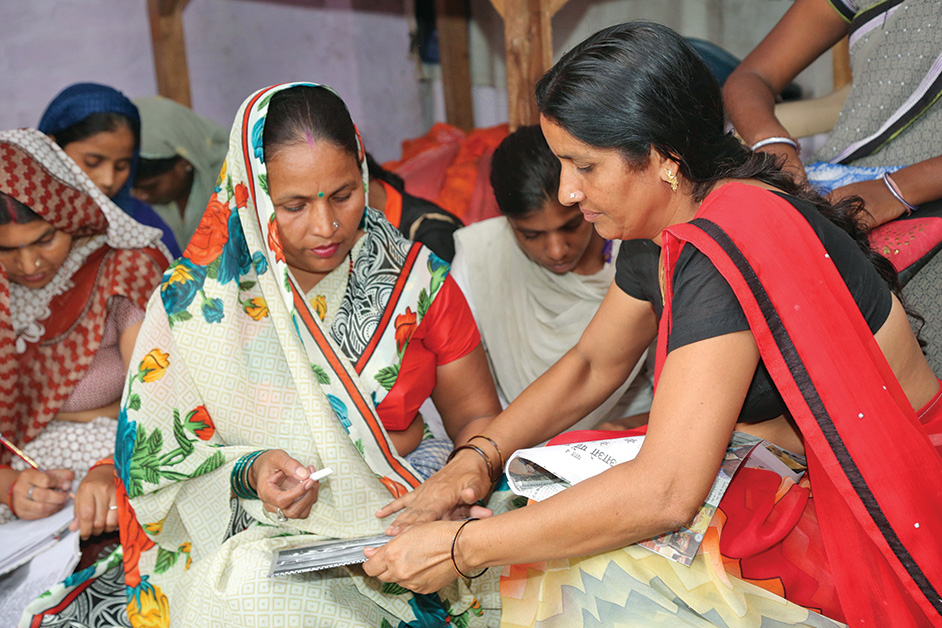
As of 2023, outdated population data excluded 4.5 crore+ eligible individuals from the Public Distribution System, while domicile-based rules left 14 crore+ migrant workers without access to welfare, according to India Migration Now, a research and advocacy agency. Recognising this gap early on, Tata Power launched Adhikaar in 2017 to assist marginalised communities with documentation — a major barrier to accessing government benefits.
“At Tata Power, inclusion is increasingly becoming a lived reality, with conscious efforts to integrate it into everything we do,” says Himal Tewari, Chief Human Resources Officer and Chief – Sustainability and CSR, Tata Power. “Adhikaar began in 2017 to help marginalised communities overcome documentation barriers and access government welfare. Over time, it has evolved into a shared community movement, with our Adhikaarpreneurs becoming active champions who drive awareness, engagement, and change on the ground. Today, nearly 22 lakh citizens across 15 states have benefited from a range of social schemes, from health coverage to pensions. As we grow, we are focusing even more on affirmative action groups, especially persons with disabilities, to ensure that no one is left behind in India’s growth story.”
Placing care at the core
In 2009, Jharkhand’s Seraikela block had an alarmingly high infant mortality rate (IMR), prompting Tata Steel Foundation (TSF) to launch the Maternal and Newborn Survival Initiative (MANSI). The initiative aims to reduce maternal and newborn deaths by improving access to appropriate healthcare for women and children at both institutional and community levels.
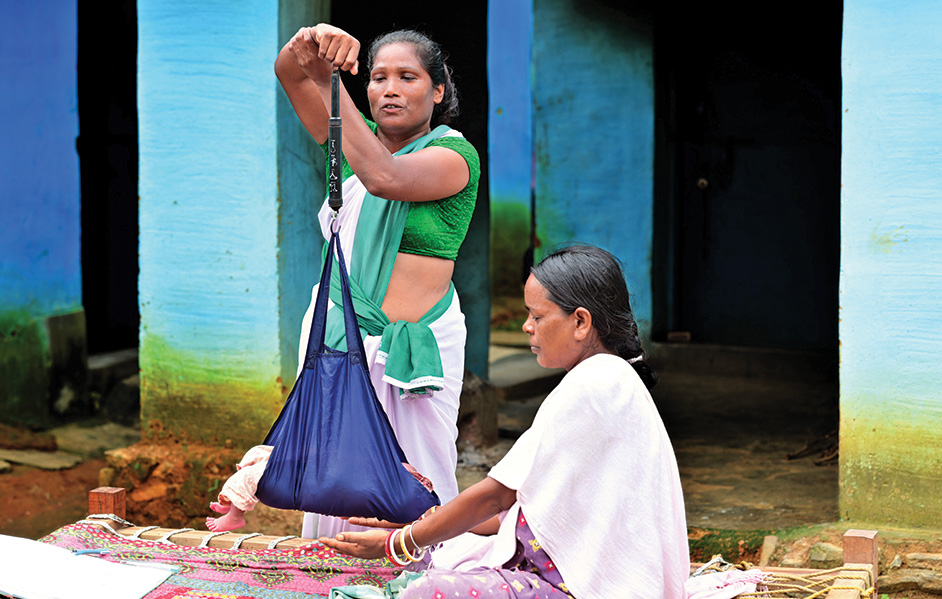
Phase 1 (2010-15) of MANSI focused on upskilling Accredited Social Health Activists (ASHAs), locally known as Sahiyyas, in home-based newborn care. Phase 2 (2015-20) expanded the mandate in terms of scope and reach, strengthened frontline workers’ capacity and promoted institutional deliveries. Operation Sunshine emerged as a standout innovation during this phase. It is a digital system for real-time tracking of high-risk pregnancies and newborns, aiding frontline healthcare providers with data and solutions.
The current phase, MANSI+ (2021-26), adopts a life cycle approach, directly impacting critical points in a person’s life. The programme, now active in 52 blocks in Jharkhand and Odisha, has expanded to include complex medico-social issues, like underage marriages and pregnancies, and malnutrition, aiming to reduce maternal, newborn, and under-five mortality by 50%. “With the National Health Mission as an active partner, we mobilise existing government social security schemes, such as the Janani Suraksha Yojana, Ayushman Bharat Scheme and other state schemes, with a focus on a unique sustainable model of available, acceptable, appropriate and affordable healthcare for those who need it the most,” says Dr Anuj Bhatnagar, Head – Public Health, TSF. “Our continued prioritisation of high-risk pregnant mothers and high-risk children has enabled MANSI+ to significantly reduce deaths and suffering in families in some of the most underserved regions.”
Change from the ground up
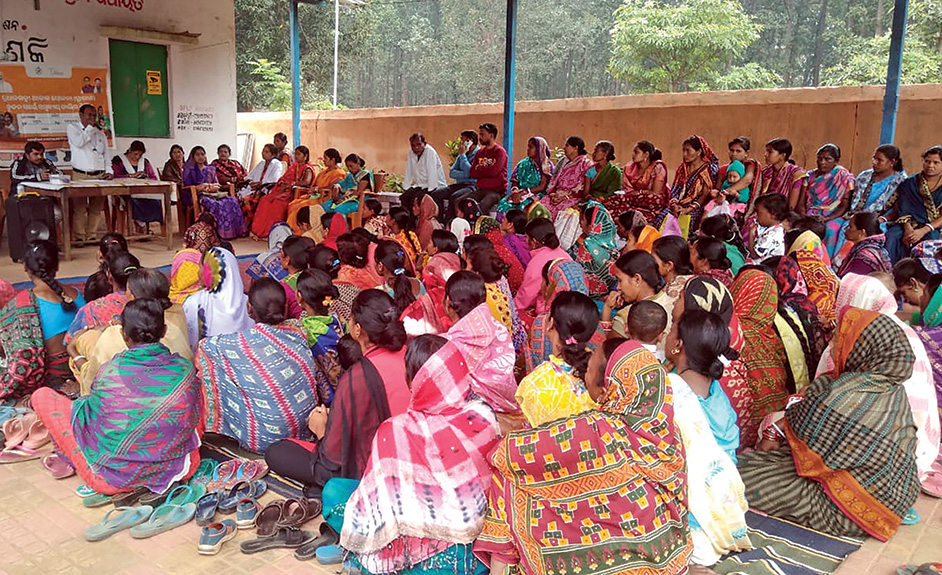
Another TSF programme is building strong local governance to empower communities. Launched in 2019 with Tata Trusts, the Grassroots Governance and Decentralised Planning programme — formerly the Development Corridor programme — was rolled out across five districts in Jharkhand and Odisha. It aims to foster grassroots leadership, promote decentralised planning, improve access to government entitlements and strengthen village level governance systems. In FY23, the first cohort of 39 Corridor Fellows, comprising local youth, began driving change across 72 gram panchayats. They combined hands-on experience through piloted projects at the panchayat level with academic learning at the Indian Institute of Management, Ranchi, earning a Certificate in Grassroots Leadership Development and Local Governance.
The programme has transformed panchayat-level governance into a truly participatory process. All 72 gram panchayats boast functional standing committees and craft annual action plans, ushering in accountability and inclusive decision-making. In a first, gram sabhas are shaping Village Development Plans, capturing community aspirations and integrating them into Gram Panchayat Development Plans. The initiative has expanded another 52 gram panchayats in Jharkhand and Odisha, bringing the total to 124. For the first time, all 124 project gram panchayats held gram sabhas on Independence Day this year, with 50% women attendees — a step towards gender-inclusive governance.
Gowing 3X since FY23, the programme has scaled up efforts to directly link people with government schemes, amplifying its reach. “The best way to leverage government entitlements for the people is to make the people themselves vibrant and participate in the community development processes,” says Kaushik Das, CSR Head, TSF.
Inside the classroom
Education is a powerful catalyst that lays the foundation for lasting change. In 2016, Tata Communications launched A New Education Worldview (ANEW) to transform foundational learning in public schools and foster a culture of learning beyond the classroom.
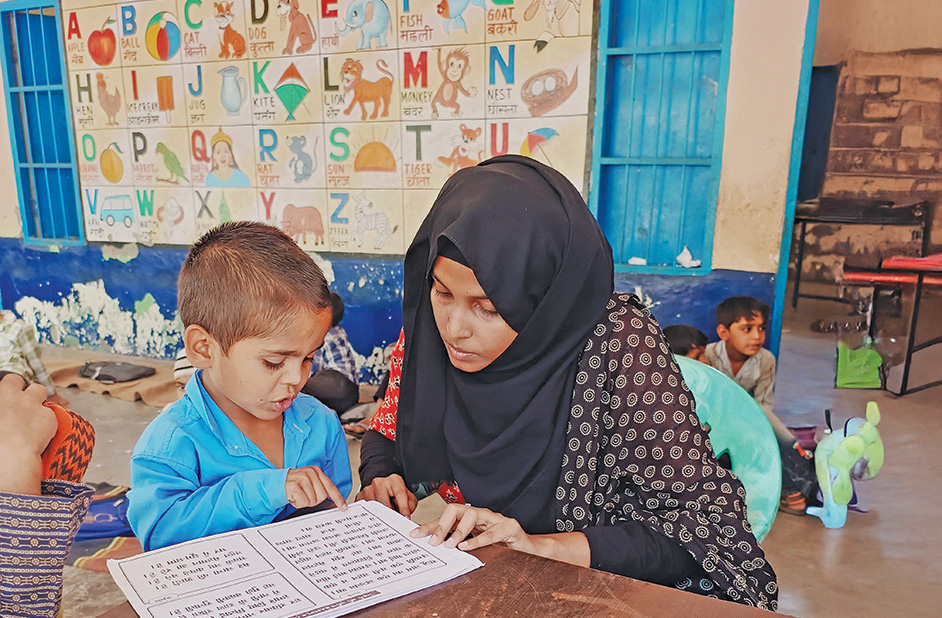
Unlike traditional programmes that focus solely on academic outcomes, ANEW builds a holistic, vibrant learning ecosystem that strengthens classroom processes, empowers schools and engages communities. Focused on driving change in 503 government schools in Nuh, Haryana, ANEW works closely with teachers, headteachers, and managers, equipping them with tools to create enriching early-grade learning environments. It brings classrooms to life with print-rich materials, energising Bal Sansads (children’s parliaments), and tech-integrated learning. These initiatives boost student learning and reduce dropout rates.
The initiative closely supports the goals of the government’s National Initiative for Proficiency in Reading with Understanding and Numeracy (NIPUN) Bharat Mission, launched in 2021. ANEW’s success is largely driven by its capacity-building sessions for teachers, designed around NIPUN’s new 5+3+3+4 schooling structure, which replaces the old 10+2 model and extends the Right to Education to children from the age of three.
A strong focus on community engagement is a key driver of ANEW’s success. “At the heart of this model is a network of collaborators called Sanginis, who act as mediums between the students, parents and the government,” says Mukul Kumar, Head - Environmental, Social, and Governance, Tata Communications. Sanginis run learning circles, support re-enrolment, and bridge the gap between school and home learning. This grassroots involvement creates a ripple effect.
By bridging the gap between citizens and the government, these programmes aren’t just delivering services — they are unlocking dignity, rights, and a future where inclusion is a reality for everyone.
—Sharmistha Choudhury