June 2026 | 770 words | 2-minute read


No water, no life. No blue, no green.” This succinct line by American marine biologist Sylvia Earle captures a truth we all know but could do with a stark reminder.
Concerns around record-breaking heat, triggered by El Nino, have put the spotlight back on water security.
With water augmentation being a key pillar of Project Aalingana, the Tata Group's vision of securing the future, here are some of the initiatives undertaken across the country.
TCS: Bringing back the baolis
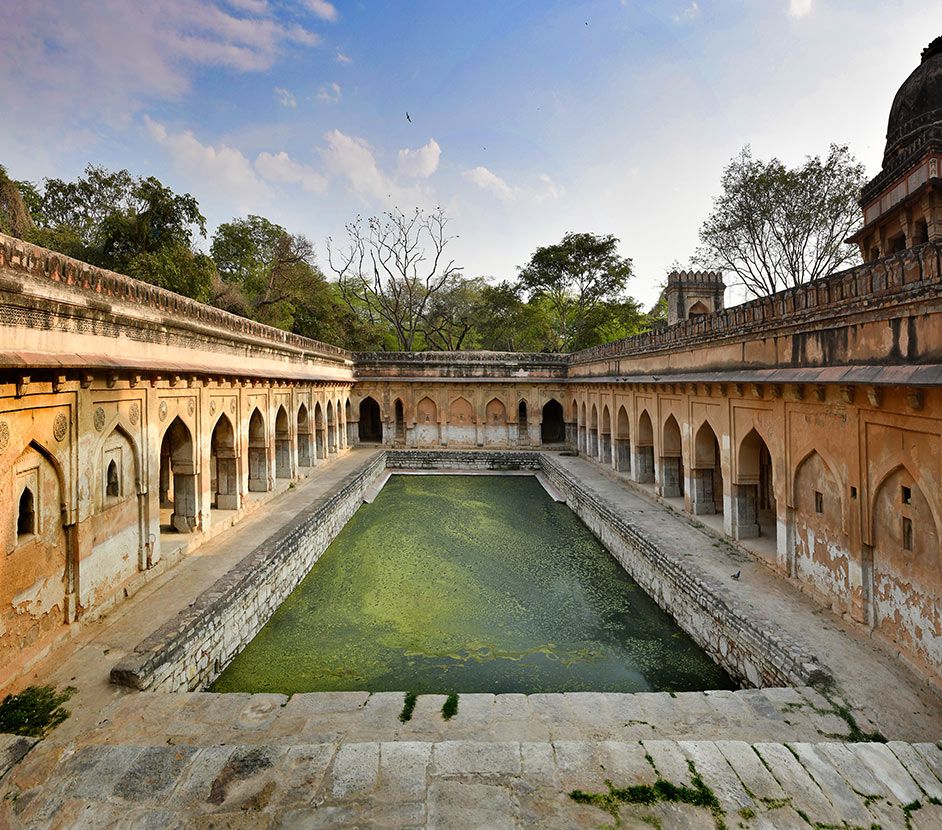
Tata Consultancy Services Foundation, in partnership with the Archaeological Survey of India and the World Monuments Fund, has undertaken the restoration of baolis. The term refers to a unique form of underground well architecture.
Rajon ki Baoli, a four-level stepwell built in 1506 in Mehrauli, Delhi, had fallen into disuse and contamination, endangering both heritage and local groundwater quality. As part of the restoration plan, overflow from a nearby sewage treatment plant was redirected away from the stepwell, stormwater drains were repaired, and adjacent communities were connected to the sewer grid, thereby eliminating pollution sources in the baoli.
To improve water quality, TCS adopted a three-pronged approach: biological, chemical, and mechanical. Aquatic life was reintroduced as natural biofilters, alum was added to settle impurities and clarify the water, and aeration pumps were installed to oxygenate the water and maintain those levels.
While TCSF has completed the conservation work at Rajon ki Baoli, it is currently executing Taj Bawdi in Karnataka, Kund Vav in Gujarat, and Jaipur baolis in Rajasthan.
Tata Motors: Championing water stewardship
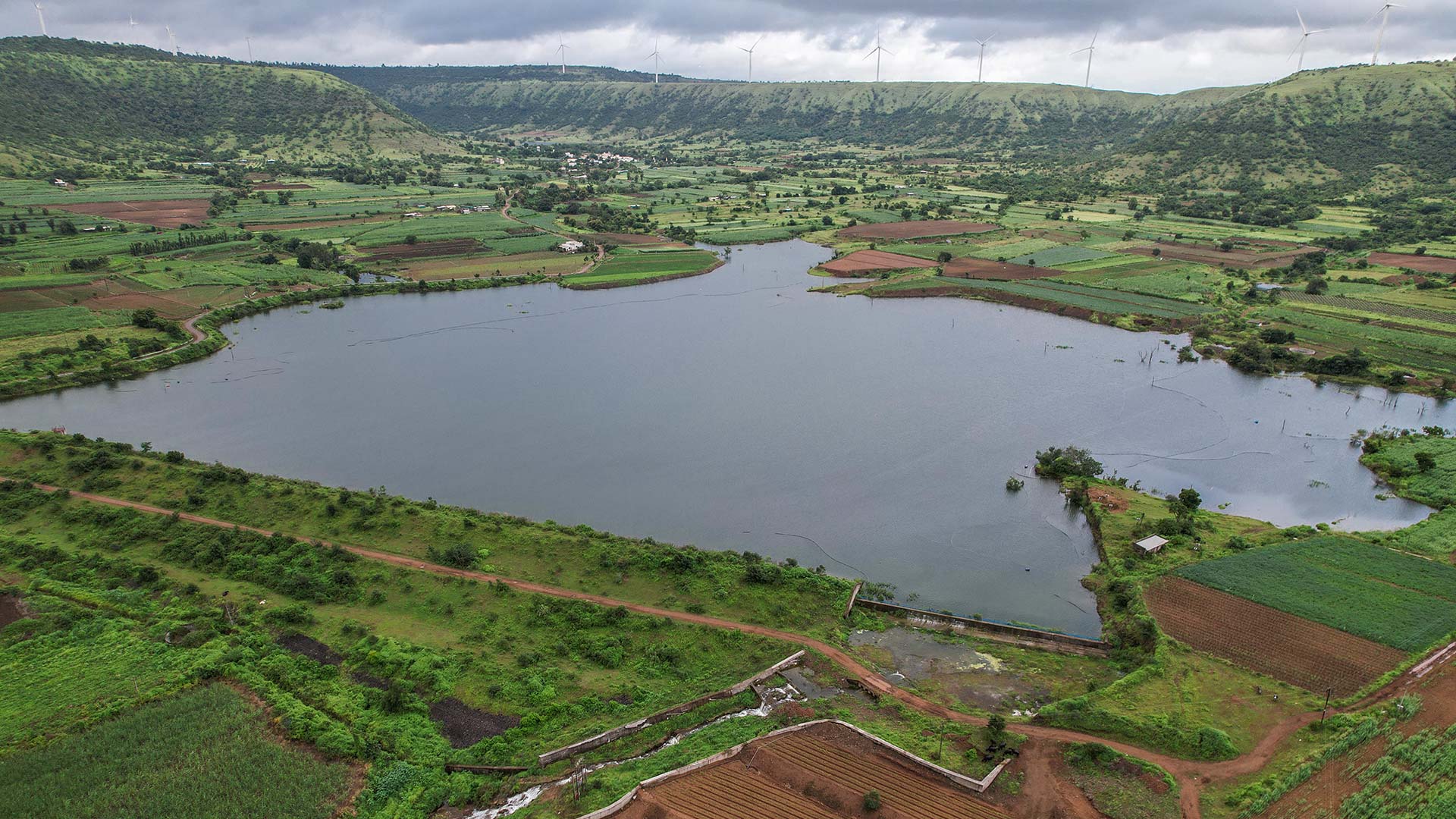
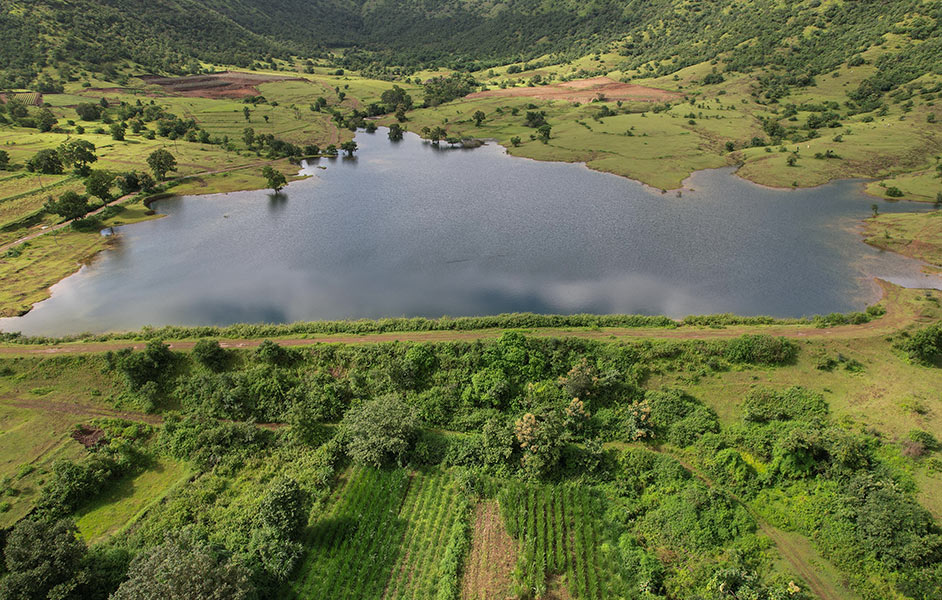
Tata Motors, in collaboration with NAAM foundation, has addressed water scarcity in rural Maharashtra by restoring hundreds of existing waterbodies across multiple districts. In February 2025, the company signed an MoU with the Maharashtra Government to restore 1,000 water bodies in 20+ districts, especially in the dry regions of Vidarbha and Marathwada.
This statewide initiative builds on Tata Motors’ successful pilot. In 2024, the company rejuvenated 356 waterbodies under the government’s Gal Mukt Dharan, Gal Yukt Shivar scheme, a community desilting programme. The approach not only increases each waterbody’s capacity but also provides nutrient-rich silt to local farmers for use on fields.
As a result, groundwater levels have risen, wells and boreholes last longer into the dry season, and communities are more resilient to drought. Based on these results, Tata Motors is scaling up the plan and is targeting 1,500 additional waterbodies in 25 districts.
Titan Company: Augmenting water security
Titan Company has a comprehensive water stewardship programme embedded in its ESG programme, Pragati. In FY25–26, the company augmented ~30 crore litres of water through interventions such as desilting, bund strengthening, and feeder channel restoration across traditional waterbodies.
A flagship project is the Akka Thangai Lake restoration in Krishnagiri, where vegetation clearance, earthwork, and channel repairs have created an annual augmentation potential of around 22 crore litres, supported by a community-led Tank Association for long-term upkeep.
Other initiatives include the Thalapalli Lake project, supporting a 5,200-acre catchment with an estimated 8 crore litres of augmentation potential, and the Masaorambhu Stream restoration in Coimbatore, where seven check dams have enabled around 10 crore litres of storage. Ecological interventions such as the Thathakodu forest pond are supporting wildlife such as elephants, leopards, and bears, while the Thakkolam Temple Pond restoration has enabled ~1.3 crore litres of annual water recharge capacity, once again demonstrating how heritage conservation can be integrated with water stewardship.
Tata Communications: Reviving the lake of hope
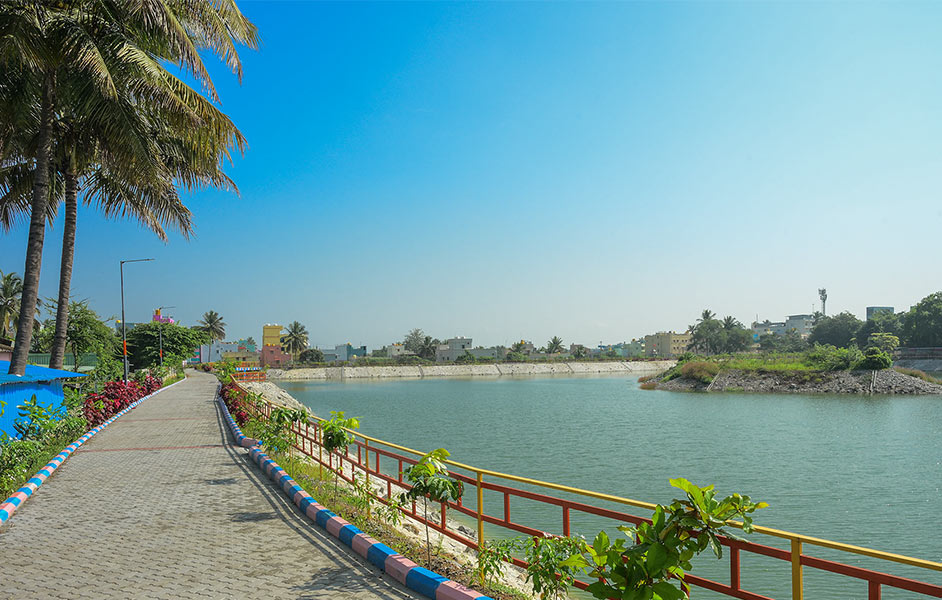
Tata Communications, in partnership with the Pitchandikulam Forest Trust and local authorities, initiated Project Nanneer to restore the Nagan Thangal Lake in Thiruvallur district, Tamil Nadu. The lake at the time had lost ~75% of its capacity due to siltation and pollution, threatening water security for ~2,800 residents.
Starting in 2022, Tata Communications implemented a science-based restoration. After a detailed hydrogeological study, the team desilted ~4 acres of the lake and used the soil to create small mounds, an island, and stable bunds. The lake’s banks and new island were planted with 4,000 native trees and shrubs, stabilising the soil and providing habitat. A solar-powered aerator was installed to improve water quality and oxygen levels.
The rejuvenated lake now supports aquatic life, provides reliable water for livestock and occasional fishing, and serves as a flood buffer during the monsoon. Tata Communications has even built a learning centre beside the lake, which operates as a community-run eco-education hub. The company is now chalking out a lake maintenance plan, which will serve as a template for ongoing upkeep.
IHCL: Implementing long-term water conservation
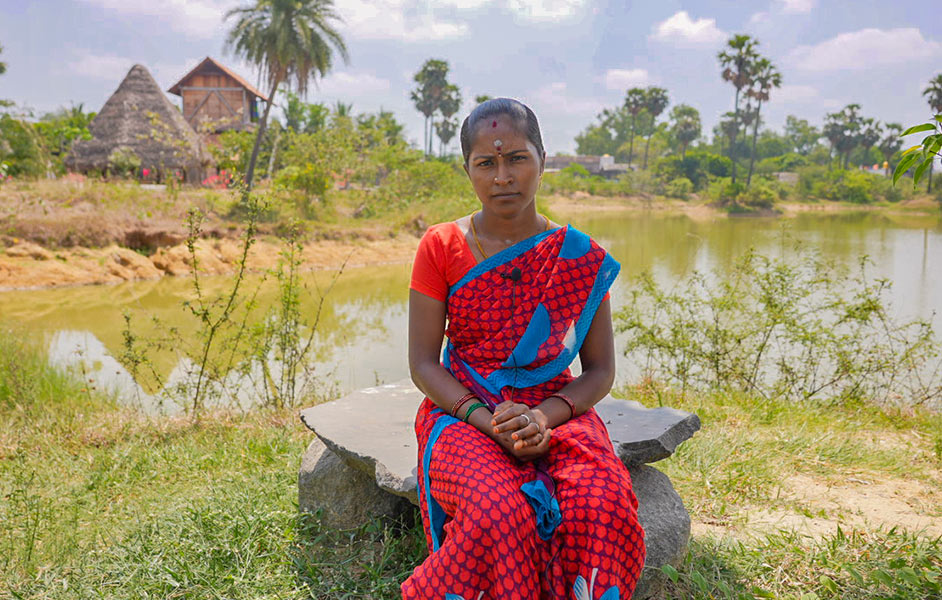
Recognising water as a shared and increasingly constrained resource, IHCL’s approach focuses on long‑term conservation in water‑stressed regions. In Gujarat, IHCL, in partnership with Ambuja Cement Foundation, is addressing water stress in the Rupen River macro‑watershed across Una and Gir Gadhada talukas of Gir Somnath district, where groundwater depletion and salinity ingress have affected agrarian livelihoods and economic stability in the area. The partnership focuses on watershed‑level solutions that leverage the recharge potential of the Rupen River catchment, extending from the Gir Forest to the Arabian Sea, through community‑led rainwater harvesting, revival of traditional water bodies and targeted ecosystem restoration across 30 villages.
The success of this initiative led to the scaling of water conservation initiatives across Tamil Nadu and Karnataka.
Through the National Agro Foundation, IHCL’s Watershed Conservation Project in Chengalpattu district, Tamil Nadu, aims to build a self-reliant and sustainable rural ecosystem in the villages through a focused emphasis to restore and rejuvenate local water bodies. In the Chikkaballapur district of Karnataka, IHCL along with Environment Association Bangalore supports rainwater harvesting at Karnataka Public School, Mandikal, improving water access and reducing pressure on groundwater resources as well as the restoration of the stone-stepped waterbody at Temple Kalyani at Hosahalli.
- Anju Maskeri