January 2026 | 800 words | 3-minute read


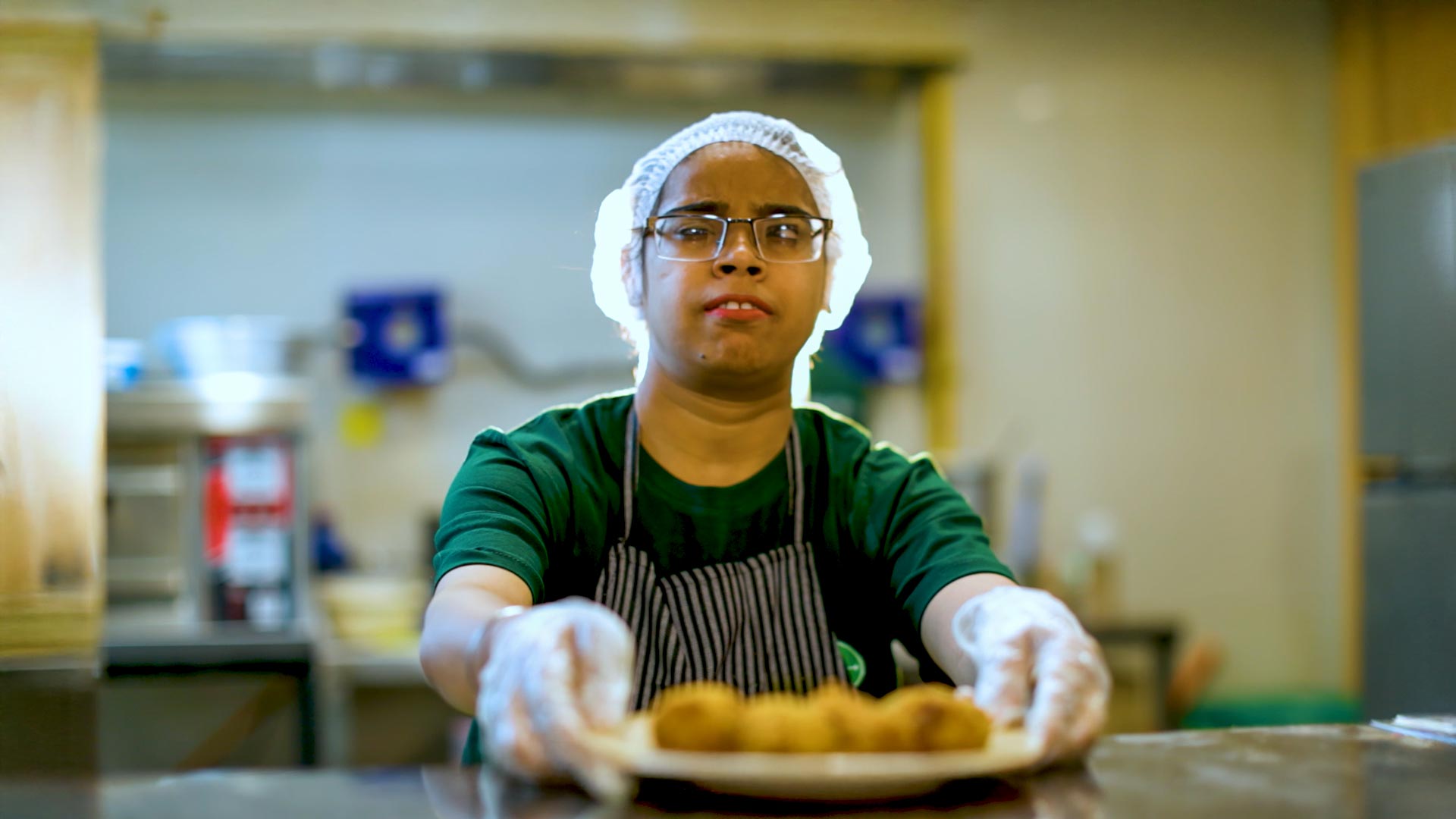
If you ever find yourself at the Olympus, Thane, corporate campus of Tata Consultancy Services (TCS), be sure to drop in at the TCS Blind Bake Café, a unique initiative where visually impaired individuals successfully operate a café within a busy corporate campus. Everything on sale here, from muffins to pizzas, is made onsite.
The café opened recently as a partnership between the IT giant and the National Association for the Blind (NAB) India Centre for Blind Women and Disability Studies. Subsequently, a second Blind Bakes Café opened in the company’s Siruseri campus in Chennai. A total of nine visually impaired chefs work in both cafes. A third café will be launched in TCS’ Pune campus soon, with five visually impaired chefs. These efforts are part of a strategic plan to set up similar cafes across TCS campuses.
The footfalls at both cafés—nearly a thousand customers every day—attest to the popularity of the café, where shakes and other beverages, snacks and desserts disappear quickly off the shelves. Watching the young chefs whisk and bake, plate and serve their confections with aplomb is as much a treat as the goodies they serve. Operating like a restaurant, team members perform their roles to perfection, getting into the rhythm of a busy restaurant.
Good intentions
The concept behind this unique venture emerged when Dolly Nemii Mittal, Lead - Gender & Persons with Disabilities (PwDs), TCS, who is also a Tata Affirmative Action Program (TAAP) assessor, visited the Taj Palace, Delhi, to conduct the TAAP assessment for Indian Hotels Company. She says, “There I saw chefs who could not see, yet they served with more clarity, warmth, and skill than most ever do. That moment stayed with me. I thought, if a place known for luxury and excellence can make space for such inclusion, why can’t we at TCS?”
That question led to an interaction with NAB India Center for Blind Women to understand the nuances of running a café. There were challenges aplenty, but TCS let its good intentions guide its actions.
The success of this venture owes itself to the supportive ecosystem built by TCS and NAB as much as to the hard work and creativity of the chefs. NAB designed a three-month training programme for the candidates. The curriculum included bakery goodies for pizzas, cakes and chocolate; beverages like hot coffees, teas and cold beverages, and snacks like fries, burgers, momos, pasta etc.
Additional modules involved training on organizing and managing a café, professional cleaning, cooking and presentation, and managing of inventory, finances and accounts. Modules on communication skills, managing negotiations and multi-tasking complete the course.
Safety first
Special care is taken to help the candidates to work around challenges like switching on the gas burner and handling sharp knives, and locating ingredients and equipment. The biggest lesson was getting used to the challenge of working in a large kitchen, where the preparation must be intense and the pace swift and proactive to meet the demands of a restaurant-style cafe.
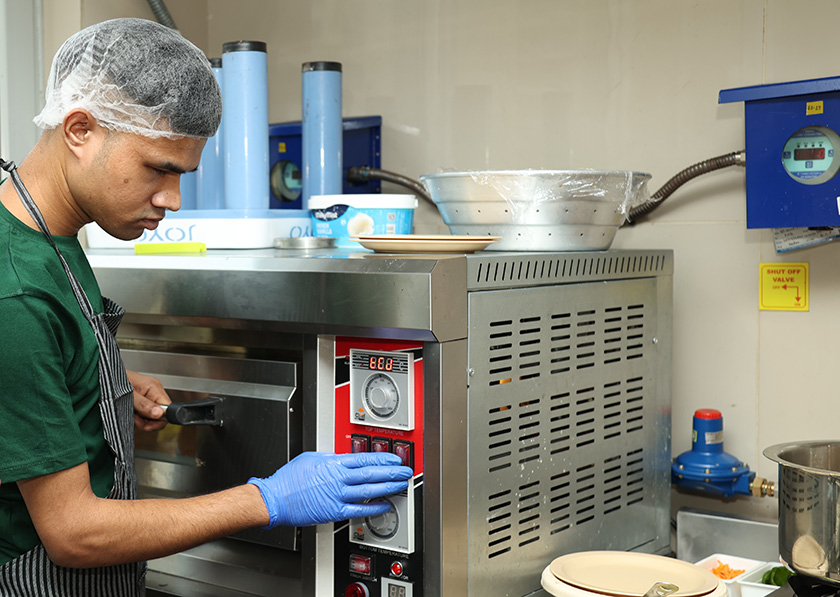
The training was followed by weeks of familiarisation with the kitchen to imbue candidates with a sense of intuitiveness about their new workplace. To ensure a safe workspace, TCS equipped each workspace in the kitchen with elements like tactile flooring to enable the chefs to familiarise themselves with the kitchen. Care was taken to ensure that there were no mobility hazards anywhere. Ovens with Braille symbols were made available. Sighted supervisors were appointed to ensure the safety of the chefs and to oversee quality checks.
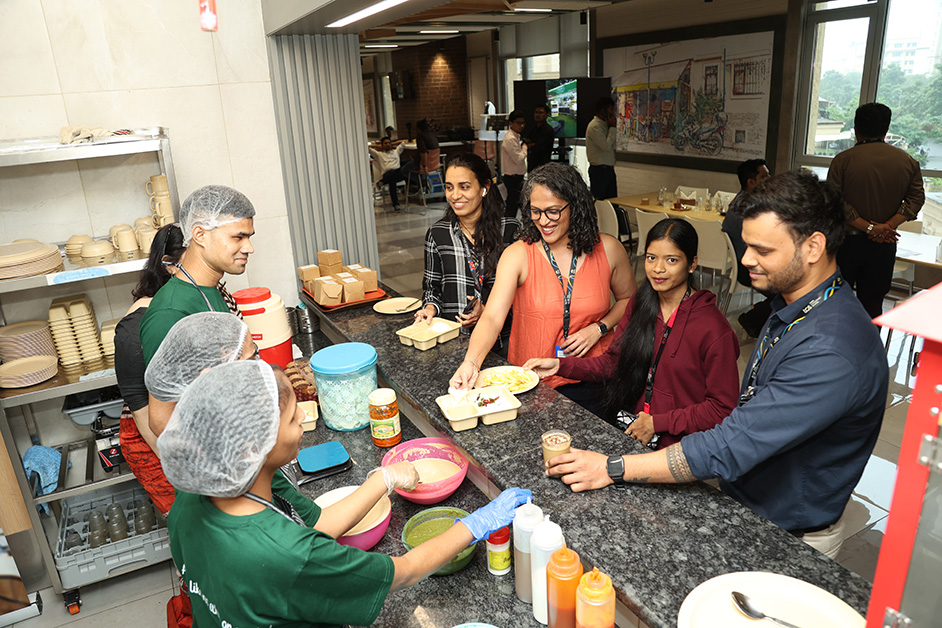
Ms Mittal says, “We worked closely with HSE [Health, Safety and Environment] and admin teams to address every detail. We also sensitised employees, helping them understand the etiquette of interaction and training them to engage naturally and supportively.”
TCS supported the daily commute of the blind chef by providing transport services. But chefs were also trained by NAB to take public transport and navigate open spaces.
Working at the TCS Blind Bake Café has been life-changing for the chefs. The young chefs are now able to earn a living and contribute financially to their families. The proceeds generated by the café go directly to the chefs with visual impairment and the running of the café.
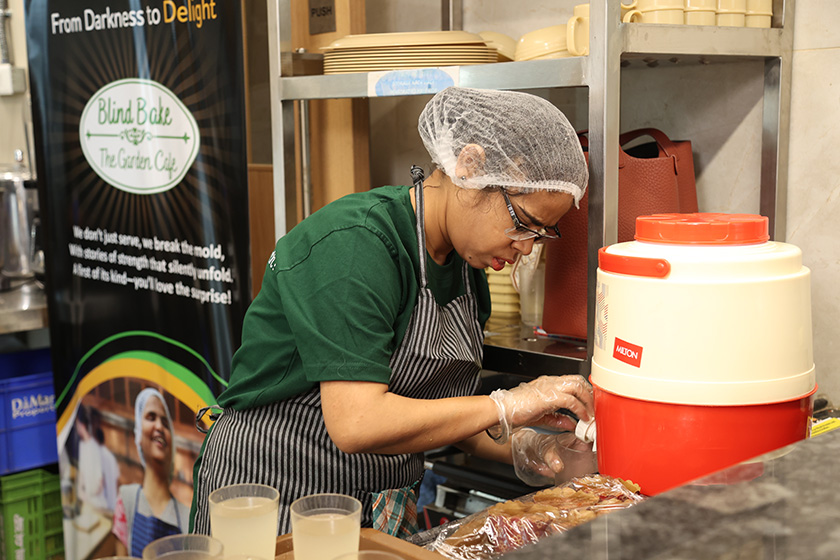
TCS has shaped an inclusive ecosystem where the visually impaired can earn their livelihood and delight their customers in a safe and affirming environment, while their customers get a valuable lesson on appreciating diverse abilities.
Where others might have seen disabilities, Tata Consultancy Services (TCS) chose to see abilities. For the chefs working at the TCS Blind Bake Café, it was this willingness to carve out a space for them that has made the real difference.
—Cynthia Rodrigues