June 2026 | 1411 words | 5-minute read


Small acts, lasting change
The Tata ethos fosters a deep-rooted volunteering culture, enabling the Group to achieve the world’s top ranking in corporate volunteering. Many employees have found purpose and empathy through hands-on community service, reflecting Tata’s legacy of service. In FY25, 54 Tata companies reported 1.087 crore volunteering hours — a 35% rise from FY24 — with a 28% participation rate. Tata’s robust framework, including Tata Engage and ProEngage, ensures measurable impact, scalability, and continuous improvement. The focus now is on deepening engagement and increasing participation, aiming for meaningful, skill-based volunteering that drives sustainable community progress and collective action.
Small acts, lasting change
The Tata Group’s ethos of service has fostered a robust volunteering culture, propelling it to the top global ranking in corporate volunteering programmes. Employees like Manoj Badave (Tata Motors) and Maitrayee Mukherjee (TajSATS) have had transformative experiences, discovering the profound impact of serving communities. Their stories are echoed by thousands across Tata’s companies, collectively reporting 1.087 crore volunteering hours in FY25 — a 35% rise from FY24. This milestone aligns with the 25th Tata Volunteering Week and the UN’s International Year of Volunteers for Sustainable Development, reinforcing Tata’s legacy of prioritising community welfare.
Tata Sustainability Group (TSG) has built a structured volunteering ecosystem, guided by a Volunteering Excellence Framework with pillars of Leadership, Strategy, People & Culture, and Stakeholder Engagement. This framework ensures scalability, replicability, and sustainability, enabling companies to benchmark, assess maturity, and improve processes. Group-wide IT platforms standardise reporting and governance, while reward systems and leadership commitment drive participation.
Despite only 28% of Tata’s 10 lakh workforce volunteering, unique participation is rising, and efforts are underway to deepen engagement and impact. Initiatives like Tata Engage, ProEngage, disaster response, company-specific programmes, and employee-driven efforts offer diverse opportunities. Tata’s volunteering agenda now emphasises meaningful, skill-based projects, aiming to deliver 10,000 annually by 2030. Hallmarks include Tata’s #1 global ranking in total hours, #2 in per capita hours, and unique contributions from companies like TCS and Tata Communications. For Tata, service defines success, with everyday acts of volunteering shaping lasting community progress.
Small acts, lasting change
The Tata Group’s ethos of service and community engagement has cultivated a robust volunteering culture that has propelled it to the top ranks globally for corporate volunteering programmes. Employees like Manoj Badave of Tata Motors and Maitrayee Mukherjee of TajSATS have experienced transformative moments through volunteering, discovering the profound impact of empathy and compassion while serving rural families and hospital patients. Their stories exemplify the spirit that drives Tata’s massive volunteering efforts, which in FY25 saw 54 Tata companies collectively report 1.087 crore volunteering hours — a 35% increase over FY24’s 80.2 lakh hours.
Chacko Thomas, Group Chief Sustainability Officer, Tata Sons, attributes this momentum to Tata’s legacy of service, employee passion, and supportive policies. The milestone coincides with the 25th Tata Volunteering Week and the UN’s International Year of Volunteers for Sustainable Development, prompting renewed focus on volunteering within the Group. Tata’s commitment to volunteering is rooted in its Founders’ belief that business must serve the community, a principle institutionalised by the Tata Sustainability Group (TSG) and the Tata Group Sustainability Council. Their vision is to be a pre-eminent global corporate volunteering programme by 2025, not only in scale but also in quality.
Shrirang Dhavale of TSG notes that Tata employees internalise the value of giving back, often prioritising volunteering over personal commitments. Companies with high volunteer participation demonstrate strong leadership, clear KPIs, diverse opportunities, and robust reward and recognition systems. To understand the impact of volunteering, TSG conducted a study involving 6,745 employees across 54 companies, revealing how volunteering strengthens culture, achieves social impact, and transforms individuals. Insights from this study are guiding TSG’s refinement of the Volunteering Excellence Framework, which has four pillars — Leadership, Strategy, People and Culture, and Stakeholder Engagement and Results — and 18 parameters to ensure scalability, replicability, and sustainability.
The Excellence Framework acts as both a mirror and a map, helping companies assess maturity, benchmark performance, and identify improvement areas. It drives continuous improvement and targeted guidance, enabling companies to roll out new policies, enhance programmes, leverage technology, and formally recognise volunteers. Some companies have integrated volunteering into their assurance frameworks to improve data integrity and accountability. At the Group level, an IT platform standardises reporting, logs KPIs, and ensures governance, allowing transparent benchmarking and resource allocation.
Despite these achievements, only 28% of Tata’s 10 lakh employees volunteered in FY25, indicating significant potential for growth. The focus now is on fostering deeper, impact-based engagement rather than simply increasing volunteering hours. TSG aims to deliver 10,000 skill-based volunteering projects annually by 2030, building on past successes.
The Tata Group’s volunteering landscape operates through three platforms: Tata Engage (including Tata Volunteering Week, ProEngage, and disaster response), company-specific programmes tailored to local contexts, and employees’ own initiatives. Tata’s commitment to community progress, not just profits, has defined its legacy for over 150 years. As the Group expands its volunteering agenda, everyday acts of service will shape the next chapter, driving lasting change through collective action.
Tata has been ranked #1 globally in total volunteering hours and #2 in per capita hours, with TCS contributing 89 lakh hours and Tata Communications achieving a 91% unique participation rate. The Group’s structured systems and platforms ensure its volunteering efforts remain scalable, impactful, and sustainable.


Some volunteering experiences leave behind more than memories — they leave an imprint on the soul. For Manoj Badave of Tata Motors, that moment arrived on dusty village roads in Ahmednagar, walking from one modest home to another, as part of a scholarship grant process with Snehalaya.
What began as a routine exercise slowly became a window into the quiet dignity and unspoken hardships of rural families striving to secure a future for their children. “We met the students’ parents and assessed the family’s financial circumstances. I realised then that I wanted to serve those in need, in whatever way I could, for the rest of my life,” he says.
A similar story unfolded for Maitrayee Mukherjee of TajSATS at Mumbai’s KEM Hospital. She joined a team that prepared and distributed meals to families who had spent days — sometimes weeks — camped outside wards, clinging to hope as they cared for their loved ones. “The manner in which they accepted the meal — with dignity and relief — reshaped my understanding of volunteering and taught me to acknowledge the humanity in others,” she says.
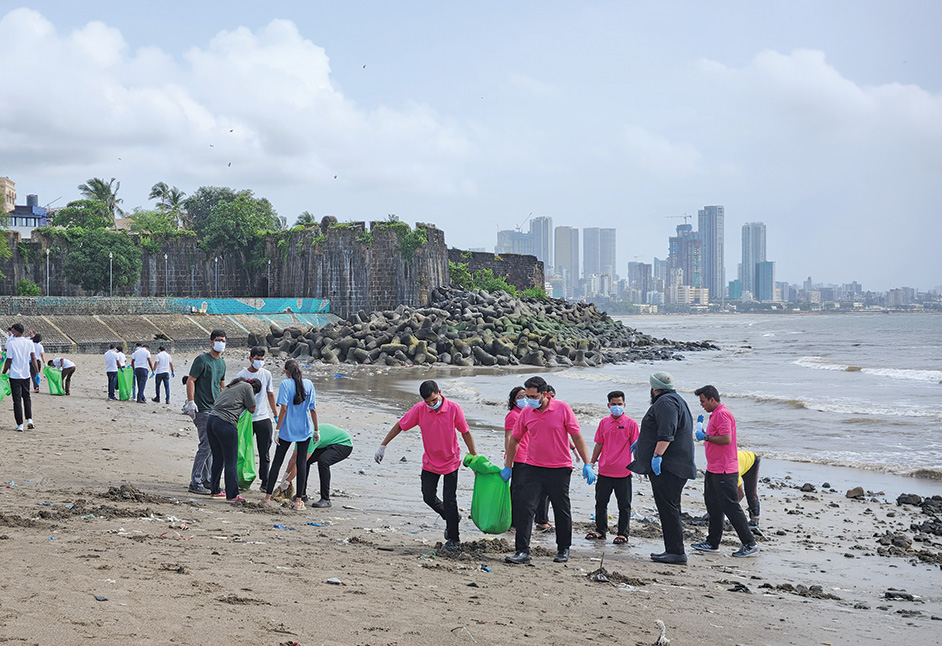
In those small, profound exchanges, Mr Badave and Ms Mukherjee — part of a growing army of Tata employees — discovered first-hand the joy of using their time and skills to serve the community with empathy and compassion. Their collective efforts have catapulted the Tata Group into the position of the #1 corporate volunteering programme globally, with 54 Tata companies collectively reporting 1.087 crore volunteering hours in FY25 — a remarkable 35% increase from 80.2 lakh hours in FY24.
Acknowledging the significance of this milestone, Chacko Thomas, Group Chief Sustainability Officer, Tata Sons, says, “The momentum we’re seeing in volunteering across the Tata Group reflects our long-standing legacy of service, the passion of our colleagues, and the policies and programmes across companies that enable purposeful engagement.”
Historic high
The milestone, coinciding with the 25th edition of the Tata Volunteering Week and the UN-designated International Year of Volunteers for Sustainable Development, has prompted TSG to reinitiate conversations around volunteering.
Tata companies have a deep-rooted history of volunteering, entrenched in the Founder’s belief that community should be central to the purpose of business. Over the years, Tata Sustainability Group (TSG), the nodal resource on sustainability, has worked closely with leaders and volunteering champions across Tata companies to successfully build a robust volunteering ecosystem capable of channelling employee purpose into measurable social impact. This aim is in keeping with the vision espoused by the Tata Group Sustainability Council: to be one of the pre-eminent corporate volunteering programmes in the world by 2025 — not just in scale, but in quality.
It is this evolution that resonates deeply within the Group. Shrirang Dhavale, Cluster Head – Social Services Cluster, TSG, remarks, “Lakhs of Tata employees are internalising the eternal Tata value of ‘giving back’. We must appreciate the fact that many of these colleagues choose volunteering even as it competes with personal time and commitments, underscoring a deeply held sense of purpose.”
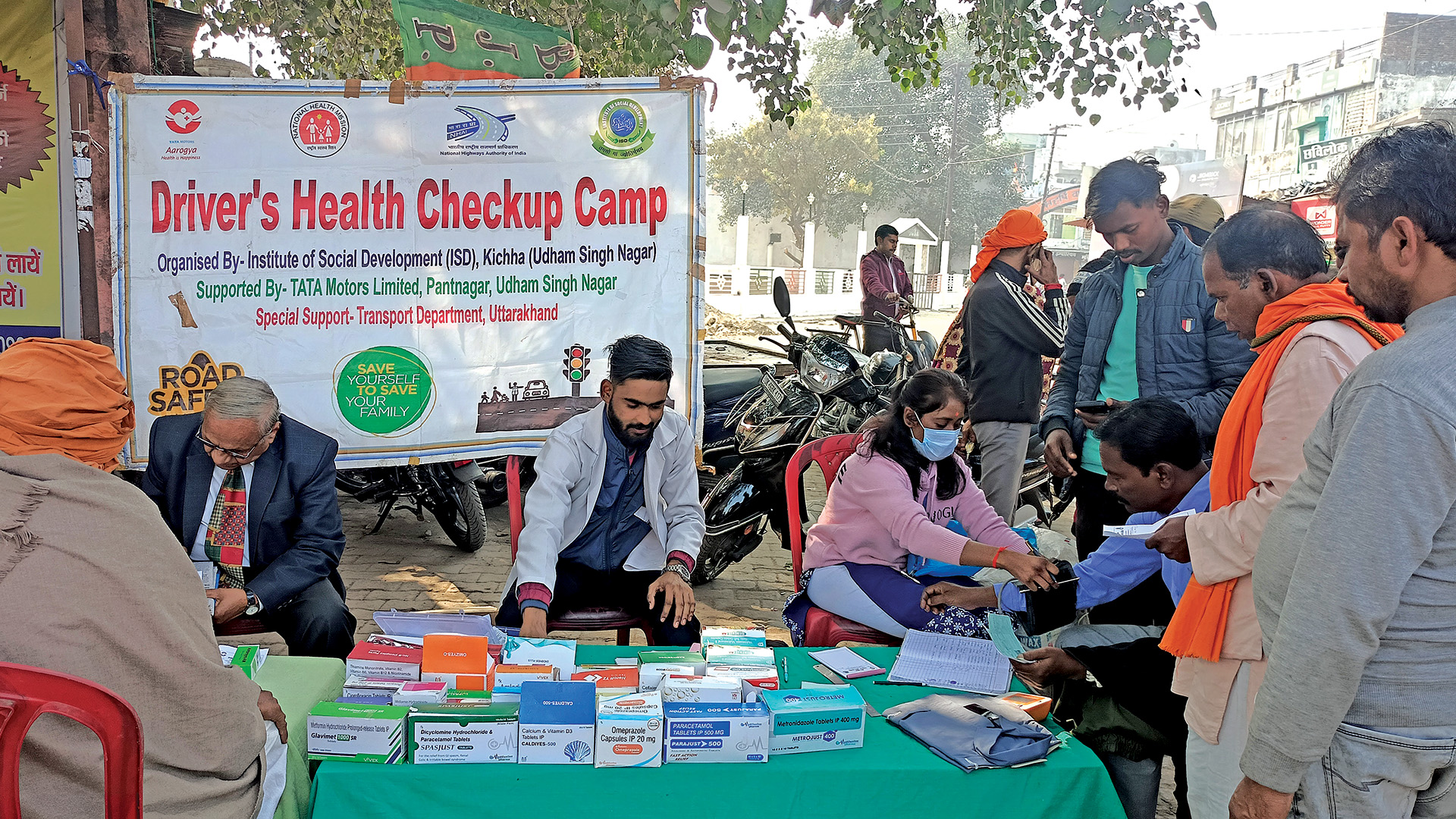
Hall of fame
The Tata Group is now a global leader in corporate volunteering.
- Ranked #1 worldwide in total volunteering hours — 1.087 crore (35% increase over FY24 achievement of 80.2 lakh)
- Ranked #2 globally in Per Capita Volunteering Hours at 10.67 PCVH (up from 7.97 in FY24, and well above the 2025 aspiration of 4 PCVH)
- 27 companies crossed 4 PCVH, seven for the first time
- 38 companies improved PCVH year-on-year
- TCS contributed 89 lakh+ volunteering hours with 14.75+ PCVH
- Among global corporates employing 1 lakh+ people, the Group is unique in contributing 1 crore+ volunteer hours annually
- Tata Communications had the highest unique participation rate — 91%
- Group-wide unique participation rate of 28% (up from 23% in FY24)
*All data for FY25
Bolstering the system
Companies that consistently see high volunteer participation tend to be anchored by deep leadership commitment, clear KPIs for volunteering, a rich portfolio of opportunities and strong reward and recognition frameworks — supported by enabling systems that sustain momentum.
To examine the significance of this growth in employee volunteering, TSG recently conducted a pioneering study titled, ‘Service that shapes us: How Tata volunteers strengthen culture, achieve impact, and transform themselves’. The study analysed the transformative impact of corporate volunteering through the voices of 6,745 colleagues from 54 Tata companies. The insights from this survey are now informing the Group’s approach in order to balance participation with purpose, and scale with depth.
Drawing on these insights, TSG is also refining the Volunteering Excellence Framework to prepare the programme for its next big leap. Currently, this framework has four crucial pillars: Leadership, Strategy, People and Culture, and Stakeholder Engagement and Results, and 18 parameters, which serve as the scaffolding upon which the Group’s volunteering efforts stand.
Robust system
The volunteering landscape at the Tata Group is built on three distinct platforms.
1. Tata Engage
Tata Volunteering Week: A biannual (March and September) location-specific event-based volunteering programme for employees, their families and retirees. These events are organised during work hours.
ProEngage: A skill-based volunteering format, in which employees, family members and retirees take up projects that require the use of their domain expertise to enable NGOs to improve their efficiency. These projects are done by employees on weekends and after office hours.
Disaster response: Employees volunteer towards the Group’s disaster response effort, in three categories: project manager and procurement officer cadres (both trained and deployed for 15-60 days) and core volunteers (no training, deployed for up to a week).
2. Company volunteering programmes: Opportunities curated by Tata companies for their employees, with reference to the operating context, employee aspirations and the needs of local communities.
3. Employees’ own initiatives: Employees’ volunteering efforts pursued at their own time and convenience, and relating to issues and causes that they feel strongly about.
TSG, in association with Tata Business Excellence Group, had developed the ‘Excellence in Volunteering’ framework with the objective of institutionalising volunteering to ensure scalability, replicability, and sustainability.
Gauri Rajadhyaksha, Deputy General Manager, TSG, explains, “The framework till now has acted as both a mirror and a map — a structured lens enabling companies to assess process maturity, benchmark against leading Tata organisations, and identify areas for strengthening. It has also enabled TSG to provide targeted guidance, fostering a cycle of continuous improvement across volunteering programmes and processes.”
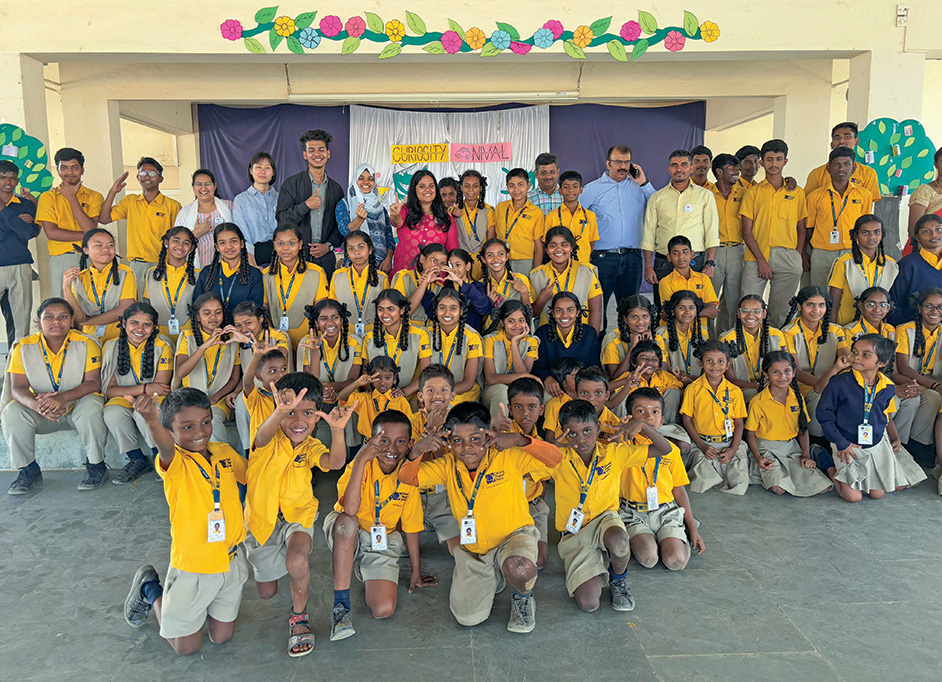
Companies across the Group continue to use the framework to proactively roll out new policies, enhance their company volunteering programmes, leverage technology and formally recognise volunteers in order to create a culture of volunteering within their workforce. A few companies have incorporated volunteering into their assurance framework, strengthening data integrity and accountability for their volunteering programmes.
At the Group level, an IT platform enables standardised reporting of process-related quantitative and qualitative volunteering data across companies. The system logs KPIs and ensures data integrity and stronger governance through leadership supervision. Transparent benchmarking enables the ranking of companies and sharing of best practices. It also allows forecasting, output mapping and resource allocation for large-scale programmes.
More hands needed
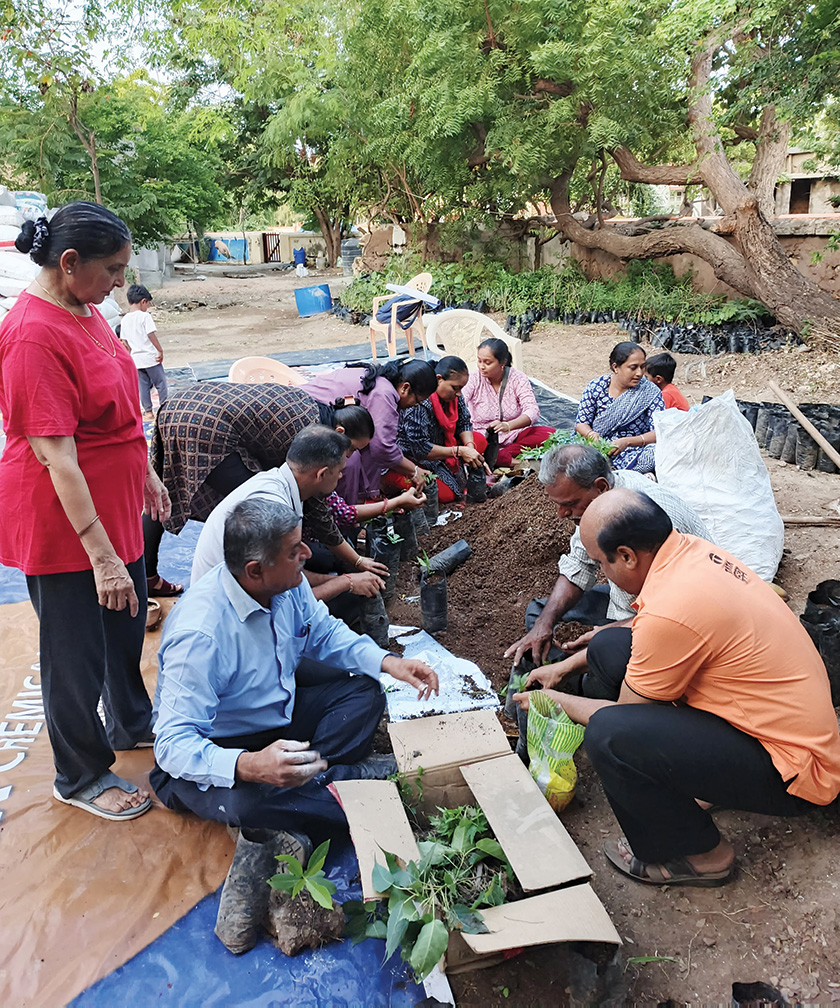
With current volunteering scale emerging out of a unique participation of just 28% of Tata employees — those who have volunteered at least once during the year — the opportunity ahead lies in convincing the remaining 72% of the Group’s 10 lakh-strong workforce to take up volunteering. Mr Dhavale notes, “Volunteering must be meaningful on both sides — where individuals feel valued, and where their skills and efforts add real value. There is considerable scope to deepen our work on both these fronts.”
The focus is now shifting from merely clocking volunteering hours to fostering deeper engagement through impact-based initiatives. Having delivered 10,000 skill-based volunteering projects through ProEngage over the past decade, TSG is now working towards achieving the same number in a single year by 2030. “As we look ahead, our priority is to deepen our impact on the communities we serve and to ensure that every Tata colleague has the opportunity to find their purpose and contribute to positive change meaningfully,” says Mr Thomas.
For more than 150 years, the Tata story has been written by leaders who believed that success must be measured not only in profits but in the progress of communities. As the Group’s volunteering agenda expands, everyday acts of service — big and small — will define the next chapter of this journey to achieve lasting change through the power of collective commitment and action.
— Cynthia Rodrigues