September 2026 | 1417 words | 6-minute read


India’s steel industry is entering what could be its most consequential decade. Demand is surging — driven by highways, railways, urban infrastructure, renewable energy installations, and a manufacturing sector expanding its global footprint. Capacity has crossed 200 million tonnes (MT), with India firmly on track to become a 300MT steel economy by 2030. Yet, the very material underpinning this growth story presents one of its most formidable climate challenges.
Steel remains among the world’s most difficult industries to decarbonise. Conventional steelmaking relies heavily on coking coal, accounting for a significant share of industrial carbon emissions. Blast furnace–basic oxygen furnaces emit ~2-2.5 tonnes (T) of CO2 for every tonne of steel produced. The challenge for India is clear: how to expand steel production while reducing its carbon footprint.
In Ludhiana, Punjab, Tata Steel is attempting to answer that question.
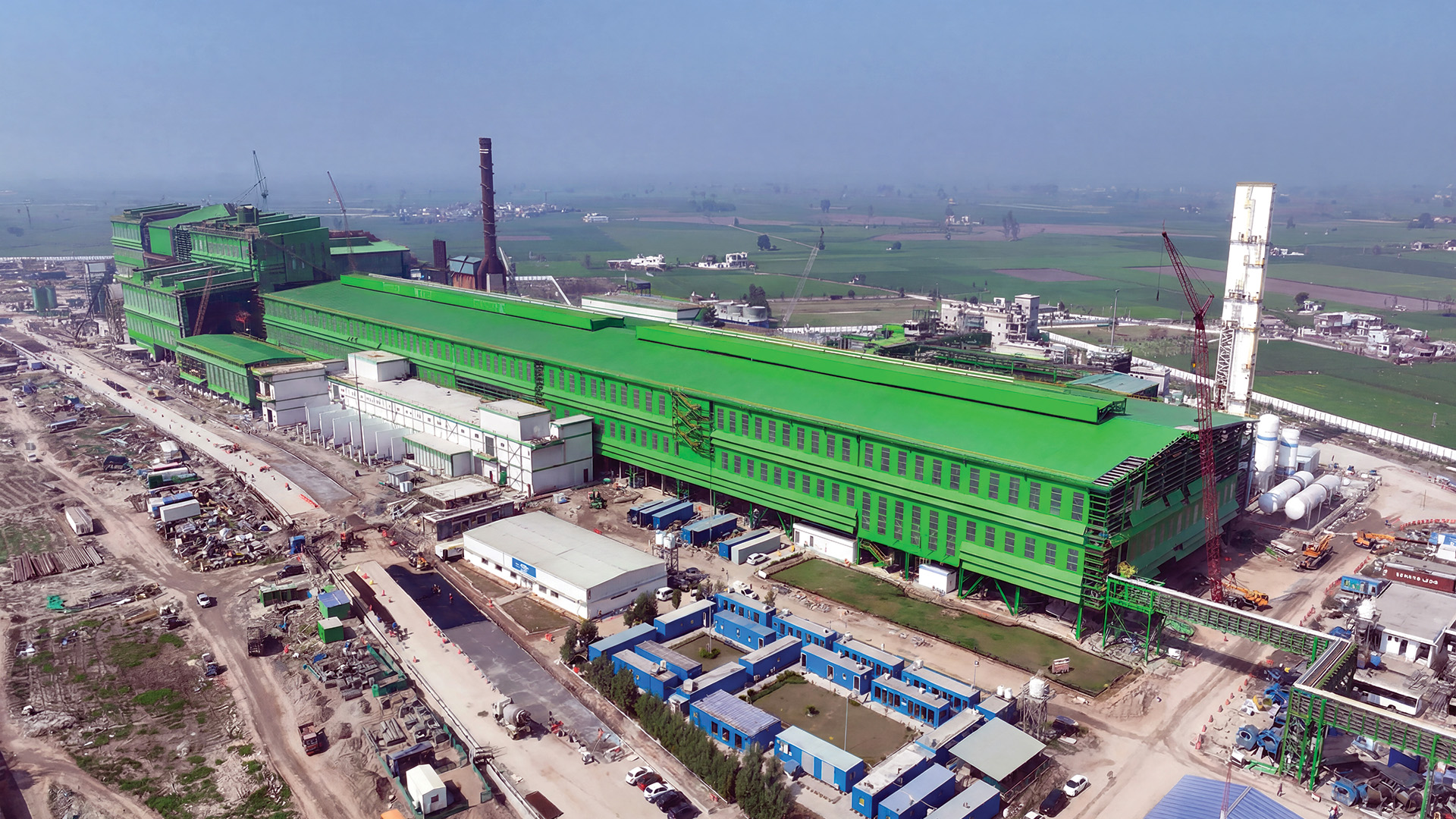
Inaugurated in March 2026, the Ludhiana plant is more than just another steelmaking facility. It represents the Tata Group’s first manufacturing footprint in Punjab and Tata Steel’s first scrap-based Electric Arc Furnace (EAF) plant in India, underscoring its strategic importance beyond output alone. “The Ludhiana EAF marks a defining milestone in Tata Steel’s journey towards achieving net zero by 2045,” said TV Narendran, Chief Executive Officer and Managing Director, Tata Steel, at the launch ceremony. More broadly, it signals how the company is rethinking capital investment for the circular economy — by backing technologies that reduce resource intensity while remaining globally competitive.
The numbers
- ~ Rs 3,200cr investment
- 0.75MTPA capacity
- 100% steel scrap feedstock
- ~40% scrap sourced from Tata Steel’s recycling facility in Rohtak, Haryana
- ~50% renewable energy
- <0.3T of CO₂ per tonne of steel produced (ultra-low emission intensity)
Built with an investment of ~ Rs 3,200cr, the plant is designed to produce 0.75 million tonnes per annum (MTPA). Its ultra-low emission profile — less than 0.3T of CO2 per tonne of steel produced — positions it as one of India’s most significant projects in low-carbon steelmaking.
Why Ludhiana matters
The significance of the Ludhiana EAF lies in its demonstration of an alternative to traditional steelmaking, which relies heavily on iron ore and coking coal. Blast furnaces reduce iron ore into molten iron, a process that is energy-intensive and carbon-intensive. EAF technology, by contrast, melts recycled steel scrap using electricity.
At Ludhiana, that shift goes a step further. Using 100% steel scrap as feedstock, it draws about half of its power from renewables. This forms the foundation of the plant’s sizeable lower emissions profile. A zero effluent discharge system further reduces its environmental footprint. The result: lower emissions, reduced dependence on virgin raw materials, and improved integration of renewable energy.
The Ludhiana advantage
Strategic location
Proximity to major construction and industrial hubs in North India helps Tata Steel source raw materials and serve customers within 400km, cutting logistics costs and shortening supply chains
Strong scrap availability
Located within a broad automotive and engineering industrial belt, the Ludhiana EAF has access to a steady stream of recyclable steel for scrap-based production
Supportive ecosystem
Developed in collaboration with the Government of Punjab, the project showcases how policy support and industrial infrastructure can enable low-carbon manufacturing at scale
Economic impact
The plant is expected to benefit ~2,600-2,700 families and create indirect employment for 8,000-10,000 people
Integrated recycling network
Tata Steel’s recycling plant in Rohtak, Haryana will supply ~40% of the scrap needs of the Ludhiana plant
Community development
Through the Tata Steel Foundation, the company has been investing in education, skill development, and women’s livelihoods in the region
Circular steel ecosystem
The Ludhiana facility did not emerge in isolation. In many ways, its foundations were laid in 2021 when Tata Steel commissioned its steel recycling plant in Rohtak, Haryana. That facility forms a critical part of the company’s circular economy strategy, supplying ~40% of the scrap required by the Ludhiana EAF. Being situated in Hi-Tech Valley Industrial Park, the facility enjoys strategic proximity to its customer base.
“The EAF plant is located in Hi-Tech Valley Industrial Park, a key auto hub for efficient scrap acquisition,” says Chaitanya Bhanu, Vice President – Operations, Tata Steel Jamshedpur. “We aim to procure raw material and sell steel from this plant within a 400-km radius. This strategic location essentially optimises supply chains, placing manufacturing closer to customer hubs to drive agility and enhance cost efficiency.”
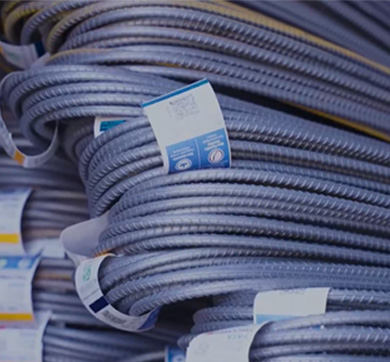
The approach reflects a broader redesign of the steel value chain. Scrap is sourced, recycled, and converted into new steel within a tightly integrated regional network. This streamlines logistics, improves cost efficiency, and strengthens material circularity. The EAF’s primary output will be construction-grade steel rebars sold under the Tata Tiscon brand, bringing low-carbon steel to North India’s industrial and construction markets.
Innovations for cleaner steel
Advanced furnace technology: Tata Steel partnered with Danieli to deploy Q-One, a digital power system that links the furnace directly to the grid, reshaping how steel is melted, enabling greater use of renewable energy.
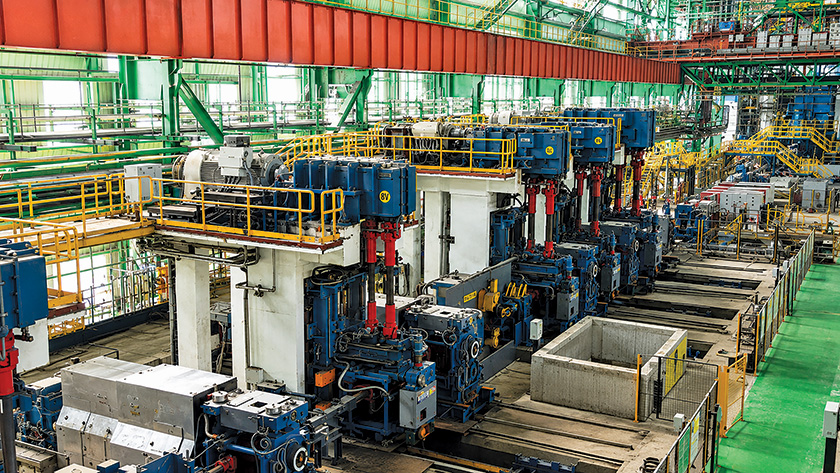
Next-gen minimill: The plant houses an advanced MIDA Hybrid QLP minimill (seen above), developed with Danieli. It is India’s first green steel endless casting and rolling plant, powered by a Digimelter and Octocaster system.
Portfolio of technologies
Tata Steel is careful not to portray the EAF as a silver bullet. “We look at green steel not as a single technology choice but as a portfolio of complementary pathways, each addressing different parts of the decarbonisation challenge,” says Mr Bhanu.
While EAFs offer a near-term route to lower-emission steelmaking, Tata Steel is also testing green hydrogen, biochar injections, and HIsarna technology to reduce emissions and reliance on coking coal and high-grade iron ore. Another key initiative is its EASyMelt pilot in Jamshedpur, in partnership with the SMS group. It relies on a coal- and gas-based, plasma-assisted melter that could cut carbon emissions by over 50% versus conventional steelmaking.
Carbon capture forms another pillar supporting the company’s sustainability strategy. Tata Steel has already invested in a 5-tonne-per-day carbon capture plant in Jamshedpur while continuing to work with startups, academic institutions, and technology partners to accelerate decarbonisation innovations.
Steeling for the future
The path to green steel holds promise, but challenges remain. For one, India’s scrap ecosystem remains fragmented, making it difficult to scale scrap-based EAF steelmaking. Second, while renewable capacity is growing, issues related to grid stability, intermittency and transmission infrastructure continue to affect large industrial users.
Third, green steel technologies, whether hydrogen, EAF or DRI, require significant capital investment, and remain costlier to operate than conventional methods. Access to competitively priced renewable power is critical, stressing the role of power-pricing policy in scaling adoption. While global buyers increasingly value lower-carbon steel, domestic customers remain price-sensitive, limiting the ability to command significant green premiums.
The transition, therefore, will depend not only on technology but also on policy, investment and market demand advancing together.
The blueprint
The Ludhiana EAF offers three important signals for the wider industry.
1. Proof of concept: It demonstrates that scrap-based, low-emission steel production can operate at commercial scale in India, potentially accelerating wider EAF adoption.
2. Advancing circularity: By creating demand for processed steel scrap, it strengthens the business case for organised recycling. This could help formalise India’s fragmented scrap ecosystem and reduce dependence on imported coking coal.
3. An industrial decarbonisation model: The plant illustrates that decarbonisation will likely require a mix of technologies rather than a single breakthrough solution.
A measured bet
For Tata Steel, the Ludhiana EAF is more than a single plant. It is a playbook for the future. The company plans to expand EAF capacity in India, supported by a 3MTPA steel recycling business by FY30-31, while further decarbonising blast furnace operations through higher scrap usage, greener fuels, and process innovation.
In that sense, Ludhiana offers a glimpse of the future of Indian steelmaking. Progress will not be driven by a single breakthrough technology, but by practical experiments, steady improvements, and carefully scaled innovations.
The Ludhiana EAF is one such experiment. But in a sector defined by scale, permanence, and long investment cycles, it signals something important: that the future of steel may be shaped as much by carbon efficiency and circularity as by tonnes produced.
— Anuradha Anupkumar