May 2026 | 1971 words | 8-minute read


Tata Steel Foundation's Six Big Bets
Over the last decade, Tata Steel Foundation (TSF) has transformed tribal communities in eastern India through six strategic big bets. TSF evolved from Tata Steel’s CSR projects into a future-ready institution, focusing on deep geographic saturation, identity-driven development, business-community integration, public system strengthening, and ecological stewardship. Programmes like MANSI improve maternal health, Samvaad fosters tribal identity, and Sukinda Eco-race revives sustainable livelihoods. TSF partners with governments, donors, and academia, impacting 63 lakh lives across eight states. By prioritising long-term system-building and community ownership, TSF creates durable change pathways, addressing complex development challenges and rising aspirations for a hopeful future.
Tata Steel Foundation's Six Big Bets
Over the past decade, Tata Steel Foundation (TSF) has pioneered a new model for social development in eastern India, impacting over 63 lakh lives across eight states. Established in 2016, TSF evolved from Tata Steel’s CSR project into a future-ready institution, guided by six big bets addressing livelihoods, health, governance, identity, and ecological resilience.
TSF’s “future-back thinking” emerged during the pandemic, when community consultations revealed widespread uncertainty about the future. This led TSF to envision resilient communities in 2035 and work backward to design present-day interventions.
TSF distinguishes itself by integrating last-mile implementation, policy advocacy, and capital convergence, earning trust and external funding from international donors. Its geographic strategy emphasises deep saturation in target areas, ensuring systemic change — exemplified by MANSI’s focus on maternal and child health and Masti Ki Pathshala’s work with street children. TSF prioritises identity and confidence, supporting tribal culture through Samvaad and empowering marginalised groups via Sabal and Disha. The Foundation embeds societal perspectives into business, treating communities as stakeholders and collaborating with academic institutions for immersive learning. TSF also strengthens public systems through grassroots governance, connecting communities to welfare schemes and fostering local leadership. Ecological challenges are addressed socially, working with communities to revive indigenous livelihoods, such as the Sukinda Eco-race Conservation Project for tussar silkworms.
As TSF enters its second decade, it aims to build durable systems responsive to rising aspirations and complex challenges, demonstrating that sustained commitment can drive lasting transformation across India’s tribal heartlands.
Tata Steel Foundation's Six Big Bets
Tata Steel Foundation (TSF), established in 2016, has spent a decade transforming the tribal heartlands of eastern India through a new model of corporate-led social development. Moving beyond traditional CSR, TSF has evolved into a future-ready institution, engaging deeply with communities and focusing on lasting systemic change. Its approach is guided by six big bets—strategic pillars addressing livelihoods, health, governance, identity, and ecological resilience.
TSF’s journey began with a pandemic-era survey across Jharkhand and Odisha, revealing that 53% of families struggled to envision a hopeful future due to instability and economic distress. This insight led TSF to adopt “future-back thinking,” imagining resilient communities in 2035 and working backwards to shape current interventions. This philosophy underpins TSF’s institution-building, integrating last-mile implementation, policy advocacy, and capital convergence. Unlike typical CSR models, TSF actively partners with governments, donors, and Tata Group companies, attracting significant external funding — Rs 275 crore from international donors alongside Tata Steel’s Rs 2,725 crore CSR investments since 2021.
TSF’s impact is extensive: over 63 lakh lives touched through 20+ programmes across eight states. Its Maternal and Newborn Survival Initiative (MANSI) exemplifies geographic saturation, training local health workers (sahiyyas) and strengthening health systems in targeted districts. MANSI Darpan, a self-monitoring tool for expectant mothers, and Didis Café, a women-led food truck enterprise, illustrate TSF’s grassroots engagement. The Masti Ki Pathshala programme redefines geography, focusing on urban child labourers and migrants through residential bridge courses at railway stations.
Identity and confidence are central to TSF’s development strategy. Platforms like Samvaad celebrate tribal culture, enabling individuals like Neelam Usha Minj of the Asur tribe to gain professional skills and preserve indigenous traditions. Programmes such as Sabal (for persons with disabilities) and Disha (for women’s leadership in governance) rebuild agency and self-belief, addressing intangible barriers to opportunity. Samvaad has created a network of 17,000+ participants and impacted 3.7 lakh lives through tribal identity initiatives.
TSF also seeks to embed societal perspectives into business, viewing communities as stakeholders rather than mere beneficiaries. Collaborations with academic institutions like XLRI, IIMs, and ISB foster immersive learning and bridge boardroom decisions with ground realities. The Unurum social immersion programme exposes students to grassroots development, cultivating future leaders attuned to social impact.
Strengthening public systems is another cornerstone. Through the Grassroots Governance and Decentralised Planning programme, TSF partners with local administrations in 25 blocks across 11 districts, connecting citizens to welfare schemes and building local leadership. Initiatives like the Padmapur Zone in Odisha have improved agricultural productivity through community-managed water resources, unlocking Rs 5,300 crore in public entitlements and fostering women’s participation in governance.
Ecological resilience is treated as a social challenge. TSF’s Sukinda Eco-race Conservation Project collaborates with tribal farmers to revive the indigenous tussar silkworm and restore sericulture, nurturing biodiversity and sustainable livelihoods. The project’s success is evident in rejuvenated landscapes and renewed community pride.
As TSF enters its second decade, it faces the aspirations of a younger generation seeking rapid change amid global crises. CEO Sourav Roy emphasises building durable systems for lasting impact. TSF’s commitment to deep engagement, integrated strategies, and community ownership illustrates how long-term efforts can create resilient pathways for transformation, making the future less uncertain for the communities it serves.


- 0.5×
- 0.75×
- 1×
- 1.25×
- 1.5×


In Kolhan, Jharkhand, an expectant mother consults MANSI Darpan — a self-monitoring tool that issues trimester-wise instructions and critical-care alerts — conveniently attached to her mirror as she gets dressed for the day. In the bustling kitchen of Didi’s Café — a food truck on one of Noamundi’s busiest streets — 16 women entrepreneurs take shifts to churn out 300 rotis a day, apart from other delectable dishes. In West Singhbhum, a farmer with limited physical mobility is making a sizeable profit from growing coriander and lac trees.
These signs of change are part of a larger transformation unfolding across tribal heartlands in eastern India where Tata Steel Foundation (TSF) has been working closely with local communities for a decade. Since its establishment in 2016, TSF has endeavoured to reshape how corporate-led social impact is imagined — evolving from a set of individual Tata Steel CSR initiatives into a long-term institution that listens, learns, and evolves alongside the communities it serves.
Genesis of ‘future-back’ thinking
The seeds of TSF’s big bets were planted during the pandemic, when it undertook an extensive exercise across Jharkhand and Odisha, asking ~1,000 families where they saw themselves in 10 years. The silence was sobering. When prodded, 53% said they struggled to imagine a hopeful future, citing instability, economic distress, and uncertainty.
“That insight forced us to rethink our role,” says Mr Roy. “We realised development cannot only be about delivering services. It must also rebuild confidence and possibility.” The result was what TSF calls ‘future-back thinking’ — imagining what communities should look like in 2035 and working backward to inform present-day interventions. “Instead of projecting forward from today, we asked — ‘what would a truly resilient community look like, and what would it take to get there?’. It has been fundamental to TSF’s strategy.”
This milestone comes at a moment when development challenges themselves are becoming more complex. Climate uncertainty, migration, changing aspirations and fragile public systems require deeper and more integrated responses. “If you want to solve structural problems, institutions must be built to last 15 or 20 years to create systems that can sustain change,” says Sourav Roy, Chief Executive Officer, TSF. “The idea behind the Foundation is to build a future-ready social impact organisation — one that takes forward Tata Steel’s legacy but also keeps an eye on what the next decade or two will demand.”
That philosophy is now crystallised into what TSF calls its ‘six big bets’ — a framework guiding programmes across livelihoods, health, governance, identity, and ecological resilience.
#1 Building a future-ready institution
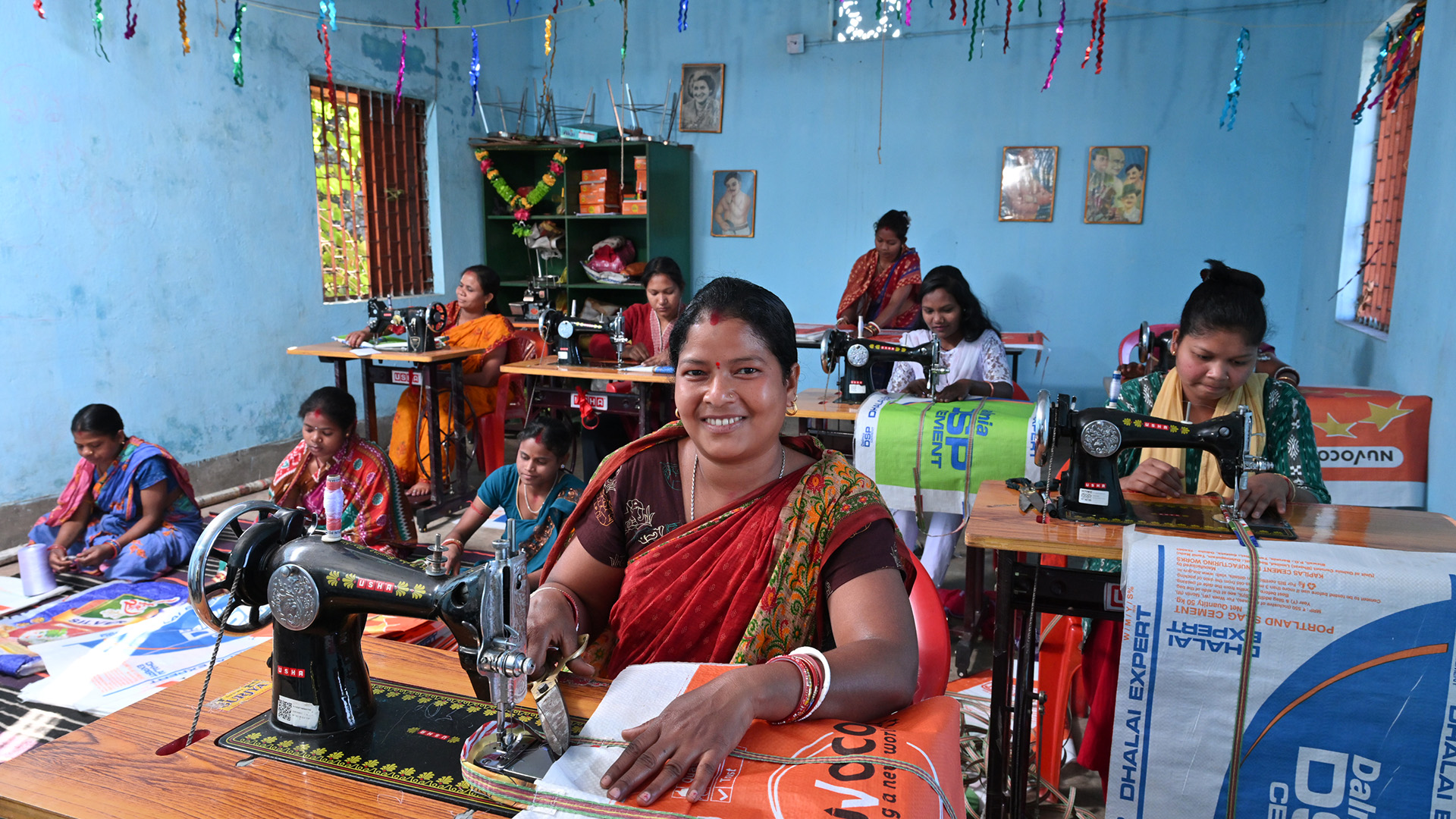
As Mr Roy puts it, this is “one of the most complex institution-building exercises in the social sector.” TSF brings together last-mile implementation, policy advocacy, and capital convergence on one platform, setting it apart from traditional CSR models that typically focus only on funding projects.
“Being involved in the nitty-gritty of last-mile implementation is where the real intelligence happens,” says Mr Roy. TSF works across the full implementation cycle in multiple areas — from maternal health to livelihoods and governance — often in partnership with governments, donors and other Tata Group companies. The Foundation has 20+ unique programmes (including MANSI+, Disha, Sabal, Samvaad, gender and community enterprises, skill development, water conservation, grassroot sports, species conservation, among others), and is present in 8 states (Jharkhand, Odisha, West Bengal, Maharashtra, Uttar Pradesh, Madhya Pradesh, Karnataka, and Punjab).
The success of TSF’s on-ground work has attracted considerable external funding. While 90% (Rs 2,725cr) of TSF’s expenditure has been funded by Tata Steel’s CSR investments since 2021, the remaining Rs 275cr has been contributed by international donors and philanthropic partners. “A significant share of the resources we deploy has been raised externally because large funders are coming back to us and saying — we trust you, please do more work with us,” says Mr Roy.
#2 Geography as a strategic principle
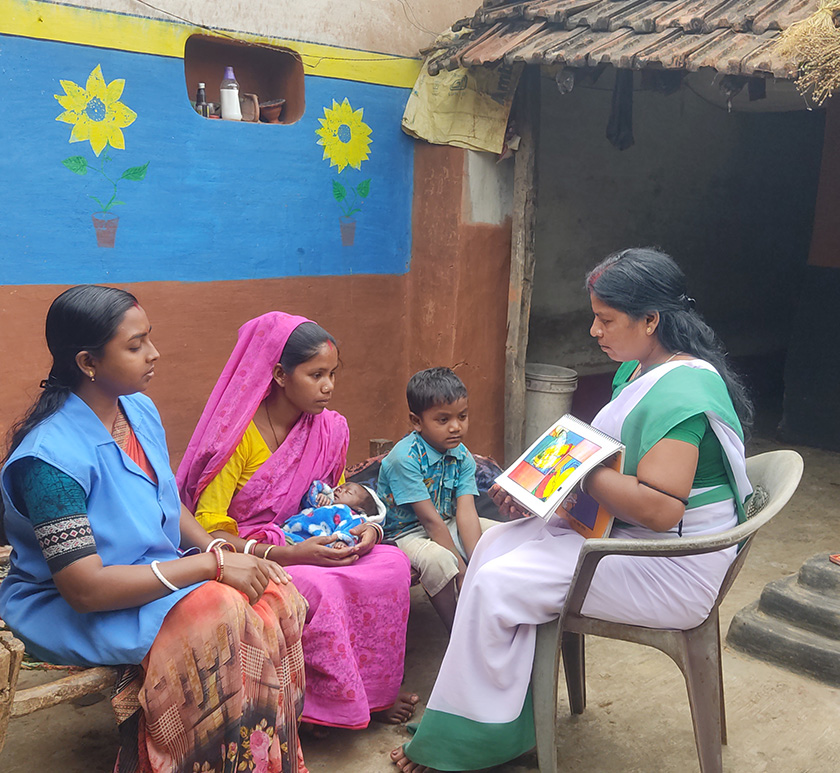
In Jharkhand’s Nimdih block, Shantimai Mardi, a Sahiyya Didi, fires up her e-scooter in the early hours of a spring morning. She rushes towards a village 30km away to administer urgent medical care to a mother-to-be. Equipped with her trusty scooty, provided through the Maternal and Newborn Survival Initiative (MANSI) programme, Ms Mardi knows she can get there in time. “With this, we are able to meet more people in a day and ensure timely intervention,” she says.
MANSI’s impact can be attributed, to an extent, to the deliberate focus on deep geographic saturation, unlike many programmes that scatter resources thinly across multiple regions. “We look at saturation as an activity, not an outcome,” explains Mr Roy. “The goal is to saturate the panchayat/village so entire districts and corridors experience systemic change.” For example, MANSI, which tracks high-risk pregnancies and infants, has focused on training Sahiyyas and strengthening local health systems in East Singhbhum, West Singhbhum, Seraikela Kharsawan and Gumla.
Simultaneously, TSF has also learnt to redefine ‘geography’. “Masti Ki Pathshala taught us that if you want to work on child labour in an urban context, then geography has to be based on the movement or migration of potential beneficiaries,” says Mr Roy. The residential bridge course, delivered in partnership with the Indian Railways, is designed for the all-round development of street children and child labourers at railway stations and in nearby slums, helping make entire rail corridors child-labour free.
#3 Identity and confidence as drivers of development
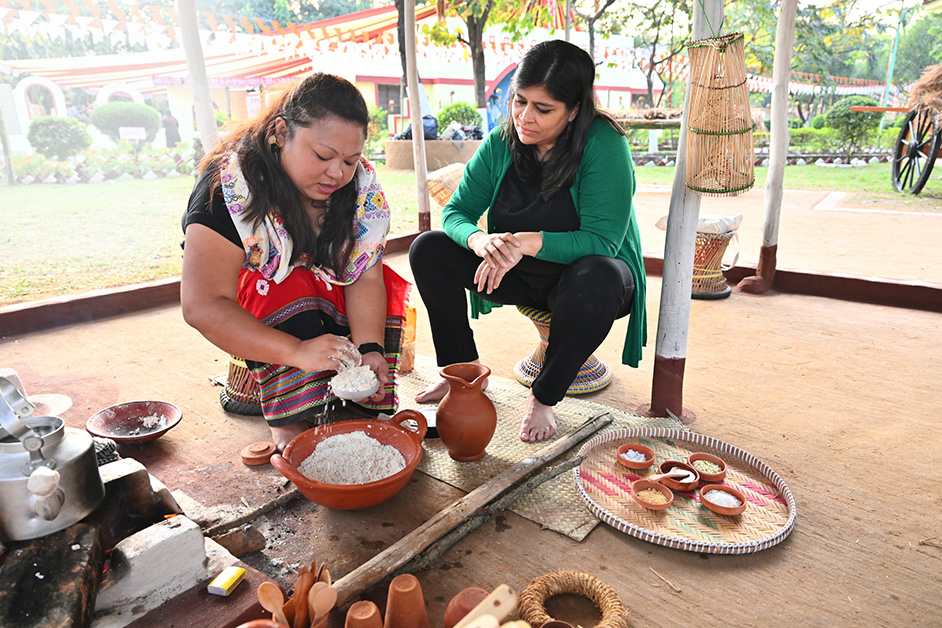
When Neelam Usha Minj, of Jharkhand’s Asur tribe, first engaged with Samvaad — TSF’s national platform to celebrate tribal culture — she did not know where it might lead. She has since attended a 10-day Tribal Cuisine Workshop at the Institute of Hotel Management, Aurangabad, gaining training in food safety and sustainable practices, bridging traditional knowledge with professional skills.
Today, Ms Minj focuses on preserving indigenous ingredients and reviving chemical-free food traditions while working to establish a cloud kitchen rooted in her tribal culinary heritage.
Ms Minj’s story is an example of what can be achieved when development efforts prioritise identity, as Samvaad has done consistently, thus earning the trust of local communities. “Exclusion is not always material,” says Mr Roy. “Sometimes, it is intangible; like people believing that certain opportunities are simply not meant for them.” He recalls hearing, ‘I’m from this community — we can’t do this.’ “When someone has written off their entire life like that, money or training alone cannot solve the problem.”
Beyond Samvaad, TSF runs programmes such as Sabal, which supports persons with disabilities, and Disha, which enables women’s leadership in local governance — both aiming to rebuild identity and agency.
#4 Embedding societal perspectives into business
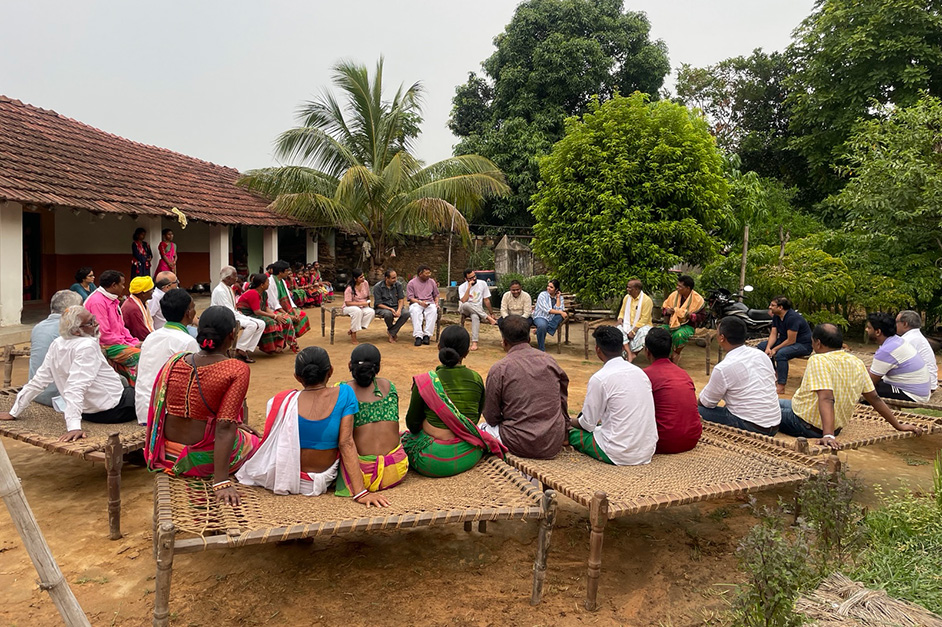
The fourth pillar of TSF’s strategy is to shift how corporations see communities: not as beneficiaries, but as key stakeholders. As Mr Roy explains, “Businesses must understand how communities experience them. Affirmative action and social engagement should not be seen as compliance — they expand legitimacy and markets.”
TSF engages in several collaborations with academic institutions to co-design courses, immersive learning programmes, and community engagement initiatives. A key component is Unurum, a social immersion programme that provides students with first-hand exposure to grassroots development work.
TSF professionals also participate in the co-creation and co-delivery of these knowledge-based programmes on social impact, public policy, management, and strategy, among others. The goal is to bridge the gap between boardroom decisions and ground realities.
#5 Convergence with and strengthening public systems
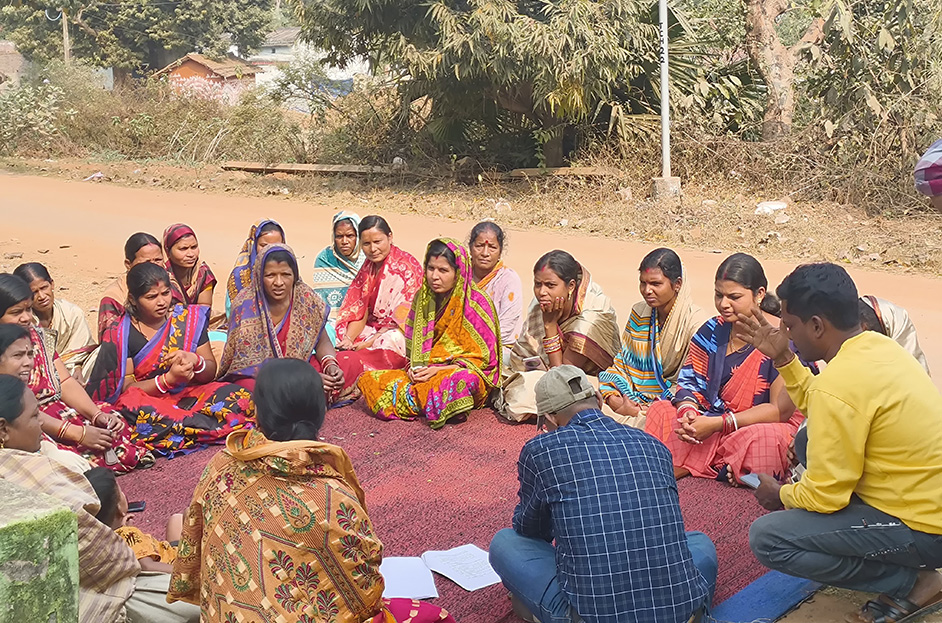
One of TSF’s most important learnings has been the need to strengthen systems that already exist. “Development cannot happen in isolation,” says Mr Roy. “The real challenge is making unheralded public systems work better for people they are meant to serve.”
This philosophy underpins its Grassroots Governance and Decentralised Planning programme. TSF has partnered with local administrations, panchayats and community groups across 25 blocks in 11 districts, to connect citizens with welfare schemes, strengthen village-level planning processes, and build local leadership.
In Odisha’s Keonjhar district, the Padmapur Zone initiative has brought local farmers, government departments, and community institutions together to tackle declining agricultural productivity caused by poor irrigation. The result? The development of 11 farm ponds that turned barren land productive. It culminated in the formation of the Pandit Raghunath Murmu Water Users Group, a collective of farmers for managing water resources, maintaining the ponds and coordinating agricultural practices.
“Ultimately, development must be owned by communities and supported by institutions that will remain long after any programme ends,” says Mr Roy. “Our role is to help build those connections so that the system works for everyone.”
#6 Ecology as a social challenge
Environmental challenges are often treated as purely scientific problems. TSF takes a different view: they are equally social in nature and can only be solved with communities at the centre. “Climate and ecological work cannot only be market-driven,” says Mr Roy. “The last mile is social. It requires deep engagement with communities who live closest to these ecosystems.”
Across eastern India — where forests, agriculture and livelihoods are deeply intertwined — ecological resilience is inseparable from community well-being. So, TSF focuses on building local stewardship of natural resources, rather than imposing external solutions.
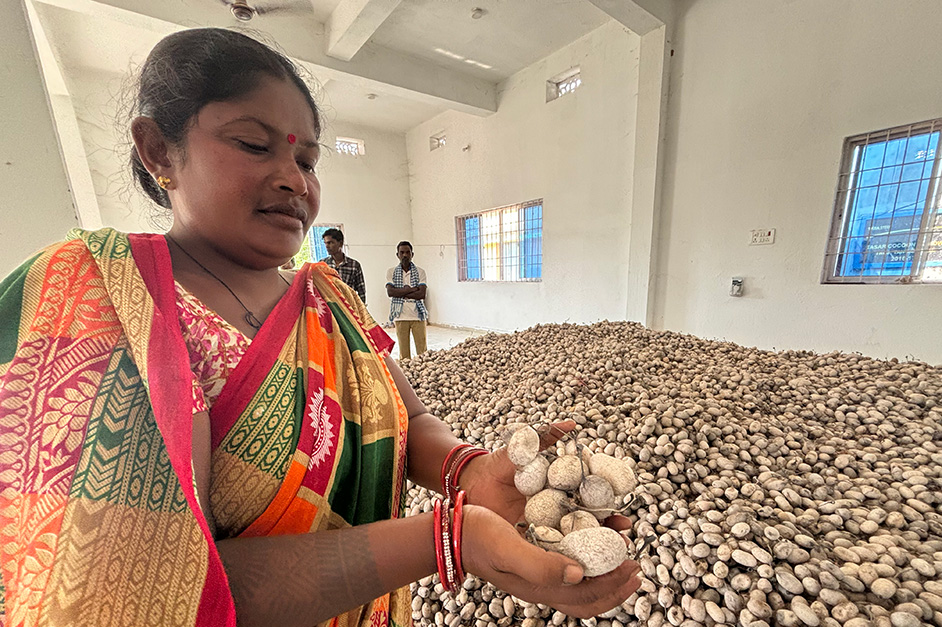
In Odisha’s Sukinda, TSF’s Sukinda Eco-race Conservation Project is working with local farmers to protect the indigenous tussar silkworm — once central to the tribal economy, but declining due to industrialisation and climate change. The project aims to revive the silkworm and restore sericulture as a sustainable livelihood.
The project is nurturing Arjun and Asan trees, the species’ habitat, introducing high-quality silkworm seed banks, and promoting scientific rearing practices in the Tussar Corridor, a biodiversity-rich area between Harichandanpur and Mangalpur. The transformation is unmistakable: barren land is now lush with life and the promise of a dignified livelihood, along with renewed pride in the community’s ecological heritage.
As TSF steps into its second decade, it faces a new challenge: responding to the rising aspirations of a younger generation, one acutely aware of global ecological crises, social inequality, and economic uncertainty. Their impatience for change can at times clash with the slow, iterative nature of development work. Mr Roy believes the answer lies in building stronger systems: “Our role is to create structures where the next generation can act effectively. Development is not about quick wins; it is about creating durable pathways for change.”
Those pathways are already taking shape. From maternal health innovations to women-led enterprises and ecological restoration, TSF’s programmes illustrate how long‑term commitment can drive lasting transformation. And in the villages where these initiatives have taken root, the future feels a little less uncertain.
— Anuradha Anupkumar