September 2026 | 1552 words | 6-minute read


Sindhe Siva from Nimmalakunta, Andhra Pradesh, is a seventh-generation Tholu Bommalata artist, crafting the colourful leather puppets used in this traditional form of shadow puppetry.
Mentored by his father — himself a state awardee — Mr Siva mastered the painstaking craft, with each puppet taking 30 to 40 days to create, even as the centuries-old art form faces an uncertain future. Like many traditional storytelling art forms, it is being displaced by films. Determined not to let the craft perish, Mr Siva and his cluster of 15 artisans continued producing inherited designs, though limited scope for innovation constrained their growth.
The turning point came when Mr Siva joined Titan Company’s Tarasha Design Mentorship programme, which supports traditional artisans across India. The exposure inspired him to explore new forms, designs, and nature-inspired motifs, developing a contemporary design language that appealed to modern audiences. Today, he sells through his website, participates in exhibitions across the country, and is steadily building his customer base.
Mr Siva’s story reflects a broader effort by Tata companies to support artisan communities. From preserving declining crafts to creating market access and entrepreneurial opportunities, companies such as Tata Steel, Tata Power, Indian Hotels Company Ltd (IHCL), Tata Chemicals, Tata Communications and Titan Company are building sustainable livelihoods by bridging the gap between crafts and commerce.
Tapping into indigenous talent
The Government of India estimates the country is home to 64.66 lakh handloom and handicraft artisans, with clusters in Uttar Pradesh, Rajasthan, Assam, Odisha, West Bengal, and Tamil Nadu. Many face economic challenges due to fragmented markets, dependence on intermediaries and limited design support.
Project Tarasha helps artisans strengthen their skills and become successful entrepreneurs or ‘craftpreneurs’, emphasising enterprise development as much as craftsmanship. Launched in 2020 during the pandemic, it was designed for artisans who had suddenly lost access to markets. “It was not merely relief intervention, but a long-term solution to help artisan enterprises become market-ready and future-facing,” says Ritika Gandhi, Vertical Lead, Indian Heritage Arts and Crafts Vertical, CSR, Titan Company.
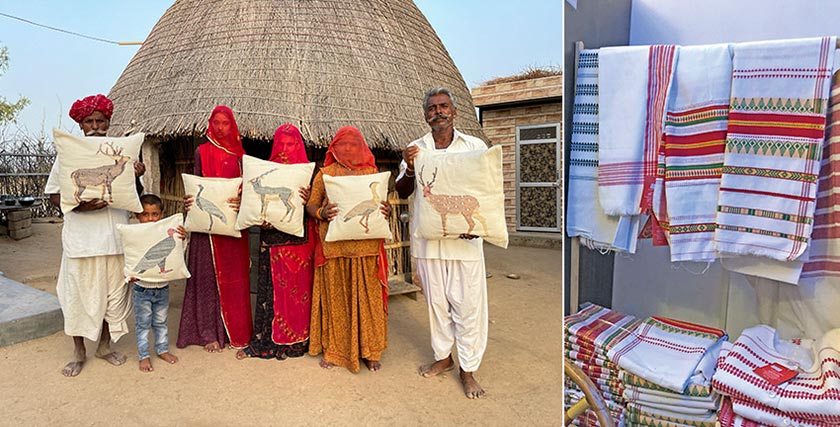
Ms Gandhi recalls how artisans had limited digital literacy, were unaccustomed to using smartphones for business, and were sceptical of online tools. Tarasha addressed these through digital skills and business development courses, regional language-friendly workshops, peer learning, and sustained mentorship.
A similar story underpins the Okhai Centre for Empowerment, which was established in the 1990s after a severe drought in Okhamandal, Gujarat, to support rural and semi-urban women artisans. “But beyond the drought, there were deeper structural challenges,” says Manorath Dhillon, Chief Executive Officer and Creative Director, Okhai. “Their craft was locally rooted but commercially invisible, and sold, if at all, through occasional exhibitions, leaving them dependent on unreliable, one-off sales. Social mobility restrictions further prevented them from marketing their own work.”
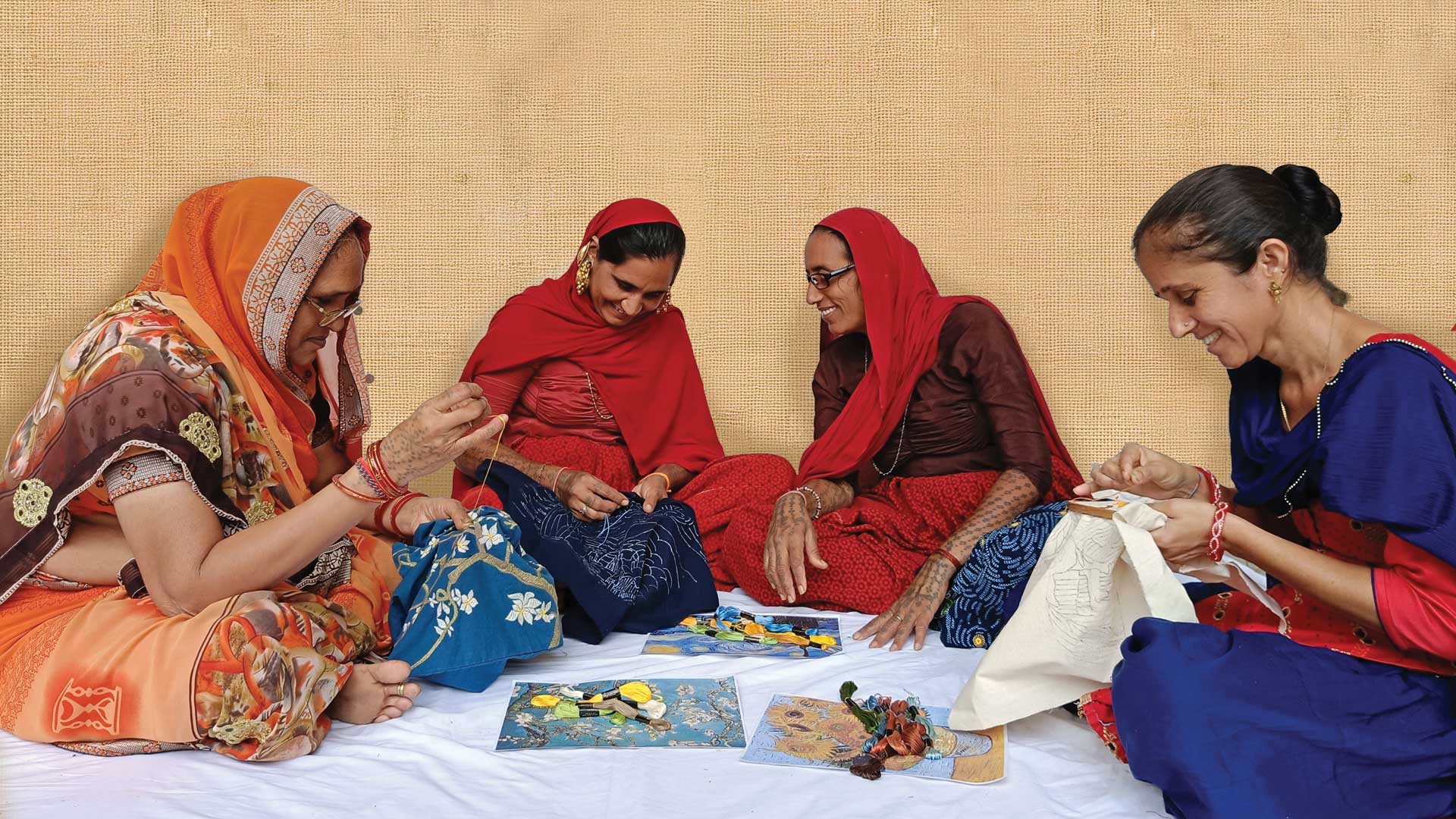
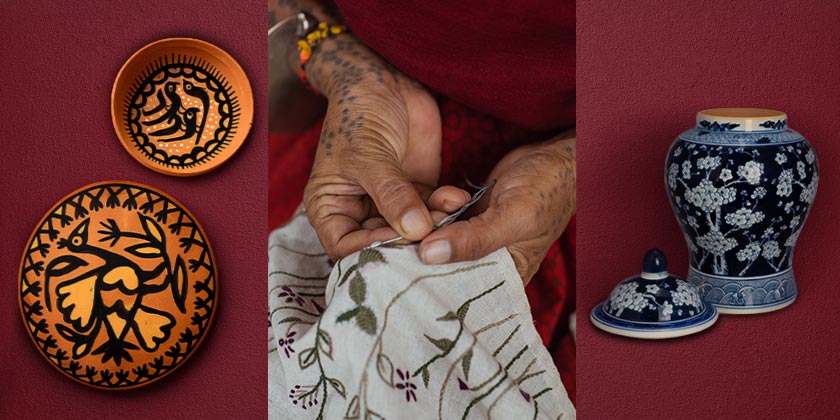
Ramiben Nangesh, an appliqué artisan from Arambhada village, helped women in her community turn traditional embroidery into an income-generating activity, with support from the Tata Chemicals Society for Rural Development.
Okhai focused on building entrepreneurial capability, which meant reducing dependence on exhibitions and expanding into formal retail, gifting channels and digital marketplaces. Today, ~90% of its sales come through online channels. Artisans are trained in digital cataloguing, inventory management and online sales, while Okhai’s five lakh plus social media followers and one crore reach has helped the brand expand its market.
Women as economic agents
Okhai is one of many Tata Group artisan livelihood initiatives that place women at the centre — unsurprising, given that women account for 71% of handloom weavers and 64% of all Indian artisans.
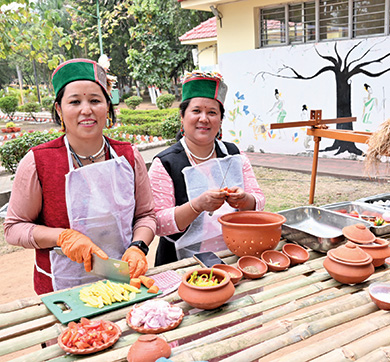
Another initiative is Johar Haat, which spotlights rural and tribal women artisans. Launched by Tata Steel in 2023 as part of the Samvaad ecosystem, it is housed in a cluster of eight shops, providing artisans direct access to consumers and an opportunity to showcase and sell their products while celebrating their heritage. “Cultural identity is a strong economic asset,” says Smita Verma, Lead – Gender and Community Enterprise, Tata Steel Foundation. “Positioning tribal art, crafts, cuisine, textiles and indigenous knowledge as unique cultural offerings has helped create demand while preserving heritage.”
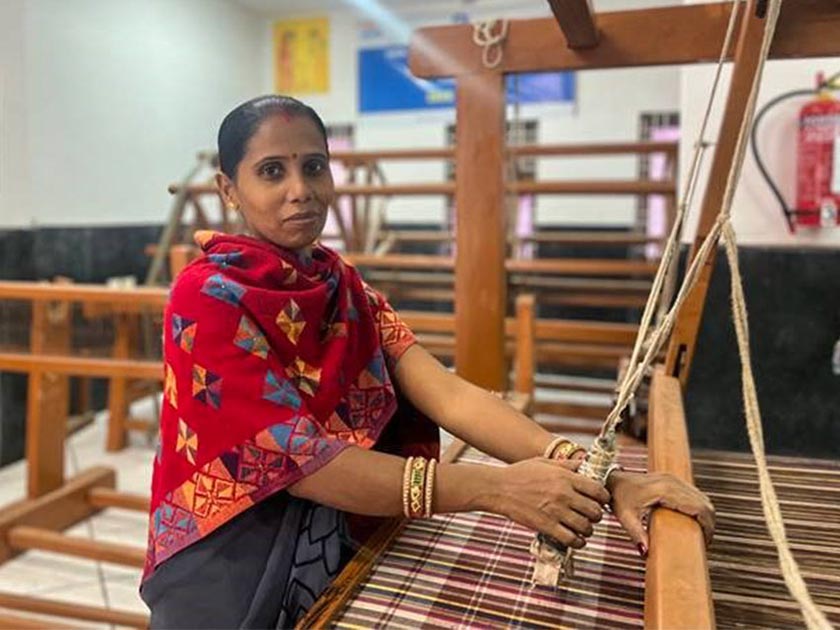
Johar Haat has also amplified women’s voices. Jasmine Guria of the Ho tribe from East Singhbhum, Jharkhand, founded Heartmade, a brand specialising in bags and accessories. She was invited to speak at the Tata AI Sakhi Immersion Programme at the India AI Impact Summit in New Dehi this year. “Johar Haat gave us a new perspective on what women can achieve. It has earned me respect and improved my confidence and social skills. Being able to address an audience of 1,500 women from eight states across India is proof,” she says.
Also putting women front and centre is Tata Communications’ Project Udaya, which began as a pilot project in Pune to bring women from SC/ST communities, self-help groups, and persons with disabilities into the economic mainstream through enterprise creation. The pilot’s success led to an official launch in 2019. Trainers guide women in developing innovative, cost-effective variations of handmade products.
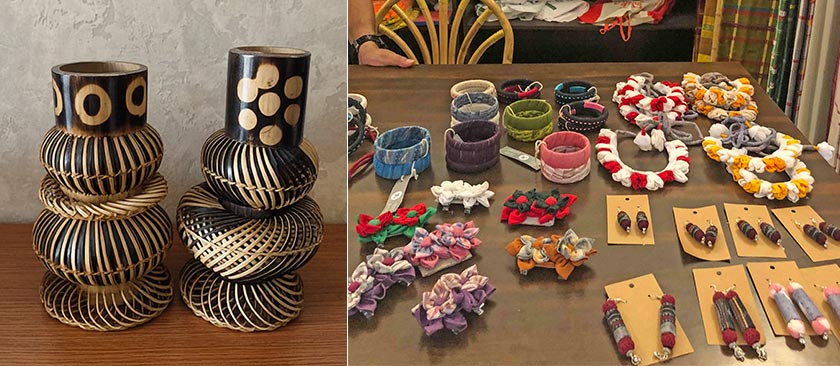
The transition from artisan to entrepreneur can be challenging. “Entrepreneurship is a mindset; one needs to understand the market and the product,” says Aman Gupta, Chief Human Resources Officer, Executive Vice President – CSR, Environmental & Occupational Health and Safety and Sustainability, and Corporate Services (India), Tata Communications. “Changing the mindset of artisans takes time and continuous handholding.” To enable this shift, Tata Communications co-developed a programme with the Entrepreneurship Development Institute of India. So far, the project has been implemented across Pune, Raigad, and Ratnagiri in Maharashtra and has enabled artisans to launch ventures in food and beverages, chemical and herbal products, edible oils, and manufacturing, among others.
Mastering product and process
Recognising that sustainable livelihoods require strengthening the entire value chain and not just skill development, Tata Power’s Anokha Dhaaga programme is helping artisans and micro-entrepreneurs move beyond production to become creators, decision-makers and business owners.
“India’s traditional crafts possess immense cultural and economic potential,” says Himal Tewari, Chief Human Resources Officer and Chief – CSR and Sustainability, Tata Power. “Realising that potential requires moving beyond preserving skills to creating opportunities for artisans to participate more meaningfully across the value chain. At Tata Power, our approach focuses on strengthening capabilities across design, sourcing, production, branding and market access, enabling artisans to build sustainable enterprises, command greater value for their craftsmanship and preserve our rich heritage for generations to come.”
Launched nearly a decade ago as a garment manufacturing initiative, Anokha Dhaaga has evolved into Tata Power’s flagship micro-entrepreneurship programme. Today, the initiative nurtures regional art forms like Pattachitra, Warli, Dokra and tiger grass craft, through a combination of skill development, quality enhancement, design innovation and market linkages. Additionally, the initiative has introduced a Smart Circularity range, featuring upcycled and recycled products, while also co-developing fly ash-based products with IIM Madras, resulting in a jointly filed patent.
Craft in a luxury ecosystem
While many programmes help artisans access markets directly, IHCL’s Khazana introduces handcrafted products to a global audience through select Taj hotels and palaces.
Conceived to bring India’s finest craft, textile, jewellery and design traditions closer to discerning guests, its innovation lies in changing where and how a craft is experienced. “The environment in which the craft is presented is as important as the product itself,” says the company. “Within Taj hotels, products are experienced in a setting associated with trust, quality, and consistency. This plays a meaningful role in how guests perceive and value what is offered, allowing artisans to position their work with confidence.”
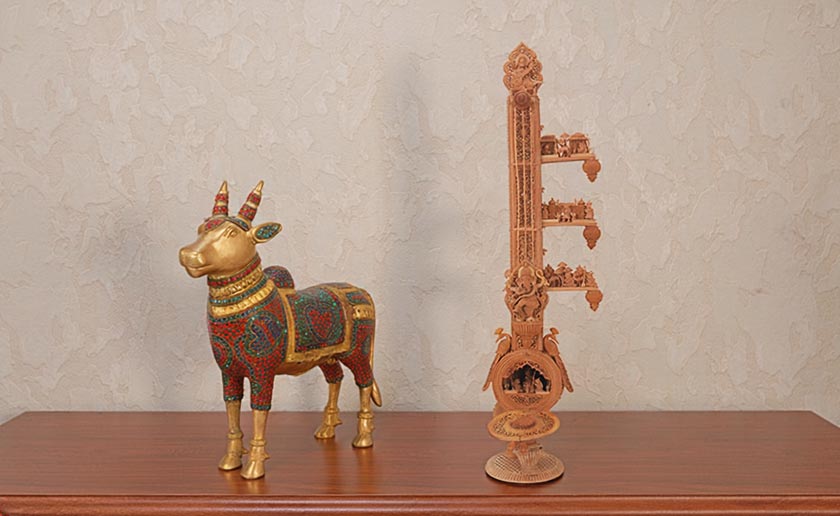
Artisans are also supported in adapting their work to align with contemporary lifestyles through lighter textiles, modern colour palettes, improved finishing, and travel-friendly packaging. Regional textiles are curated into sarees, stoles, scarves and resort wear, while local art and craft are developed into home décor and collectibles.
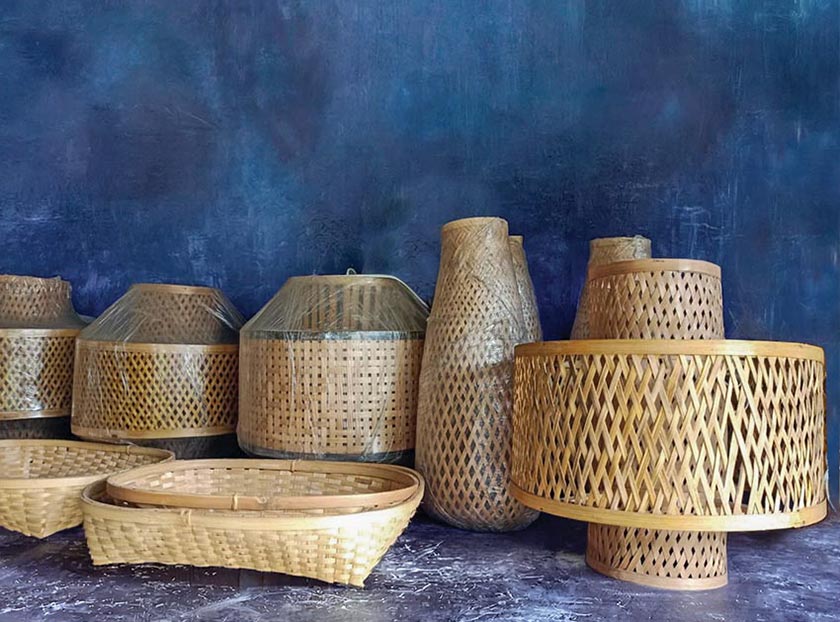
As these initiatives evolve, the focus is shifting towards sustainable growth. Okhai plans to expand its decentralised, home-based work model to bring more women into the fold. Project Udaya aims to establish dedicated retail outlets and an e-commerce platform. Khazana will deepen destination-led curation across Taj hotels and strengthen ties with local artisans. Project Tarasha is expanding designer-artisan collaborations, while Johar Haat is evolving into a broader tribal enterprise ecosystem. Anokha Dhaaga is driving long-term growth through greater access to organised retail, institutional buyers and new markets.
The future of craft lies not in preserving it behind glass, but in enabling it to evolve. By combining traditional skills with design innovation, digital tools, entrepreneurship and market access, these initiatives are ensuring that India’s traditions continue to thrive for generations to come.
Growing from strength to strength
Project Tarasha
- 100+ craftpreneurs supported
- Presence in 20 states
- 71% rise in income
- 60+ crafts represented
Okhai
- 30,000 artisans supported (60% of these are women)
- Presence in 20 states
- 40+ crafts from across the country
- 30,000+ orders dispatched annually
Khazana
- 50,000 artisans supported
- Presence in 14 states
- 25% rise in income for artisans
- ₹18cr revenue generated in FY26
Anokha Dhaaga
- 35,000 women artisans supported
- 15,000+ women upskilled
- Presence in 12 states
- ₹6.5cr revenue generated in FY26 YTD
Johar Haat
- 372 artisans supported
- Presence in 17 states, 2 union territories
- 25 SHGs in its ambit
- ₹1.10cr revenue generated since inception (2023)
Project Udaya
- 1,692 women and persons with disabilities supported
- 87 SHGs supported
- Presence in 3 districts, 25 blocks and 125+ villages in Maharashtra
- ₹10,581 average increase in monthly income per entrepreneur
- Anju Maskeri