December 2025 | 1621 words | 6-minute read


Aatithya, by Tata Steel Foundation's Samvaad
Tata Steel Foundation’s Aatithya initiative empowers tribal home chefs by transforming traditional tribal cuisine into economic and cultural opportunities. Over eight years, it has supported 440 chefs from 52 tribes across 25 Indian states. Partnering with Indian Hotels Company Ltd (IHCL) and hospitality institutes, Aatithya provides training in culinary skills, business, and marketing, helping chefs launch food businesses and access premium markets. Showcased at the annual Samvaad conclave, the initiative highlights nutritious, locally sourced dishes, challenges stereotypes, and fosters cultural pride. With 80% women participants, Aatithya drives grassroots change, entrepreneurship, and cultural preservation among India’s 10 crore tribal citizens.
Aatithya, by Tata Steel Foundation's Samvaad
Tata Steel Foundation’s Aatithya initiative is revolutionizing India’s tribal cuisine by transforming it into a source of economic empowerment and cultural preservation. Over eight years, Aatithya has supported 440 home chefs from 52 tribes across 25 states, forming a key part of the Foundation’s Samvaad conclave—a platform dedicated to tribal identity and sustainable economic ecosystems. Recognizing the rich yet marginalized culinary heritage of India’s 10 crore tribal citizens, Aatithya challenges stereotypes about tribal food and seeks to unlock its economic potential.
Launched in partnership with Indian Hotels Company Ltd (IHCL) in 2017, Aatithya began by inviting tribal home chefs to curate fine dining experiences and sell dishes at Samvaad, with guidance from IHCL’s Hotelier Development Program graduates on adapting traditional methods for commercial cooking. The program expanded to include professional training, workshops, and industry connections, enabling home chefs to start food businesses and participate in luxury dining pop-ups under the Taj brand. This has increased their earning power and pride in their culinary traditions, with many reconnecting with ancestral recipes.
Notably, 80% of empowered chefs are women, reflecting the Foundation’s commitment to gender equity and community-driven change. Success stories include entrepreneurs like Kummaram Arun Kumar, who scaled his mahua laddus business, and Sandhyavati Mardi, a grassroots leader and repeat Samvaad participant. Aatithya aims to build a nationwide network of home chefs, leveraging IHCL’s expertise to foster entrepreneurship and economic agency rooted in cultural pride among India’s tribal communities.
Aatithya, by Tata Steel Foundation's Samvaad
Tata Steel Foundation’s Aatithya initiative is a transformative project aimed at empowering India’s tribal communities by showcasing and commercializing their traditional cuisines. Over the past eight years, Aatithya has supported 440 home chefs from 52 tribes across 25 states, turning their culinary heritage into a means of economic opportunity and cultural preservation. The initiative is a key part of the Foundation’s Samvaad conclave, an annual gathering focused on tribal identity, dialogue, and entrepreneurship.
Aatithya began with the recognition that India’s 100 million tribal citizens possess rich culinary knowledge that remains largely invisible to mainstream consumers, often due to misconceptions about tribal food being non-nutritious or unappetizing. Sreya Ganguly, a mentor for the initiative, emphasizes that this oversight represents not only a cultural loss but also a missed economic opportunity. To address this, Aatithya, in partnership with Indian Hotels Company Ltd (IHCL), was launched at Samvaad in 2017, inviting 30 tribal home chefs to curate fine dining experiences and set up food counters, with all earnings going directly to the chefs.
Recognizing that many home chefs lacked experience in large-scale cooking and service, the Foundation collaborated with IHCL’s Hotelier Development Program (HDP) graduates, who trained the chefs in standardization, hygiene, and commercial cooking while preserving traditional methods. As the initiative gained popularity, more tribal chefs were identified and encouraged to participate, including individuals from various professions united by their passion for cooking. This exposure allowed tribal communities to promote their unique cuisines to wider markets, as articulated by participants like Rajendra Prasad Payam of the Koya people and Anil of the Swangla people.
The success of Aatithya led many home chefs to start their own food businesses, such as food carts and home-based ventures. To further support them, the Foundation, alongside IHCL and the Institute of Hotel Management, Aurangabad (IHM-A), developed a 15-day capacity-building program covering culinary techniques, food preservation, marketing, and industry standards. Annually, 15-20 chefs undergo this training, and workshops are held to connect them with industry professionals.
Aatithya’s partnership with IHCL has enabled tribal chefs to present their dishes in luxury dining settings, elevating their status and expanding their earning potential. Chefs began to see their everyday cooking as a source of pride and livelihood, reconnecting with their cultural roots and passing down culinary traditions.
The initiative has been particularly empowering for women, who make up 80% of the home chefs. The Foundation’s vision emphasizes women’s central role in driving change, equipping them with tools to improve their lives and communities. Examples like Kummaram Arun Kumar, who scaled his mahua laddus business, and Sandhyavati Mardi, a grassroots leader and entrepreneur, illustrate the program’s impact.
Ultimately, Aatithya aims to build a nationwide network of tribal home chefs, blending economic empowerment with cultural pride. Leveraging IHCL’s expertise and the Foundation’s community reach, the initiative offers tribal communities not just financial opportunity but economic agency rooted in heritage.


In the heart of India’s tribal belt, a transformative initiative is taking root. Tata Steel Foundation’s Aatithya is working to transform traditional tribal cuisine into a vehicle for economic opportunities and cultural preservation.
Over a period of eight years, Aatithya has empowered 440 home chefs from 52 different tribes across 25 Indian states. The initiative forms a cornerstone of the Foundation’s Samvaad conclave — a platform on tribal identity in India — and is focused on building sustainable economic ecosystems. Aatithya’s origins lie in a simple observation — India’s ~10 crore tribal citizens possess centuries of culinary knowledge that remains invisible to mainstream consumers. They have been marginalised and their cuisine dismissed as “not nutritious, not tasty and mostly non-vegetarian, which is far from the truth!” says Sreya Ganguly, Manager, People Team, Tata Steel Foundation, and mentor of Tribal Cuisine at Samvaad. This oversight is not just a cultural loss, but also a missed economic opportunity for tribal communities; one that the Foundation aims to address through Aatithya.
Heritage on a plate
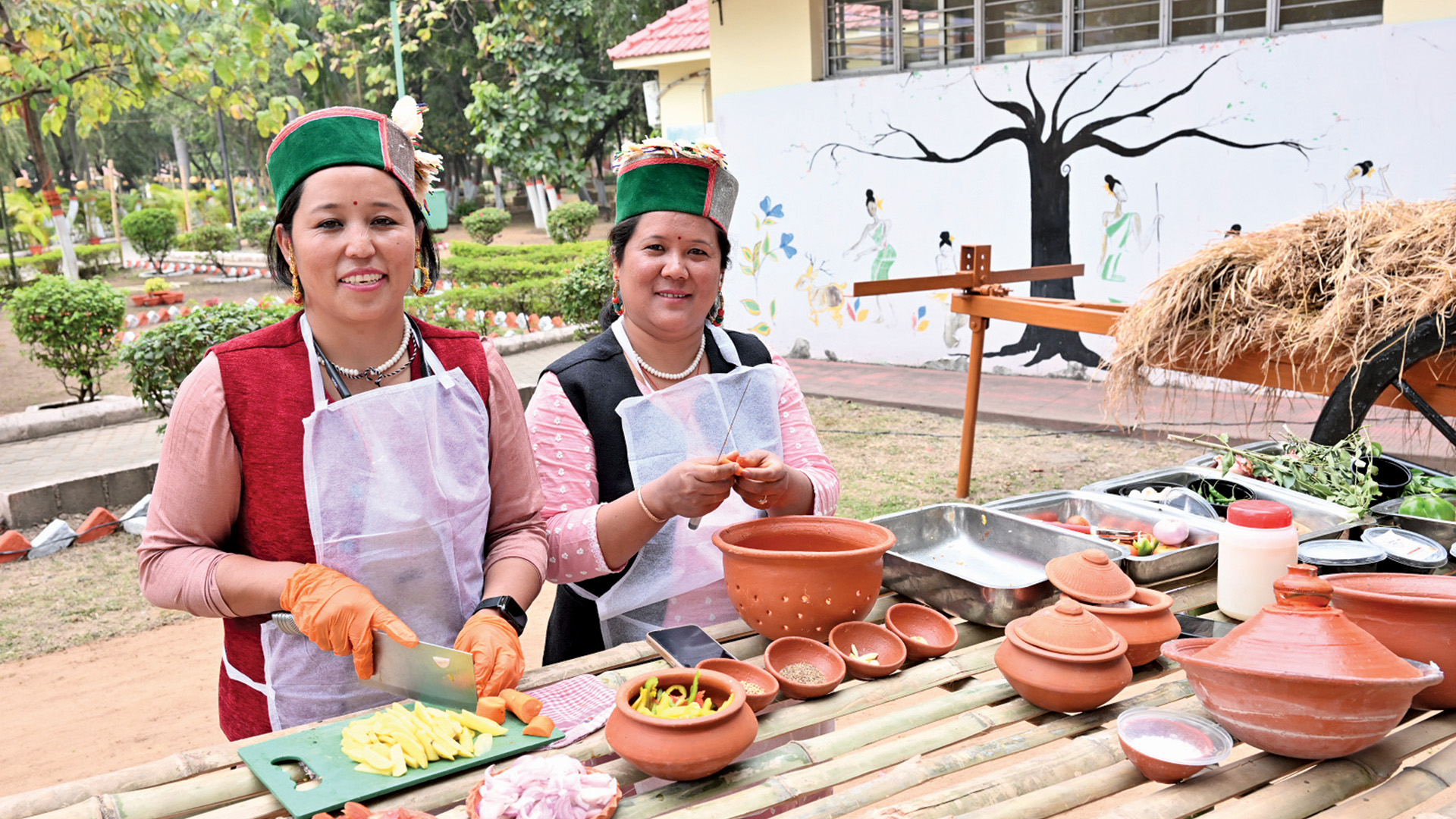
Launched in partnership with Indian Hotels Company Ltd (IHCL), Aatithya was first introduced in 2017 at the five-day annual Samvaad conclave, which celebrates indigenous culture, and fosters dialogue, knowledge sharing and entrepreneurship among tribal communities across India. “Tribal cuisine is rooted in traditional, nutritious cooking practices, using unprocessed, locally foraged or sourced ingredients — often grown in home gardens — which means there are also a lot of delicious vegetarian dishes,” says Ms Ganguly. “In 2017, we invited 30 tribal home chefs to curate fine dining experiences for 50 select attendees as well as set up food counters at a dedicated Aatithya section. We provided the ingredients and supplies, and the home chefs could take home all the earnings.”
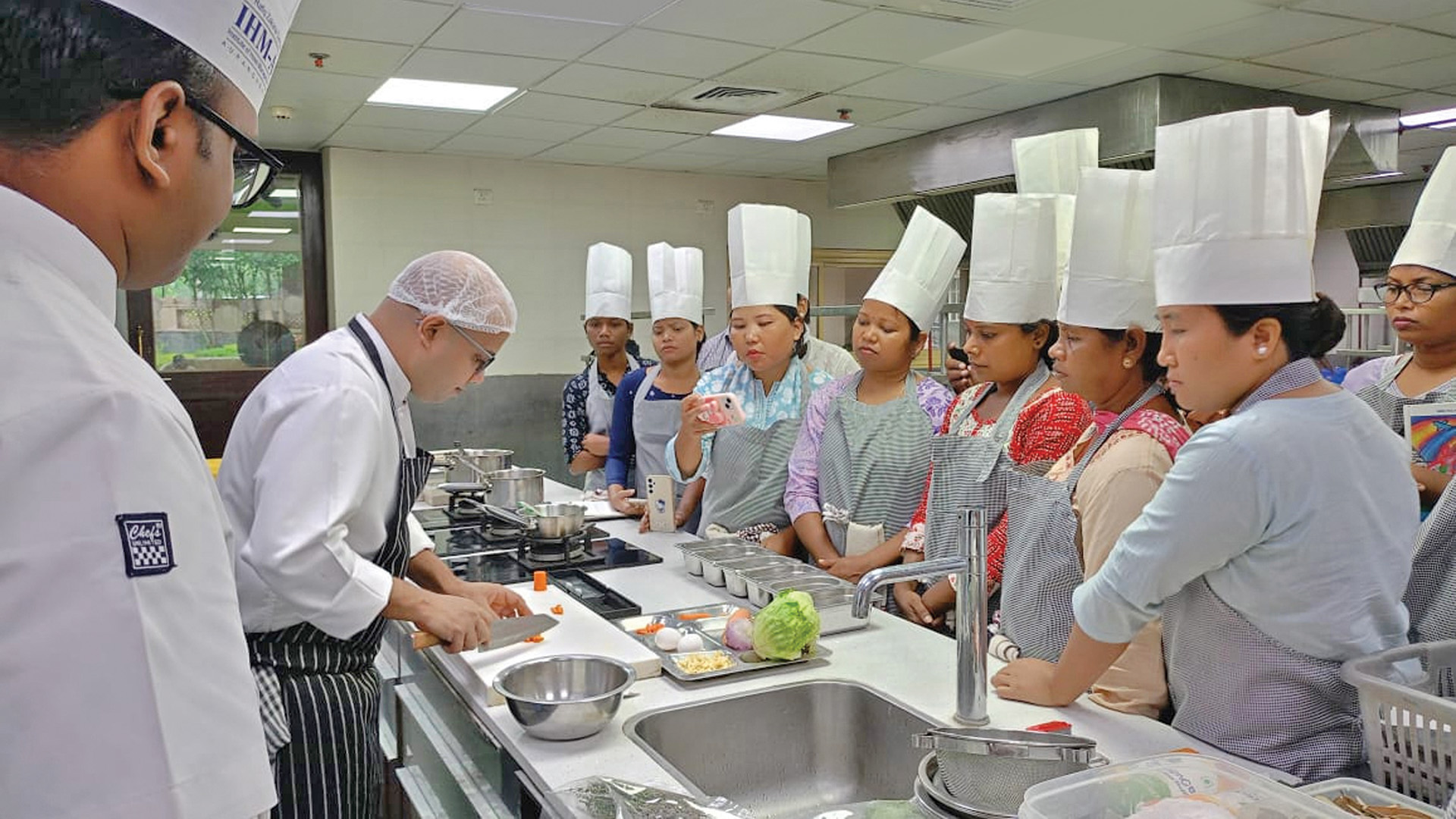
Realising that the home chefs were unfamiliar with large-scale cooking and service, the Tata Steel Foundation sought help from IHCL. “We engaged graduates from IHCL’s Hotelier Development Program (HDP) to guide the home chefs on how to adapt their traditional cooking methods for bulk cooking. The training focused on standardisation, consistency, hygiene, and service, while still using their traditional cooking utensils.”
The delicacies showcased were a huge hit with the visitors and HDP graduates. Realising that these home chefs were custodians of irreplaceable cultural knowledge, the Foundation made tribal cuisine and Aatithya a core part of the Samvaad ecosystem and set out to expand the initiative. “The HDP graduates started exploring different regions, visiting forests and tribal areas, seeking individuals who were well known locally for their dishes,” says Ms Ganguly. “They got to know these people, their cooking styles, the stories associated with the dishes, why specific ingredients are used, etc. Sometimes, they found people who were teachers, shopkeepers, advocates, etc, who had other jobs and were passionate about cooking. We engaged with them and encouraged them to participate in Samvaad.”
As word spread, more people started coming forward and showed interest in the programme. “So many foods are available in the market, but our tribal community food is not available,” said Rajendra Prasad Payam of the Koya people of Telangana, while attending Samvaad 2023. “So, I am here promoting our food to the outside market through Aatithya.” Anil of the Swangla people of Himachal Pradesh chimes in, “Events like this are a big deal for tribes. There are very few platforms like this that promote tribes.”
From hearth to market
After their visits to Samvaad, many home chefs started small food carts/trucks or a home-based food business. Noticing this trend, the Foundation stepped in to help. It partnered with IHCL and the Institute of Hotel Management, Aurangabad (IHM-A) to help home chefs gain professional training through a 15-day capacity building programme. The curriculum resembles that of any well-known hospitality programme, covering a range of topics, including culinary techniques, food preservation, food industry standards, marketing strategies, and cooking for commercial production — all critical learnings for commercial success.
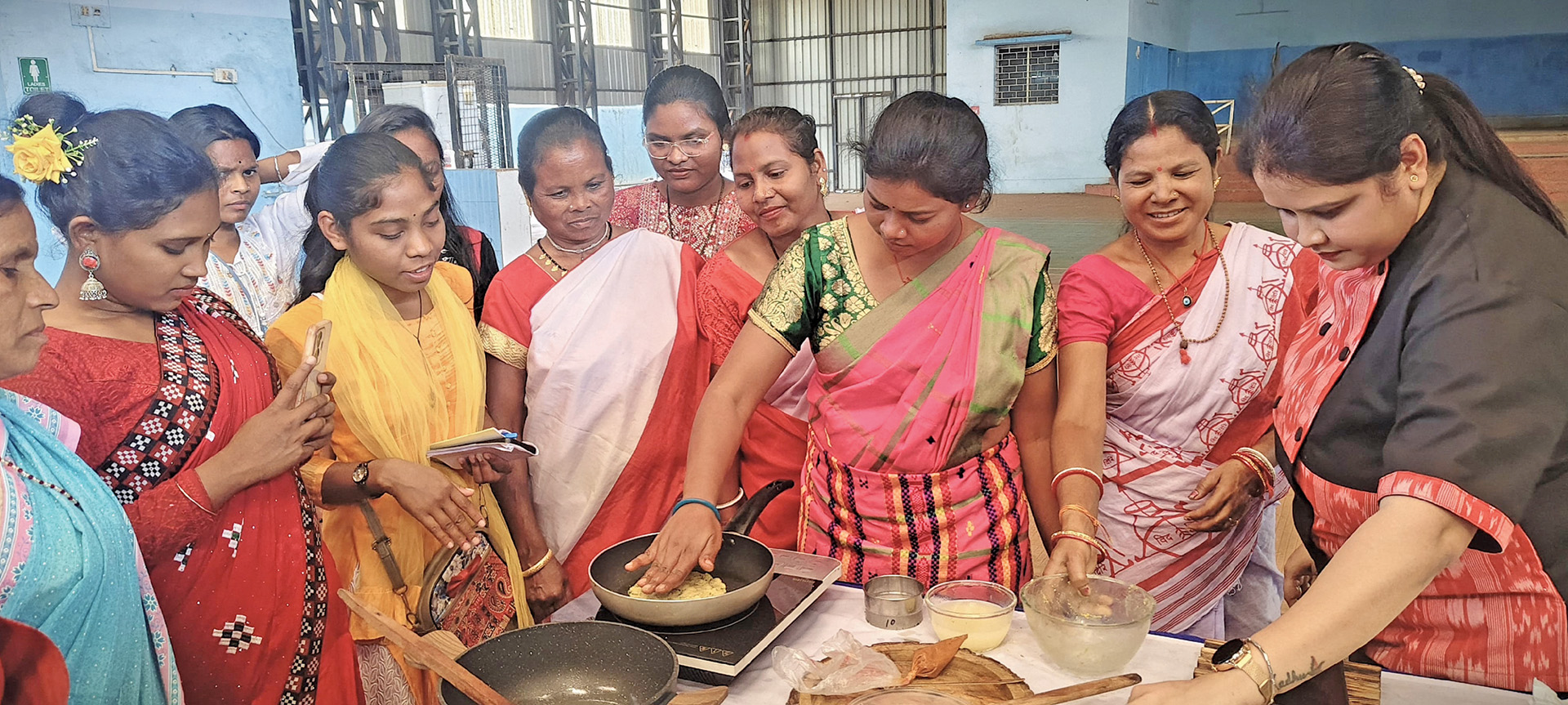
“Every year we identify 15 to 20 home chefs for this boot camp and help them become professional chefs,” says Ms Ganguly. The initiative has been strengthened through several workshops, including a recent 10-day session at IHM-A, with 19 home chefs from Jharkhand, Maharashtra, Chhattisgarh, Odisha, and Madhya Pradesh. “We also connect home chefs with the right people in the industry so that their businesses can flourish,” she adds.
Fuelling change
The partnership with IHCL is a crucial aspect of Aatithya. It gives home chefs the opportunity to collaborate with culinary experts and bring their dishes to the world. As the operator of India’s largest hotel chains, IHCL provides access to premium market segments that would typically be out of their reach. Tribal cuisine pop-ups are now regularly held in luxury dining establishments under the Taj brand — a dramatic elevation for dishes that were earlier confined to village kitchens.
For the home chefs, Aatithya has brought about a transformation in earning power as well as in perspective. “They discovered that their meal preparations, which they considered everyday ordinary tasks, could be a source of livelihood,” says Ms Ganguly. “They started taking pride in cooking their cuisine. Food that they earlier considered ‘ordinary’ — but was often passed down through generations — could now be something they could turn into a business. Many of them are reaching out to their mothers and grandmothers to learn the histories and stories behind their recipes and traditions. In this way, it is also helping them to reconnect with their culture.”
Flavours of empowerment
Through Aatithya, many home chefs are now blending cultural pride with economic opportunity. Take, for instance, Kummaram Arun Kumar, 28, from the Gond tribe in Utnoor, Telangana, who sells mahua laddus, a tribal superfood made from dried mahua flowers, jaggery, and dry fruits. Based on a recipe passed down by his mother Kummaram Bhagu Bai, the laddus are rich in iron, calcium, and dietary fibre, a great gluten-free source of energy, especially for pregnant women and women suffering from anaemia. Yet, despite their nutritional value, he initially struggled to scale his business due to limited awareness, financial constraints and lack of direct access to major food distribution networks.
That changed in 2023, when he first attended Samvaad and sold the mahua laddus. They quickly became a crowd favourite, especially among health-conscious visitors and hospitality professionals, who appreciated their unique flavour and nutritional value. Since then, he has taken his laddus across the country, and set up stalls at exhibitions and festivals, steadily building a growing fan base. A standout moment came at the 2024 Tata Affirmative Action Programme Convention, where he was one of eight tribal home chefs chosen to exclusively cater to delegates at the President, Mumbai - IHCL SeleQtions. He is currently working on improving packaging to increase his product’s shelf life. Future plans include forging ties with local health departments and online organic food platforms to broaden his reach.
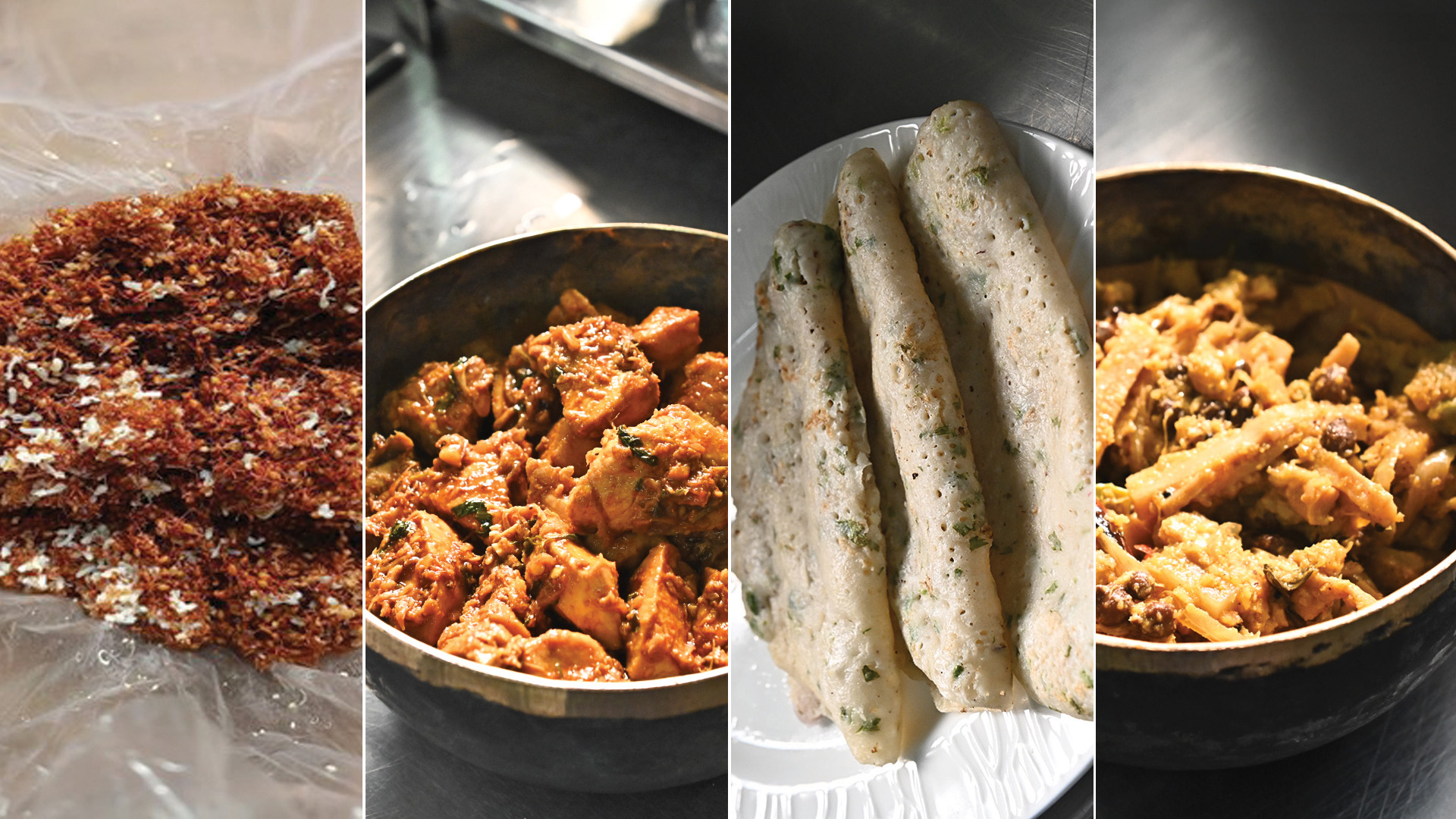
Tribal delicacies
Hau
The Gond and Maria tribes are known for their immunity-boosting red ant chutney.
Duru Kanda Uttu
This is a hearty yam curry seasoned with spices and herbs, known for its earthy flavour and smooth texture — a comforting tribal staple.
Chilka roti
A soft flatbread made from fermented rice batter, offering a light and wholesome flavour.
Healta Uttu
Made with freshly harvested bamboo shoots, the curry is know for tangy flavour and rich aroma, reflecting forest-based food traditions.
From her kitchen
Of the 440 home chefs empowered so far, 80% are women, and that isn’t surprising, given that the Foundation’s vision is to ‘create an enlightened, equitable society in which every individual realises her potential with dignity’. “People often ask us about the ‘her’ in that statement,” says Ms Ganguly. “We tell them that it isn’t a grammatical error; it has been placed there purposefully, because women are the ones who drive change. Once they absorb knowledge, they put it into practice and give back, either to their families or the wider community. It’s incredible how they take ownership and accountability, and we have seen that in Aatithya. Once they are equipped with the right tools, they are determined to improve their lives, their families’ lives. That is how Aatithya is also driving change in communities from within.”
One such example is Sandhyavati Mardi from the Santhali community in eastern India. A grassroots leader and entrepreneur, she has won local ward elections five years in a row. On most days, she can be found running her chai pakoda shop, but come November, she makes her way to Samvaad without fail. Ask Ms Mardi what she’s most proud of and she’s quick to say it’s her family — and the fact that she ensured all four of her children are educated and pursuing their careers.
Entrepreneurial power
Through Aatithya, the Foundation aims to build a nationwide network of home chefs, empowering them with livelihood opportunities and entrepreneurial skills, while introducing wider audiences to the unique flavours of tribal cuisine. The potential for expanding this programme is immense: India is home to over 700 scheduled tribes in India, representing ~10 crore people, according to the 2011 census. By leveraging IHCL’s hospitality expertise and the Foundation’s large community network, the programme has created a strong framework for entrepreneurship. But for tribal communities, Aatithya offers something more empowering than financial opportunity — economic agency rooted in cultural pride.
— Kermin Bhot