February 2026 | 1564 words | 6-minute read


Driving a Global Push
Tata AutoComp Systems, established in 1995, has transformed from a domestic supplier to India’s second-largest auto-component manufacturer with global reach. Through disciplined international acquisitions and leveraging India’s cost competitiveness, it aims to become a major player in Europe’s automotive supply chain, targeting ₹90,000 crore ($10 bn) revenue by 2031. Tata AutoComp operates 66 plants across four continents, offering integrated systems, engineering services, and EV components. Its growth strategy combines acquisitions, organic capability-building, and strong R&D. Collaborations within the Tata ecosystem and a focus on sustainability and ESG support its ambitions to compete as a global Tier 1 supplier.
Driving a Global Push
Tata AutoComp Systems is executing an ambitious global expansion, leveraging international acquisitions and India’s cost advantages to strengthen its position in Europe’s automotive supply chain, traditionally dominated by Western and Japanese firms. Founded in 1995 to support Tata Motors, the company has transformed from a domestic supplier into India’s second-largest auto-component manufacturer, operating across India, North America, Latin America, Europe, and China. Tata AutoComp produces a wide array of components and integrated mobility solutions, and its revenue has surged from ₹1,374 crore in FY16 to ₹13,095 crore ($1.2 billion) in FY25, with international operations playing a growing role. Its aggressive acquisition strategy has secured advanced technologies and direct access to leading European OEMs like Volvo, BMW, Bentley, and JLR, notably through the purchase of IAC Group assets in Europe. The company maintains 21 business units (11 JVs) and 66 manufacturing plants globally, delivering integrated systems in line with strict quality standards. Alongside acquisitions, Tata AutoComp has built organic capabilities, with 55 plants in India and a strong focus on R&D, quality, and patents in EV and electronics. The shift from supplying components to offering integrated systems positions Tata AutoComp to meet evolving industry demands for electrification and digitalization. Collaboration within the Tata ecosystem, especially with Tata Motors and JLR, enhances its technological edge and sustainability focus, aligned with Tata Group’s net-zero targets. Its future strategy centers on targeted acquisitions, increased R&D in EV and autonomous tech, and expansion in Mexico and China, aiming to become a global Tier 1 supplier.
Driving a Global Push
Tata AutoComp Systems is executing one of India’s most ambitious manufacturing expansion strategies, aiming to become a major global player in the automotive supply chain. Traditionally focused on supplying components to Tata Motors and other Indian automakers since its establishment in 1995, Tata AutoComp has dramatically transformed over the past decade. It is now India’s second-largest auto-component manufacturer by revenue, with operations in India, North America, Latin America, Europe, and China. The company produces a broad range of components and mobility solutions, including interior and exterior systems, thermal, emissions, powertrain, body and suspension systems, and electrical and EV components. It also has engineering services, supply chain solutions, and an aftermarket division.
Tata AutoComp’s revenue has grown from ₹1,374 crore in FY16 to ₹13,095 crore ($1.2 billion) in FY25, with international operations contributing increasingly. This growth is largely due to an aggressive acquisition strategy, acquiring companies with advanced technologies and deep customer relationships, which would have taken years to develop organically. The global expansion began with a manufacturing facility in China, followed by acquiring a Swedish entity with footprints in North America, Mexico, Brazil, and Europe. Currently, Tata AutoComp has 21 business units (11 JVs) and 66 manufacturing plants across four continents, delivering integrated systems and engineering support aligned with global quality standards.
Recent acquisitions in Europe, notably IAC Group assets in the UK, Sweden, and Slovakia, consolidated under the Artifex umbrella, have given Tata AutoComp access to premium European automakers like Volvo, BMW, Bentley, Porsche, INEOS, JLR, and Scania. These moves capitalize on disruptions in Europe’s supply chain, where local suppliers face challenges such as post-Covid recovery, low-cost imports, aging workforce, geopolitical tensions, and rising costs.
Despite its acquisition-driven growth, Tata AutoComp has also systematically developed organic capabilities, with 55 manufacturing plants across 12 Indian locations. Its founding vision, driven by Ratan Tata, was to create a world-class supplier for the entire industry, not just Tata Motors. Three business units have won the Deming Prize, reflecting a strong focus on quality. R&D is a key pillar, with over 400 engineers at the Pune center working on advanced materials, electronics, EV components, thermal management, and lightweighting solutions. The company’s patent base has expanded significantly.
Tata AutoComp’s strategy aligns with the automotive industry’s shift from internal combustion engines to EVs, increasing digitalization, and sustainability mandates. The company’s frugal design, agile operations, and ability to provide engineering solutions from India differentiate it from other suppliers. It is transitioning from supplying individual components to offering integrated systems, such as cockpit assemblies and thermal management, which are in demand as cars become more complex.
Collaboration within the Tata Group, especially with Tata Motors, JLR, Tata Power, TCS, and Tata Elxsi, strengthens its technological and sustainability capabilities. Tata AutoComp is committed to sustainability and ESG, targeting net zero by 2045 and 100% renewable energy and water neutrality by 2030.
Looking ahead, Tata AutoComp’s roadmap includes targeted acquisitions, increased R&D in EV and autonomous technologies, and expansion in Mexico and China. The company aims to achieve ₹90,000 crore ($10 billion) in revenue by 2031, positioning itself as a global Tier 1 supplier and highlighting India’s rise as a significant industrial force.


- 0.5×
- 0.75×
- 1×
- 1.25×
- 1.5×


Tata AutoComp Systems is pursuing one of Indian manufacturing’s most ambitious expansion strategies. It bets on a combination of international acquisitions, and India’s cost competitiveness that can help it establish a stronger position in Europe’s competitive automotive supply chain — one that has long been dominated by European, American and Japanese players.
Over the last few years, this intent has been backed by disciplined execution. Tata AutoComp has strategically acquired companies that bring in specific technological capabilities and deep customer relationships. Both are capabilities that would take years to develop organically. With revenues touching ₹13,095 crore ($1.2 bn) and a healthy pipeline of contracts, Tata AutoComp is positioning itself for a global scaleup, targeting ₹90,000 crore ($10 bn) in revenue by 2031.
From India to Sweden
For a company that has spent a large part of its existence providing components to Tata Motors and other Indian auto companies, the transformation has been dramatic. Established in 1995, Tata AutoComp was largely a domestic player until a decade ago. Today, it is India’s second-largest auto-component manufacturer by revenue, operating out of India, North America, Latin America, Europe, and China. The company manufactures a wide range of components and mobility solutions, including interior and exterior systems; thermal, emissions, and powertrain systems; body and suspension systems, and electrical and EV components. It also has a dedicated engineering services unit, a supply chain solutions entity, and an independent aftermarket division.
The company’s revenue has increased from ₹1,374 crore in FY16 to ₹13,095 crore in FY25, with international operations increasingly contributing more. This is in no small part due to its aggressive acquisition strategy, methodically gaining controlling stakes in several suppliers around the world, securing access to advanced technologies that fill gaps in its expertise.
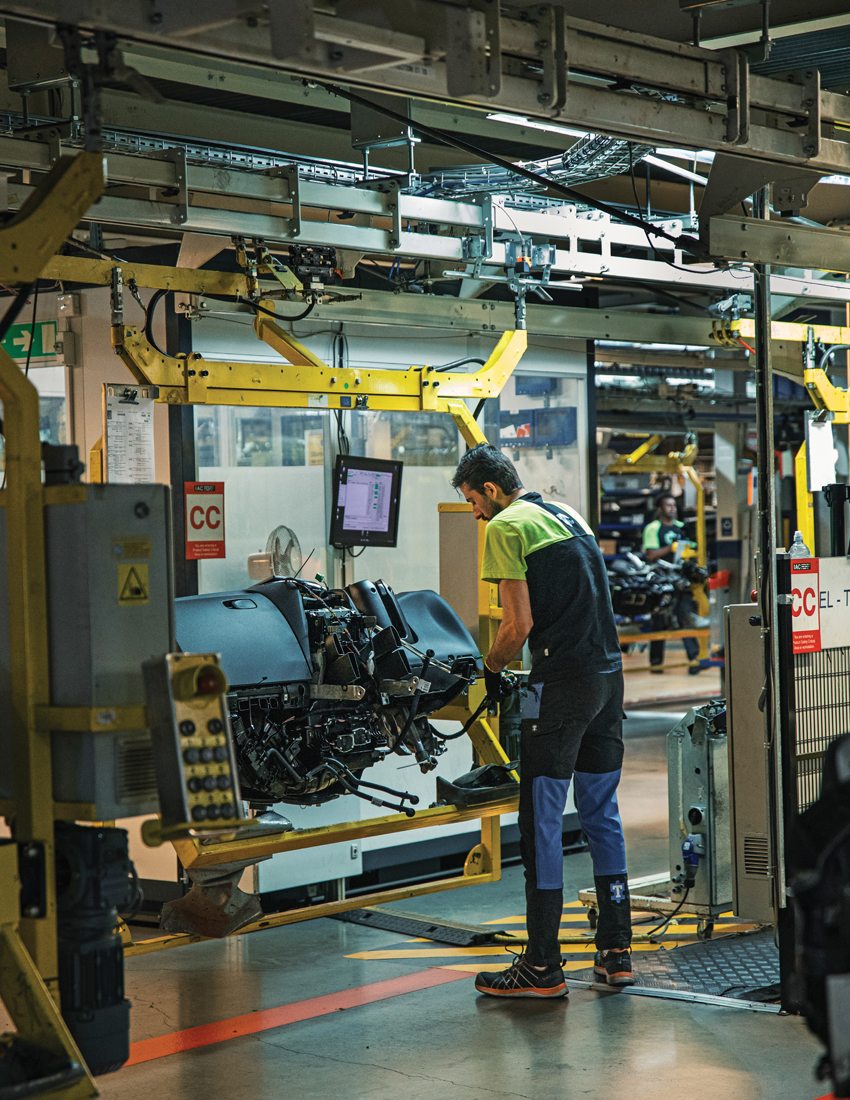
“Tata AutoComp began its global expansion by first setting up a manufacturing facility in China, followed by the acquisition of an entity in Sweden, which had footprints in North America, Mexico, and Brazil, apart from Europe,” says Arvind Goel, Vice Chairman, Tata AutoComp. Today, the company has 21 business units, of which 11 are JVs, and 66 manufacturing plants across four continents that deliver integrated systems and engineering support in line with strict global quality standards.
“With the experience and global exposure that Tata AutoComp gained by operating the international entities, and the opportunities that arose due to JLR having a manufacturing presence in Europe, the company recently acquired more units in Europe,” says Mr Goel. These investments aim to make the most of the disruptions taking place in Europe’s automotive supply chain. “Many European suppliers have struggled to recover from post-Covid shock, coupled with low-cost imports from countries like China and India, and the lack of a nearby low-cost supply base, like North America has in Mexico,” explains Mr Goel. “Their other significant challenges include an ageing workforce, the war in Ukraine, rising energy costs, inflation, and more.”
Tata AutoComp was established at the time when the Indica was being envisaged, driven by Ratan Tata’s vision to create a world-class automotive component supplier alongside the development of an indigenous car in India, Born from this vision, Tata AutoComp was conceived not only to serve Tata Motors but to cater to the entire automotive industry. - Arvind Goel, Vice-Chairman, Tata AutoComp
In 2025 alone, the company bought IAC Group assets across Europe — UK, Sweden, and Slovakia — and is consolidating them under the Artifex umbrella. Together, these companies design and engineer premium interior components for top European automakers like Volvo, BMW, Bentley, Porsche, INEOS, JLR, and Scania. The acquisitions give Tata AutoComp direct access to these OEMs, place it on the upper tier of global suppliers, and increase its footprint across Europe and the UK.
Organic foundations
Tata AutoComp hasn’t relied entirely on acquisitions for its growth. The company has systematically built its capabilities and has 55 manufacturing plants across 12 locations in India. “Tata AutoComp was established at the time when the Indica was being envisaged, driven by Ratan Tata’s vision to create a world-class automotive component supplier alongside the development of an indigenous car in India,” explains Mr Goel. “Born from this vision, Tata AutoComp was conceived not only to serve Tata Motors but to cater to the entire automotive industry.”
In the last two years, three different business units have won the prestigious Deming Prize for their strong focus on quality and business excellence. R&D is another important pillar. The company’s Pune engineering centre has 400+ engineers working across advanced materials and electronics systems. The Tata AutoComp ecosystem has expanded its patent base in EV components, electronic control systems, thermal management, and lightweighting solutions.
“Thirty years ago, Tata AutoComp began by assimilating technology from its JV partners,” says Mr Goel. “Today, the company has acquired and developed several new technologies on its own. In the future, we will adopt a strategy of leveraging technology in both ways, including developing and acquiring new technology, and gaining access to new technology through JV partners.”
As its domestic strength has grown, so have its earnings. With passenger vehicle sales expected to reach 50-60 lakh annually by 2030 (up from ~42 lakh in 2024), this Indian base provides a strong, reliable pillar for its global expansion.
Financial outlook
- FY25 consolidated revenue ₹13,095 crore
- 2031 target $10 bn revenue
- 40-50% from international operations
“The drive is towards achieving growth across geographies, with the foundation that we have laid in terms of supplying to global OEMs in India itself,” says Mr Goel. “This is a natural drive, mainly fuelled by our growth ambitions and by tapping the huge potential and opportunities available globally, while leveraging our capabilities.”
A shifting landscape
The global automotive industry is undergoing its most significant restructuring. The transition from ICE to EV powertrains is rendering obsolete entire vendor ecosystems and the semiconductor shortage has exposed dangerous dependencies, prompting manufacturers to diversify their suppliers. Additionally, sustainability mandates are pushing manufacturers to examine their own emissions as well as those of their entire supply chain.

Such disruptions create fertile ground for players like Tata AutoComp, which has the capital and the vision to focus on tomorrow’s technologies. Its value proposition is centred on several elements. “Our frugal mindset in design, technology, and operations, along with our agility in addressing customers differentiates us from other suppliers,” says Mr Goel. “Apart from cost arbitrage, Tata AutoComp can also leverage its capabilities by providing engineering solutions and sub-components from India.”
From components to systems
Recent years have seen the company shift its business model — from supplying individual components to offering complete integrated systems. From entire cockpit assemblies to thermal management systems. As electrification, digitalisation, and sustainability reshape the auto industry, this is where the opportunities lie.
With cars increasingly becoming computers on wheels, integrating mechanical, electronic and software systems have become far more complex. Suppliers offering fully integrated modules enjoy an advantage: they reduce costs, simplify assembly, assume the integration risk, and provide a single point of accountability. European automakers, under pressure to increase EV capabilities, are turning to suppliers that offer complete systems, rather than just parts. Through its acquisitions, Tata AutoComp is adding key electronic and software strengths, which, when paired with its existing mechanical expertise, enable it to deliver these integrated solutions.
The Tata advantage
This shift towards integrated solutions makes the support of the Tata ecosystem a key aspect of Tata AutoComp’s success. Collaboration with Tata Motors and JLR, its core development partners, gives the company access to new technologies and helps refine and validate new solutions, strengthening their credibility and appeal to other OEMs. And as Mr Goel says, “the Tata brand gives us a soft edge.”
Recent acquisitions
IAC Group Sweden AB (acquired 100% stake)
Scale:
- ~₹6,382 crore (~$800 mn) annual revenue
- ~1,800 employees
- 3 plants in Sweden
IAC Slovakia (acquired 100% stake)
Scale:
- ~₹1,491 crore ($190 mn) revenue in FY24
- 800 employees
- One plant in Slovakia
“While collaboration with Tata Motors and JLR comes naturally to Tata AutoComp, the company has also driven synergy outcomes with several other non-auto group entities, like Tata Power, Tata Consultancy Services, and Tata Elxsi, by offering and taking products and services relevant to each other’s business,” says Mr Goel. In Tata Power’s case, the collaboration focuses on energy storage.
This ecosystem advantage also strengthens the company’s own sustainability push; a growing priority for clients when making procurement decisions. “Sustainability and environmental, social, and governance [ESG] frameworks are prime requirements in the European markets and are being driven by customers, over and above Tata AutoComp’s own initiatives,” says Mr Goel. “Hence, sustainability and ESG are extremely important for staying relevant in this market as well as in other geographies. Tata AutoComp has a significant focus on sustainability and ESG, and is fully aligned with the Tata Group’s target of net zero by 2045 and the guidelines outlined by Project Aalingana.” Its targets include 100% renewable energy and water neutrality across operations by 2030.
The road ahead
Tata AutoComp’s future road map rests on three pillars: additional targeted acquisitions to close capability gaps, greater R&D investment in next-generation EV and autonomous technologies, and expanding in Mexico and China, pursuing opportunities wherever they emerge.
With electrification and digitalisation remaking the automotive industry, Tata AutoComp is betting that its ambitious strategy will propel it into the ranks of global Tier 1 suppliers, capable of competing with the industry’s most established players. Its progress underscores not just the company’s growing momentum but also India’s emergence as a serious industrial player.
- Kermin Bhot