April 2026 | 1466 words | 7-minute read


Engineering the Energy Transition
The energy sector, responsible for over 75% of global greenhouse gas emissions, is under pressure to shift to cleaner sources as fossil fuels still dominate consumption. Tata Elxsi is helping industries transition to sustainability through AI, IoT, and digital solutions, supporting ESG and net zero goals. Key innovations include the MOBIUS+ battery passport for EVs, AI-powered digital twins for design efficiency, and TEDAx for greener fleet management. Tata Elxsi invests heavily in R&D and workforce upskilling, embedding sustainability into every stage of product development. The company aims for carbon neutrality by 2030, advancing decarbonisation and circular economy practices.
Engineering the Energy Transition
The shift to cleaner energy is urgent, as the energy sector contributes over 75% of global greenhouse gas emissions, with fossil fuels still accounting for 86% of energy consumption in 2024. Rising demand for fossil energy has exacerbated climate impacts, making industrial mitigation essential. Businesses face pressure to meet ESG targets and seek partners for responsible innovation. Tata Elxsi, leveraging over 15 years of technological and industrial design expertise, supports customers in sustainability through integrated digital solutions powered by AI and IoT. Its innovations include the award-winning Aha! tea vending machine for Chaayos, which reduces waste and water use, and IoT-enabled appliances for a Japanese manufacturer to optimize water and power consumption. Redesigning Dabur’s Vatika packaging for the UAE reduced GHG emissions by 20% and plastic use by 128MT. Tata Elxsi’s MOBIUS+ digital passport, developed with Minespider, tracks EV battery lifecycle, promoting transparency, traceability, and compliance, aiding India’s green mobility ambitions. AI-powered digital twin solution LEXI accelerates EV motor and battery design, reducing development costs and time. TEDAx, a big data analytics platform, optimizes fleet operations, cutting costs by 40% and emissions. Tata Elxsi invests 2% of annual revenue in R&D for eco-design, energy-efficient systems, and AI-driven sustainability. Nearly 90% of employees are trained in emerging technologies. Sustainability is embedded in Tata Elxsi’s operations, with over half its energy from renewables and a goal of carbon neutrality by 2030. Its campuses feature LEED-certified buildings and circular economy practices, advancing decarbonization and resource efficiency.
Engineering the Energy Transition
The urgent need to transition to cleaner energy sources is underscored by the energy sector’s responsibility for over 75% of global greenhouse gas emissions. Despite progress in renewable energy, fossil fuels still dominate, accounting for more than 86% of global energy consumption in 2024. Fossil fuel demand has increased for four consecutive years since 2020. This reliance contributes to record-breaking global temperatures, with 2024 reported as the hottest year yet, severely impacting ecosystems and livelihoods. As environmental concerns grow, businesses face mounting pressure to meet ESG goals and move toward net zero, prompting the search for partners that enable responsible innovation and manageable costs.
Tata Elxsi, part of the Tata Group, is helping clients across industries transition to sustainable practices. CEO Manoj Raghavan highlights the company’s integrated digital offerings—leveraging AI, IoT, and global partnerships—to design for sustainability, manage supply chain risks, and empower consumers with transparency. With over 15 years of expertise in technological innovation and industrial design, Tata Elxsi delivers solutions that enable climate-conscious products and experiences. Notable examples include the award-winning Aha! tea vending machine for Chaayos, which reduces waste and water usage, and the digitisation of a Japanese home appliance manufacturer’s product range, enabling efficient management of water and power consumption. Tata Elxsi also redesigned Dabur’s Vatika haircare packaging for the UAE, achieving a 20% reduction in greenhouse gas emissions, 17% improvement in truck loadability, and saving 128MT of plastic.
Tata Elxsi’s sustainability credentials are further enhanced by products directly impacting climate change, such as MOBIUS+, a digital passport for EV batteries. With global EV sales exceeding 20 million in 2025 and India aiming for 30% electric vehicles by 2030, MOBIUS+ supports faster adoption by providing transparency, traceability, and compliance. Developed with Minespider, a blockchain-powered traceability provider, MOBIUS+ assigns a unique digital identity to each battery, records supply chain handoffs, calculates carbon footprints, and enables effective recycling and resource recovery, fostering a circular battery economy.
For automakers, shifting from internal combustion engine (ICE) to EV-first models requires significant investment. Tata Elxsi’s AI-powered digital twin solution, LEXI, simulates real-world conditions to improve EV motor and battery design, enabling predictive maintenance, enhanced efficiency, and reduced development time. This supports smoother transitions and faster innovation. As Sundar Ganapathi, CTO of Automotive, notes, demand is growing for engineering services integrated with virtualisation tools.
While EV adoption rises, many vehicles remain ICE-powered. Tata Elxsi’s TEDAx analytics platform enables logistics and mobility businesses to optimise fuel and fleet operations, reducing emissions and operational costs by aggregating telematics and vehicle health data. Its GenAI engine improves delivery accuracy and efficiency.
Tata Elxsi invests 2% of annual revenue in R&D for eco-design, energy-efficient systems, AI-driven solutions, and green mobility. Nearly 90% of employees are trained in emerging technologies, reinforcing sustainable engineering. The company’s campuses use renewable energy, energy-efficient infrastructure, and circular economy practices, aiming for carbon neutrality by 2030.
Chief Risk and Sustainability Officer Dr Sajiv Madhavan affirms that sustainability is embedded in Tata Elxsi’s purpose—designing for people, planet, and progress. Through Project Aalingana, Tata Elxsi advances decarbonisation, circularity, and shared responsibility, positioning itself as a catalyst for industry transformation and a leader in sustainable innovation.


- 0.5×
- 0.75×
- 1×
- 1.25×
- 1.5×


The imperative to shift to cleaner and greener sources of energy has never been more critical. The energy sector is responsible for more than 75% of global greenhouse gas emissions. It is not difficult to see why: despite advances in renewable and clean energy, fossil fuels remain predominant, making up more than 86% of global energy consumption in 2024 (source: Energy Institute). In fact, the demand for fossil energy has grown over the past few years with demand peaking for four consecutive years since 2020.
The World Meteorological Organization reported 2024 as the hottest year yet, with the past decade the hottest since pre-industrialisation — impacting ecosystems and livelihoods worldwide.
That the industrial world must collectively step up its efforts towards mitigation is a given, especially as consumers and cohorts are increasingly making environmentally sustainable choices. Businesses worldwide are looking for solutions to help them transition to cleaner energy, ensuring that capital expenditure and operational costs remain manageable. Tata Elxsi is one of several Tata companies helping them manage this shift.
Our integrated digital offers, powered by artificial intelligence and the internet of things, strengthened by our global partnerships, are helping our customers design for sustainability, manage supply chain risk and empower their consumers through transparency and awareness. - Manoj Raghavan, Chief Executive Officer and Managing Director, Tata Elxsi
“Our customers across industries are under pressure to meet ESG goals and move towards net zero, and they want partners who help them innovate responsibly,” says Manoj Raghavan, Chief Executive Officer and Managing Director, Tata Elxsi. “Our integrated digital offers, powered by artificial intelligence and the internet of things, strengthened by our global partnerships, are helping our customers design for sustainability, manage supply chain risk and empower their consumers through transparency and awareness.”
High-impact solutions
Tata Elxsi has a runway in excess of 15 years in developing strong technological capabilities that are intertwined with a sharp focus on industrial design. This expertise has enabled the company to innovate and consistently deliver highly usable technology-based solutions for its customers and their end users. Its long-standing commitment to sustainability has in turn enabled its customers to offer climate-conscious products and experiences to their consumers. For example, the company designed the Aha! tea vending machine for Chaayos, which dispenses a hot cup in less than 30 seconds, while significantly reducing waste and water use. The machine won the prestigious iF Design Award for Product Design in 2024.
In another instance, Tata Elxsi helped a leading Japanese home appliance manufacturer digitise its product range using IoT, AI and product design. This provided customers a highly convenient way to better manage water and power consumption. Tata Elxsi also redesigned the packaging for Dabur’s Vatika haircare range for the UAE market, delivering measurable sustainability gains — including 20% reduction in greenhouse gas (GHG) emissions, 17% improvement in truck loadability, and saving 128MT of plastic use.
A passport for your battery
The company has boosted its sustainability credentials further with a range of products and solutions that have a more direct impact on climate change, driving decarbonisation and energy independence. One of these is MOBIUS+, a digital passport that traces an EV battery’s lifecycle.
EV car sales in 2025 exceeded 20mn globally, with sales increasing 30% year-on-year in the first three months, setting a record in major markets. In India too, EV registrations crossed 2mn in a single year for the first time in 2025, signalling consumer demand. Fuelling this demand, the government is aiming for 30% of all new vehicles to be electric by 2030, `putting an estimated 80 mn+ EVs on Indian roads by then. Accordingly, investments in the EV ecosystem are expected to grow exponentially, driving demand for solutions that can support faster adoption.
Earlier this year, Tata Elxsi launched a solution built for this purpose. “MOBIUS+ is designed to accelerate the transition to a cleaner mobility future by enabling digital transparency, traceability, and compliance through initiatives like Battery Aadhaar,” says Anil Radhakrishnan, Chief Product Officer, Tata Elxsi. “Our goal is to empower stakeholders across the ecosystem with scalable, future-ready solutions that support India’s green growth ambitions.”
While MOBIUS+ is targeted towards OEMs and industry players, it also enables EV owners to better assess battery sourcing, performance, and end-of-life requirements. Think of it as a digital passport: each battery receives a unique digital identity during manufacturing, capturing component details, chemistry, and technical specifications. From there, every handoff in the supply chain is securely recorded, creating a transparent, end-to-end chain of custody from raw materials to the EV owner. It also calculates the battery’s carbon footprint during every step of the process, enabling informed decisions.
Developed in collaboration with Minespider, a blockchain-powered traceability provider, MOBIUS+ collects and analyses key parameters to assess battery health, efficiency, and degradation patterns. This provides actionable insights for maintenance and optimisation throughout the battery’s first life. It doesn’t end here. When batteries reach end-of-life, detailed material composition data enables effective recycling, second-life applications, and resource recovery, creating a truly circular battery economy.
Accelerating design with AI twins
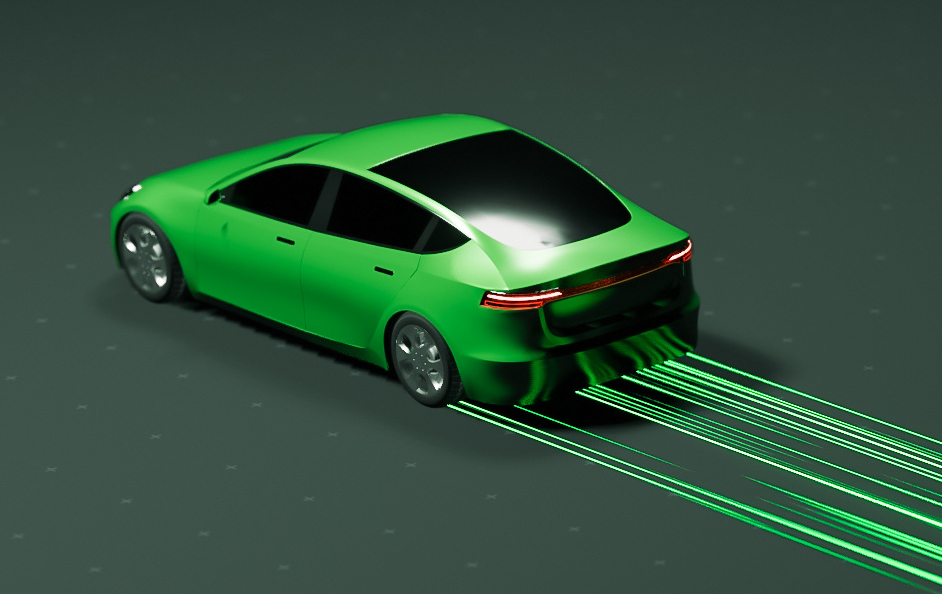
For automakers, transitioning from an internal combustion engine (ICE) centred design and production model to an EV-first approach requires significant capital investment and operational expenditure. Tata Elxsi’s AI-powered digital twin solution, LEXI, helps reduce these costs by simulating thousands of real-world conditions overnight to improve the design and performance of EV motors and batteries.
These digital models enable predictive maintenance, enhancing battery efficiency, and longevity — crucial for driving EV adoption. By collaborating with AI-driven models, engineers can significantly increase accuracy, reduce development time in half, ensuring that the transition is smooth, and bring innovations to market faster.

“As OEMs move away from traditional workflows, there is growing demand for engineering services that are tightly integrated with virtualisation tools,” says Sundar Ganapathi, Chief Technology Officer of Automotive, Tata Elxsi.
Analytics for smarter, greener mobility
Even as the world rapidly transitions to EVs, a significant proportion of passenger and commercial vehicles continue to be powered by ICE. The imperative to use non-renewable energy judiciously cannot be set aside: every effort counts.
Tata Elxsi’s industrial big data analytics platform TEDAx empowers logistics and mobility businesses, with real-time, data-driven insights for fuel and fleet optimisation. By aggregating telematics, vehicle health data, and operations metrics, TEDAx enables smarter planning for optimised route management and fuel usage. Its high-speed, GenAI-powered analytics engine and continuous monitoring improve delivery accuracy, with a 20% increase in fleet operations. This results in 40% reduction in operational costs, lower emissions, and efficient transportation management.
“These platforms, like TEDAx and MOBIUS+, are also helping us accelerate time to market and reduce development risks for our customers, enabling differentiated value propositions and sustainable revenue streams for the company,” adds Mr Raghavan.
Investing in the future
These solutions reflect Tata Elxsi’s commitment to advancing data-driven, clean energy solutions. This is supported by the company’s sustained investments in research and development: it invests ~2% of its annual revenue on new technologies. “Our investments aim to drive innovation in areas such as eco-design, energy-efficient systems, AI-driven sustainability solutions, and green mobility platforms,” says Dr Madhavan.
Sustainability is embedded in our core purpose of ‘designing for people, planet and progress. We aspire to integrate sustainability into every stage of the products and services that we build. - Dr Sajiv Madhavan, Chief Risk and Sustainability Officer, Tata Elxsi
Tata Elxsi is also investing in ensuring that its employees are equipped with the latest knowledge, critical skill sets and advancements in emerging technologies. “Almost 90% of the workforce has trained in emerging technologies like AI, IoT, and digital twins, which are the key enablers of sustainable engineering,” says Dr Madhavan. “Specialised programmes on circular design principles, regulatory compliance, and advanced simulation for energy efficiency further strengthen Tata Elxsi’s commitment to embedding sustainability into every stage of product development and delivery.”
As Tata Elxsi accelerates by aligning innovation with responsibility, it is positioning itself not just as a technology partner, but as a catalyst for transformation — tackling not only existing efficiency and sustainability challenges but also anticipating the needs of a fast-evolving industry. As more businesses and industries move towards a greener future, Tata Elxsi is laying the groundwork for cleaner technologies and smarter operations.
Sustainability by design
“Sustainability is embedded in our core purpose of ‘designing for people, planet and progress’,” affirms Dr Sajiv Madhavan, Chief Risk and Sustainability Officer, Tata Elxsi. “We aspire to integrate sustainability into every stage of the products and services that we build.”
This is visible not only in the company’s growing stack of products and services that put sustainability at the core, but also in the practices and advanced technologies it has adopted to reduce its carbon footprint and improve resource efficiency. “Over half of our energy needs are met through renewable sources like solar, green power, and long-term power purchase agreements, and we are steadily working towards our goal of becoming carbon neutral by 2030,” says Dr Madhavan. The company’s campuses use energy-efficient infrastructure and LEED-certified buildings, to reduce emissions and optimise performance. As a digital-first company, its carbon footprint is low, but it goes further by driving water reuse, waste segregation, and circular economy practices. As Dr Madhavan notes, “These efforts advance Project Aalingana by driving decarbonisation, promoting circularity, and making sustainability a shared, measurable responsibility.”
- Haroon Bijli