June 2026 | 722 words | 3-minute read


Every year as March rolls around, farms across India awaken with the fragrant ripening of that most cherished of Indian fruits — the mango. Simultaneously, another seasonal rhythm comes alive at cargo terminals, on tarmacs and in the belly holds of long-haul aircrafts.
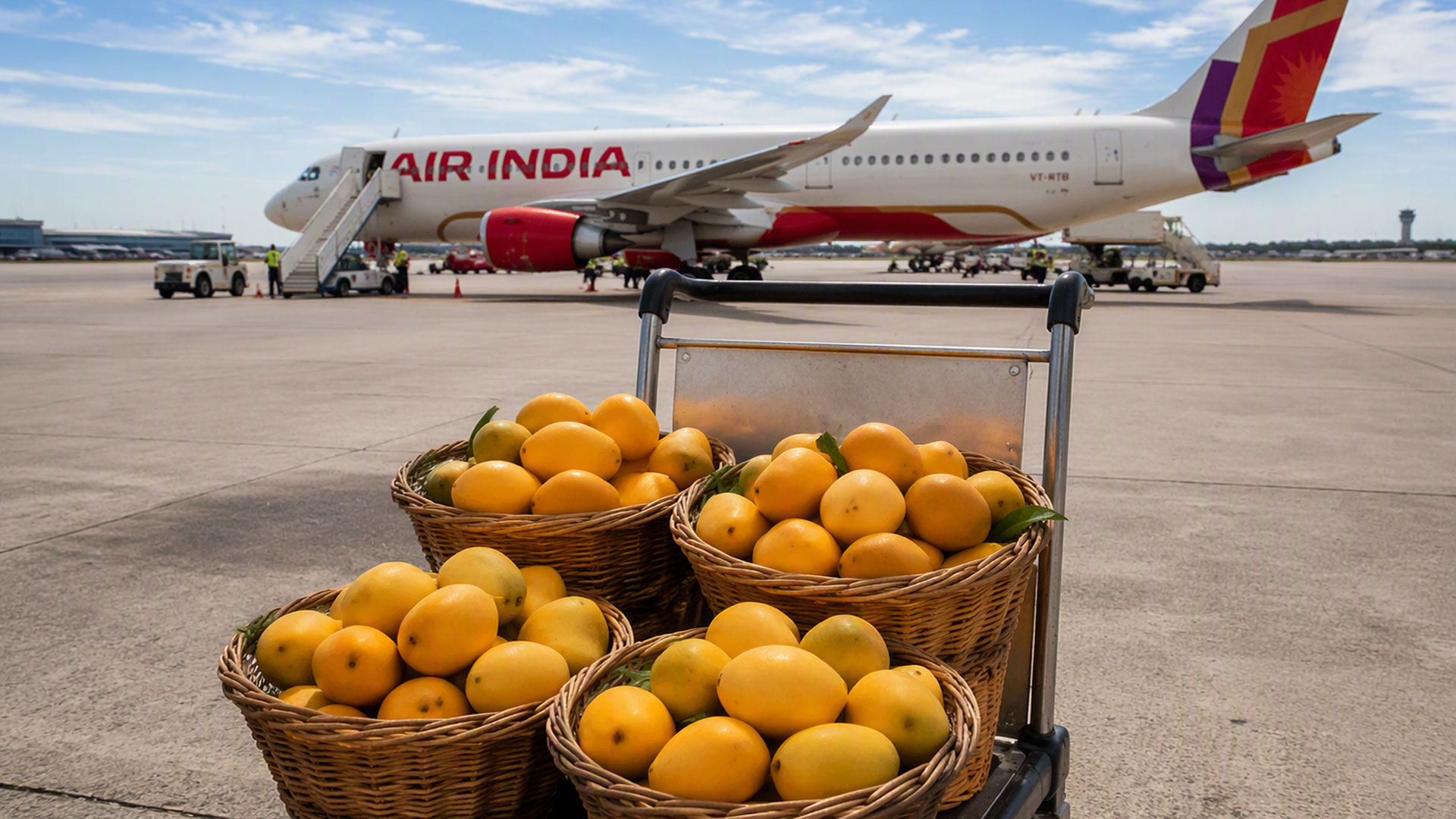
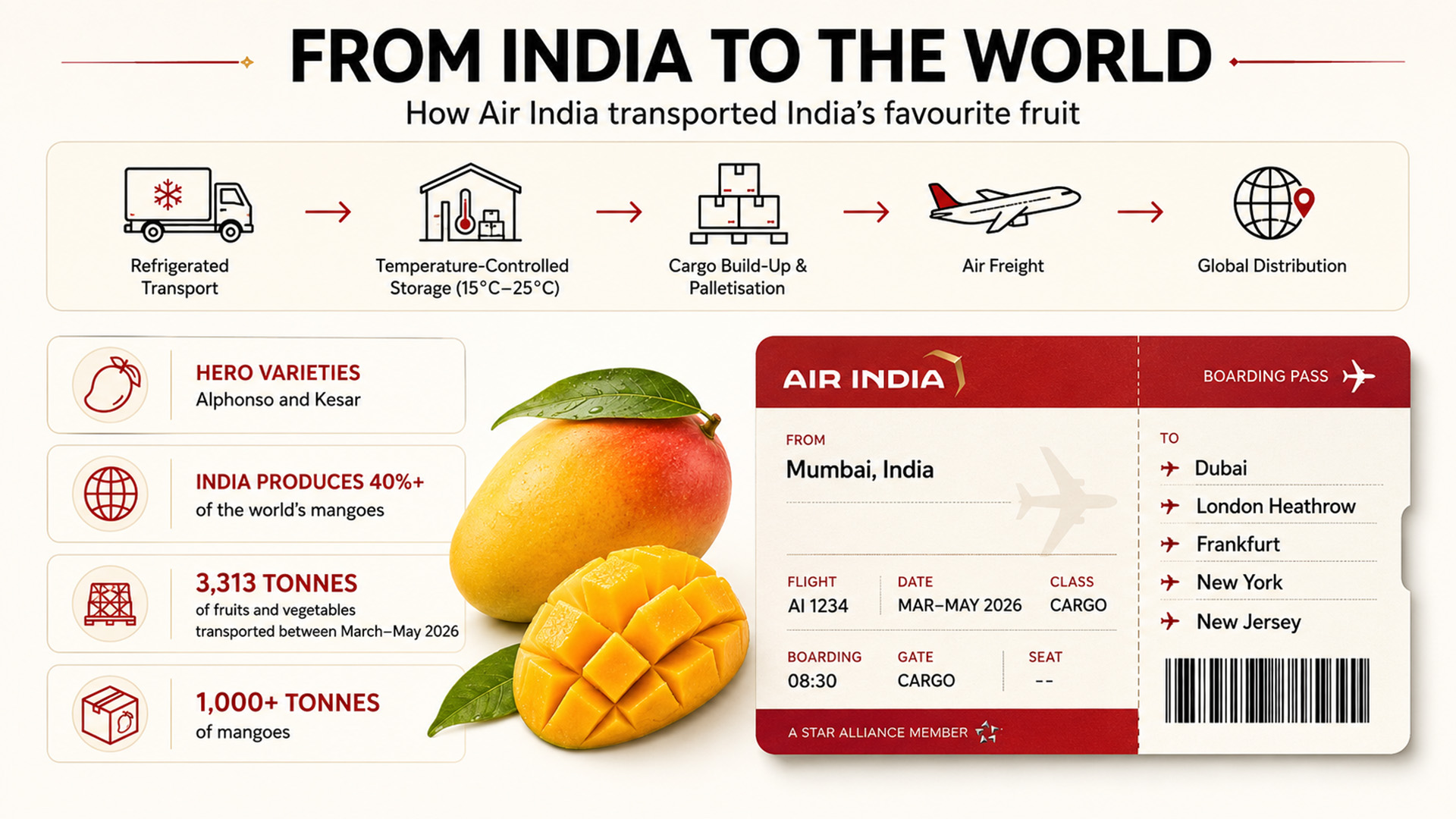
Boxes of Alphonso and Kesar mangoes, revered for their luscious sweetness and texture, and raised lovingly in the western agricultural belt, begin their journey to global markets. Mumbai, with its proximity to this farmland, is the logistical nerve centre, from where mangoes travel overnight to cities such as London, Frankfurt, Dubai, Newark and New York.
For exporters, retailers and the Indian diaspora however, this annual movement is more than a logistics exercise. It signals seasonality — increasingly rare in the global food economy — and a giddy, familiar anticipation, connecting Indian farmers to homes and supermarkets across continents.
A stellar year
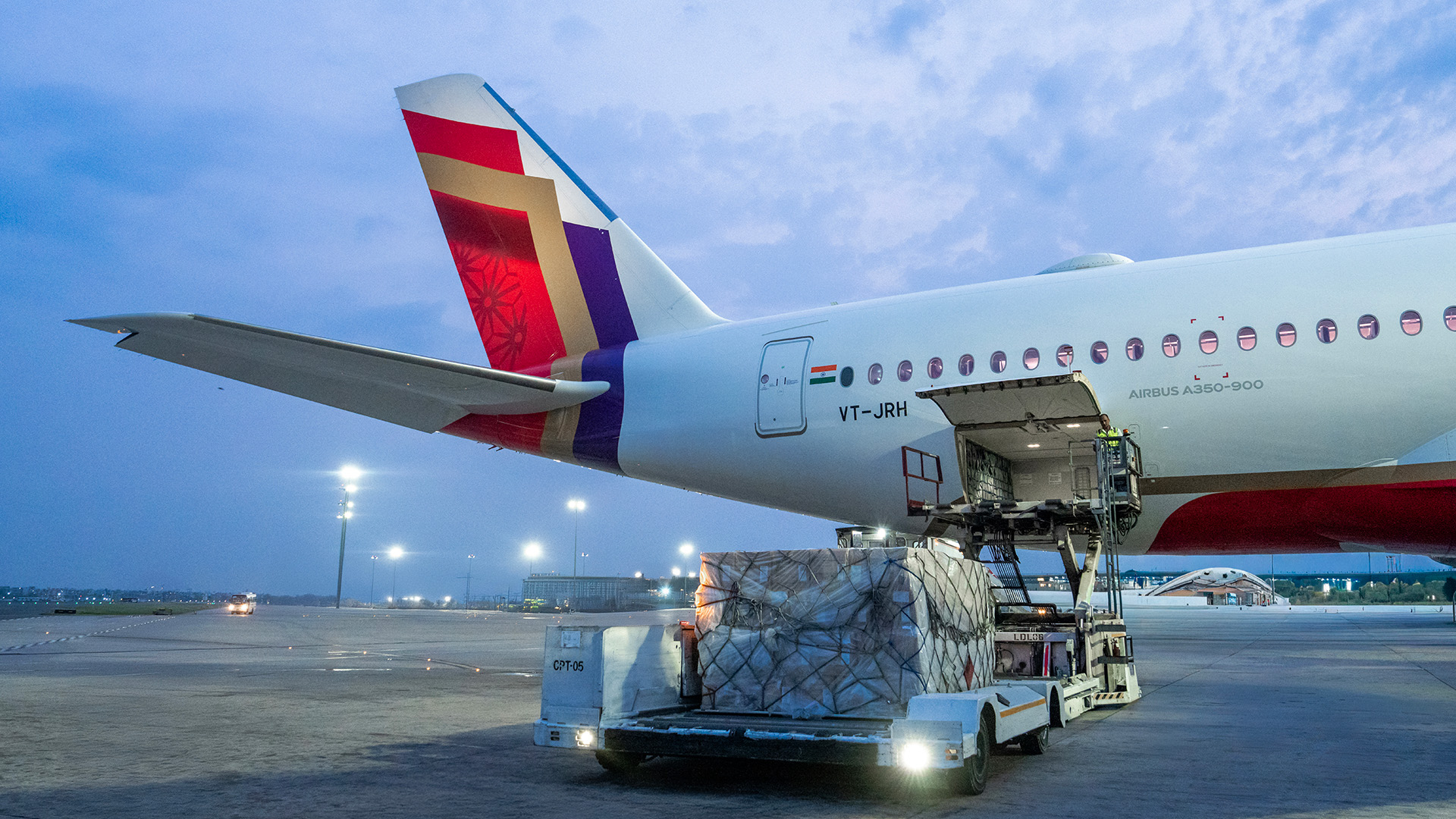
In 2026, the scale of this movement has been significant. Between March and May, Air India transported more than 3,300 tonnes of fresh produce across its network; 1,000 tonnes were mangoes.
As the harvest season gathered pace, Air India carried 805 tonnes of fruits and vegetables in March, which rose to 1,275 tonnes in April (peak harvest period), remaining strong at 1,233 tonnes in May. During peak weeks, London Heathrow received as much as 180 tonnes of uplift from Mumbai. Frankfurt received around 40 tonnes, while Dubai, Newark and New York JFK each handled roughly 30 tonnes a week. From Delhi, Air India also carried perishables to long-haul destinations like San Francisco, Toronto, Paris, Hong Kong and Sydney.
Much of the mango cargo originated from Maharashtra and Gujarat, home to two of India’s best-known varieties — Alphonso and Kesar — with Mumbai, emerging as a key local gateway on account of its strength as an international aviation hub.
Keeping it fresh
What makes this journey possible is not just network strength, but precision. Fresh produce demands speed, temperature control and careful handling at every stage. The movement begins before the aircraft is loaded, with produce reaching airport cargo terminals in refrigerated trucks through IATA-approved agents. At origin, the cargo is stored in temperature-controlled facilities, typically maintained between 15°C and 25°C, before being moved into specialised pallets and containers.
That discipline continues at the destination, where temperature-regulated handling helps preserve freshness until final delivery.
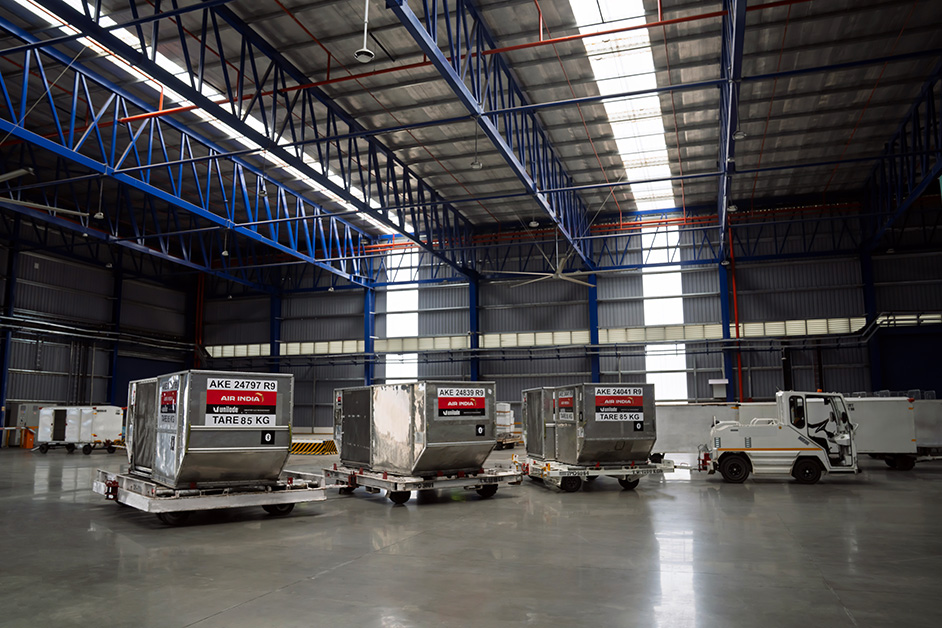
Air India has been strengthening this capability across its cargo operations. The airline now operates cold-storage and active-container facilities across 14 airports, including Delhi, Mumbai, Bengaluru, London Heathrow, Frankfurt, New York JFK and Newark. Cool dollies, thermal blankets and specialised containers help protect temperature-sensitive cargo during critical points in the journey, including transfers across the tarmac.
These facilities are GDP-certified, aligning Air India’s cargo processes with global standards for handling temperature-sensitive shipments. For perishables such as mangoes, this infrastructure is essential. A delay, temperature fluctuation or handling gap can affect quality, shelf life and commercial value.
“Transporting over 1,000 tonnes of mangoes in just three months reflects both the scale of demand and the robustness of our cold-chain processes,” says Ramesh Mamidala, Head of Cargo, Air India. “Perishables require meticulous handling, and our teams work closely with partners to maintain consistency and quality at every step.”
A cargo leader
The movement also reflects Air India’s growing role in international cargo. The airline handles more than four lakh tonnes of cargo annually, making it India’s largest international cargo operator. Its long-haul passenger network creates cargo capacity that can support Indian exporters, connect producers to high-value markets and carry time-sensitive goods across geographies.
For India’s mango growers and exporters, this network helps extend the reach of a seasonal crop. For consumers overseas, crates of Indian mangoes signal the beginning of a short but celebrated window. A mango shipment is a commercial consignment, but it is also a cultural carrier. It takes a fruit that is evocative of summer nostalgia and deep-rooted identity, and places it on tables thousands of miles away, often within days of harvest.
In doing so, Air India’s cargo operations reveal the quiet power of aviation: not only to move people and goods, but to compress distance, preserve seasonality and carry a part of India to the world.
— Anuradha Anupkumar
*Banner image generated via AI for representational purposes