July 2026 | 1031 words | 2-minute read


The stories of great men begin long before they are born. So it was with Jehangir Ratanji Dadabhoy Tata, the man known to us as JRD.
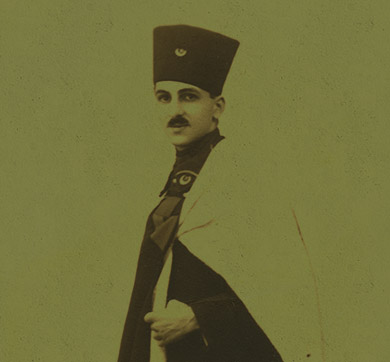
JRD’s father, Ratanji Dadabhoy (RD) Tata, was born in 1856. RD Tata's earliest memory, RM Lala recounts in his biography of JRD, Beyond the Last Blue Mountain, is that of playing barefoot with other children in Navsari. When he grew up, he moved to Bombay and attended Elphinstone College, like his cousin Jamsetji. Later, he was sent to the Far East to look after the family’s businesses. It is said that he impressed Jamsetji, 16 years his senior, with his handling of finances, so much that Jamsetji brought in the 28-year-old as a partner when he set up his early textile businesses. Thirteen years later, RD would be one of the founding directors of Tata & Sons, along with Jamsetji and his two sons, Ratanji and Dorab.
A profound inheritance
When he was 21, JRD had completed his year with the ‘Le Spahis’ regiment of the French Army and returned to India on his father’s advice. He joined Tata Sons in December 1925 as an apprentice, staying at ‘Sunita’, the spacious house that RD had built and named after his wife and JRD’s mother Sooni. He was to spend a few precious months with his father, learning from him, and absorbing the latter's work ethic, humour and occasional bouts of impatience.
Narrates Mr Lala in his biography: “At ‘Sunita’ every morning, at 8.30 am sharp, RD would get into his office car. Rodabeh recalls Jehangir tearing away from the breakfast table and hurtling down the staircase, a piece of toast still in his hand, to join his father, for RD would not wait. Jehangir was soon to acquire his father’s precision in matters of time. RD was the first to reach office and cleared his correspondence before visitors could call.”
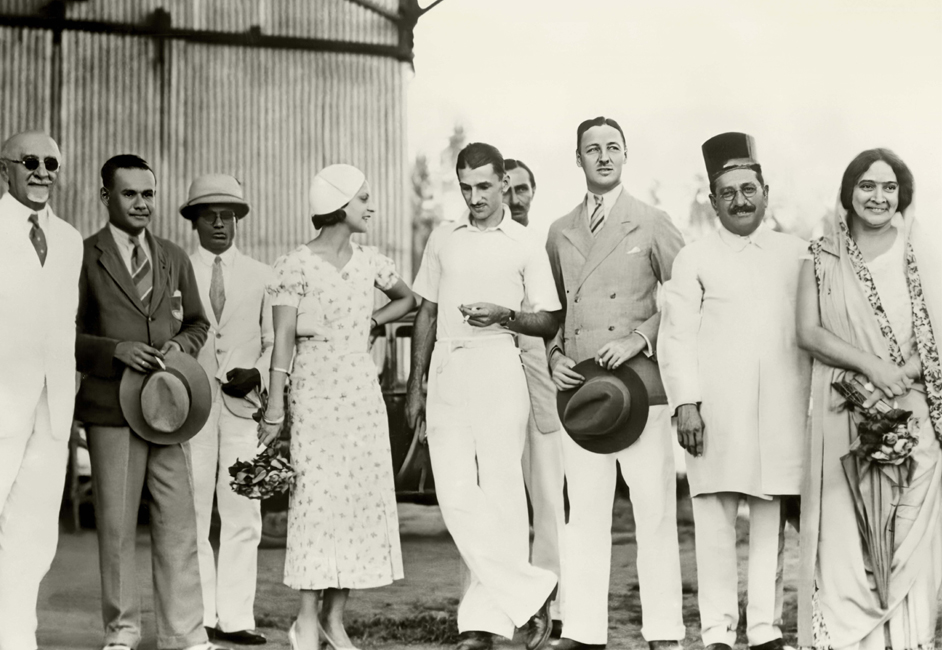
The time spent with his father was much too short, as JRD himself would recall and regret. As he tells his biographer, “He (RD) was very charming, a totally open, honest kind of man. He had no kind of pride in him.”
It was during this time that RD requested John Peterson, who he had persuaded successfully to quit the Indian Civil Service (ICS) and join Tata Steel as Director-in-Charge, to take JRD under his tutelage. JRD was assigned a small room adjoining Mr Peterson’s modest cabin in Bombay House. JRD said of this arrangement that “from that moment, Mr Peterson would never have one moment of privacy.” Every document that went to or came from him would reach JRD's desk first, and JRD would study it, offer his comments, discuss it and at times, change the content.
JRD described this time as some of the most influential months of his career. “I must say that was a very formative and important time of my career, when I saw how a highly trained ICS administrator worked. I learnt a lot from that.”
This arrangement continued till 1931, when Mr Peterson returned home to Britain, except for a break where JRD was to spend a year at Jamshedpur at Tata Steel. In early 1926, JRD made the journey from Bombay’s Victoria Terminus to Tatanagar via the Great Indian Peninsular Railway. At Jamshedpur, he would learn steelmaking, reading The Shaping and Making of Steel before visiting and learning from each department and taking notes.
It was during the summer of 1926, while absorbed in the intricacies at Tata Steel, that he would learn of his father’s death. RD had suffered a heart attack while at Hardelot, France, where he was visiting his other children.
JRD would say of his father, “‘Though he was 70, to me he was a man who still had 20 years left in him. I had no inkling that I was not going to see him around, but he seemed to have had a premonition about his death otherwise he would have allowed me to go to Cambridge and get a degree of some kind… I would have liked to have known him more closely. We were separated so much of the time. It was always a joy to get together again but it didn’t last very long.”
JRD took the first available train back to Bombay, but he was not able to make it to Paris before his father’s funeral.
Debts and Directorship
After his father’s death, JRD became the head of the family. His older sister, Sylla, was still unmarried, and his younger siblings Rodabeh, Darab and Jimmy were teenagers. Having returned only a year earlier, he had not found a firm footing in India: he would recall this period to Mr Lala as very challenging: “It was a difficult period because I did not have the background or experience.”
His father’s will had bequeathed JRD a higher share of the family income since he was the eldest son. After consulting one of his father’s associates, JRD disregarded the will and distributed the family income, including the company’s shares, equally among the five of them.
RD had been exceedingly generous according to JRD and too trusting in his later years. His preoccupation with Tata Steel had resulted in his neglect of his other businesses. This, as well as the building of ‘Sunita’, had caused RD to borrow from the company and personally from Sir Dorab. In time, ‘Sunita’, the property at Hardelot, and a family house at Ganeshkind were sold off, and RD’s businesses in London and East Asia were wound up. The debts were eventually settled. What remained was the share in Tata Sons, and the permanent directorship that would be inherited by JRD.
JRD returned to his small desk adjoining Mr Peterson’s cabin, which offered him a base to operate. In his first year as a director, he threw himself into work, despite bouts of typhoid and paratyphoid. His sister, Rodabeh, recounted to Mr Lala the experience of seeing JRD return from work, throw himself onto his bed at the Taj and pick up financial and business magazines. When she suggested rest, he refused, saying, ‘I want to be worthy of the Tatas.’
- Haroon Bijli
Photographs courtesy Tata Central Archives