March 2026 | 1305 words | 4-minute read


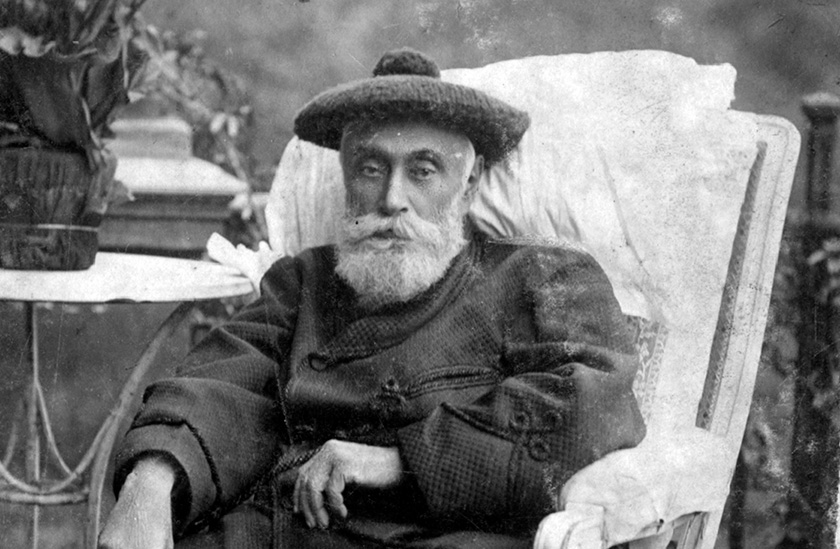
Towards the end of his life Mr Tata became associated with a further scheme for developing the industrial resources of Bombay. The diverse interests of his firm had given him widespread connections in the world of industry and finance. Since the opening of the Empress Mills he had rarely looked back. His life was apparently full. The plans for the institute of Science were slowly making headway; but though its founder had in hand the iron and steel project as well as his various experiments in reclamation and sericulture, he was always prepared to examine any new venture.
He could do so the more readily, since his sons and his lieutenants had helped him to build up a firm fitted for expansion. Mr Tata possessed a gift, which amounted to genius, for selecting the right subordinates, and throughout his life he exhibited to a notable degree the art of delegating much of his work. He kept his fingers lightly upon the pulse of a business: there was no fuss, no unnecessary worry. When he once devoted his mind to further expansion, he could call upon that reserve of time and energy which only a great organizer can keep at his disposal.
Though already subject to severe attacks of illness, he did not hesitate in taking up the hydro-electric project, which eventually became one of the firm’s largest undertakings. To him, however, the use of water-power was not a new interest. As early as 1875 he had contemplated the development of India’s hydraulic energy in connection with the manufacture of cotton. While looking for a site on which to establish the Empress Mills, he surveyed the falls at Jubbulpore, where the Nerbudda River rushes between the famous marble rocks. He actually negotiated for the purchase of the necessary land, and when the negotiations fell through, he retained his interest in the possibilities of hydraulic power, though twenty years elapsed before he was able to give it shape.
In 1897 Mr Robert Miller, a member of a well-known firm of Bombay Merchants, obtained an option of purchasing the rights over the Doodh-Sagar Falls, which lie outside the British boundary, in Portuguese territory. He came for assistance to Mr Tata, who at once suggested the employment of a competent engineer, Mr David Gostling, to make an exhaustive report upon the possible use of the power for commercial purposes. The report was favourable, and within a few weeks Mr Tata, Mr Miller, and Mr Gostling joined in the formation of a small syndicate.
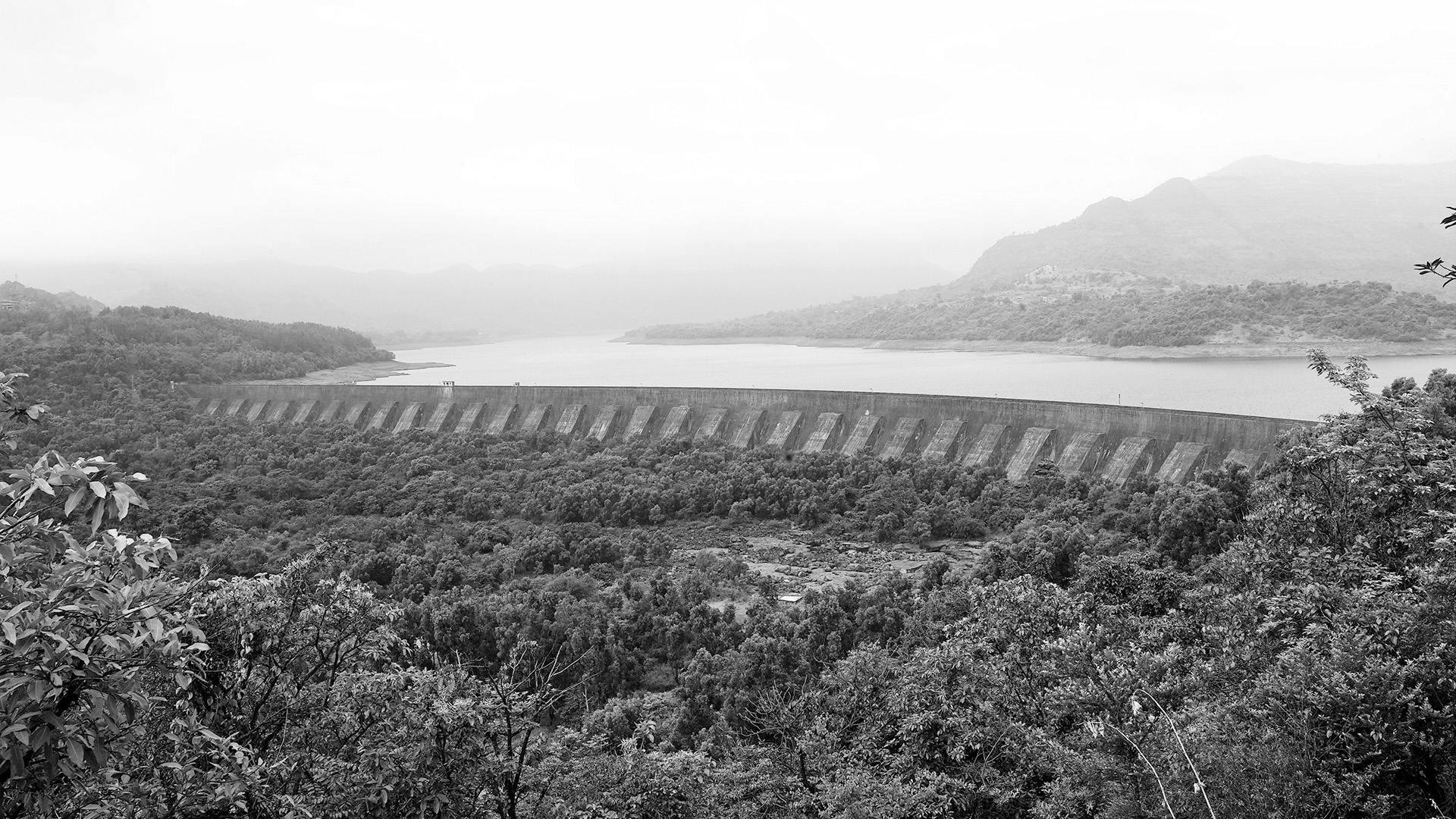
The plans of the syndicate were barely framed, before Mr Gostling came forward with another proposal. It had been his custom to spend some months of the year at Lonavla, a hill station on the Western Ghats, 2,000 feet above Bombay. He had noted the physical characteristics of the district; the contours of the surrounding valleys, the substance of the soil and the sharp gradient of the slopes. He came to the conclusion that the configuration of the land provided an excellent catchment area, and that the storage of the rains could furnish a considerable portion of the energy required to drive the mills of Bombay. Encouraged by the success of a scheme at the Cauvery Falls, Mr Gostling expounded his ideas to Mr Tata, who immediately grasped their great possibilities. The Doodh-Sagar Syndicate was temporarily set aside, and attention was concentrated upon this more promising area.
At the time of [Jamsetji’s] death little had been done, except the preliminary spade work [for the hydro electric project], but the prestige of his name, and the tactful way in which he enlisted the sympathy of the India Office, did much to lighten the labours of those who followed him.
To a mind like Mr Tata’s, the hydro-electric project made a strong appeal. He had experienced the value of the electric drive in his own mills, and welcomed power, which would make industry less dependent upon costly coal, and purify the atmosphere of the city. For over ninety days in every year the saturated winds of the south-west monsoon sweep up from the Indian Ocean, depositing their moisture upon the scarp of the Western Ghats. Within 50 miles of Bombay the hill-tops are drenched by one of the heaviest rainfalls in the world. At the summit of one of the hills in the catchment area as much as 546 inches had been measured during a single monsoon. It was estimated that, for the generation of electric energy, the volume of water flowing to the sea would be more than adequate to furnish as much power as Bombay would require for her mills. From storage lakes in the upper valleys it could be carried to the edge of the plateau at Khandala, and forced through gigantic pipes to the foot of the Ghats at Khopoli. The dams were to be handsome and impressive monuments of the development of India’s engineering.
As soon as the preliminaries of the scheme had been formulated, Mr Tata approached the Government in order to secure priority for the necessary concessions: the acquisition of the land, and the licence needed for a public project. Before taking any definite steps, he went to London and saw the Secretary of State for India, Lord George Hamilton, to whom he expounded his schemes, particularly the steel and hydro-electric projects. Lord George was decidedly sympathetic, and on returning to India Mr Tata found that the support which had evoked proved a valuable asset. Before the syndicate could be definitely launched there were two important points to be settled. One was the acquisition of the necessary rights over the land, the other was the formal recognition of the new venture. It was necessary that the Bombay Government should permit the enforcement of the Land Acquisition Act, in order to enable the Company to acquire property for what was accepted by Government to be a public purpose. The hydro-electric project, needing sites for the reservoir and works, involved the destruction of acres of forest, the absorption of miles of waste-land and the submersion of some thinly populated valleys.
Day by day Mr Tata’s position was strengthened. His lucid and enthusiastic presentation of the case had impressed Lord George Hamilton, who transmitted the correspondence to Lord Northcote, the Governor of Bombay. At the same time, Sir Richmond Ritchie wrote to Mr Tata. ‘As to the second scheme for utilizing the electric power generated in the heights of the Ghats for the purposes of Bombay and its neighbourhood, Lord George can only say that if it is brought to a successful issue it will be an achievement of which you may indeed be proud’.
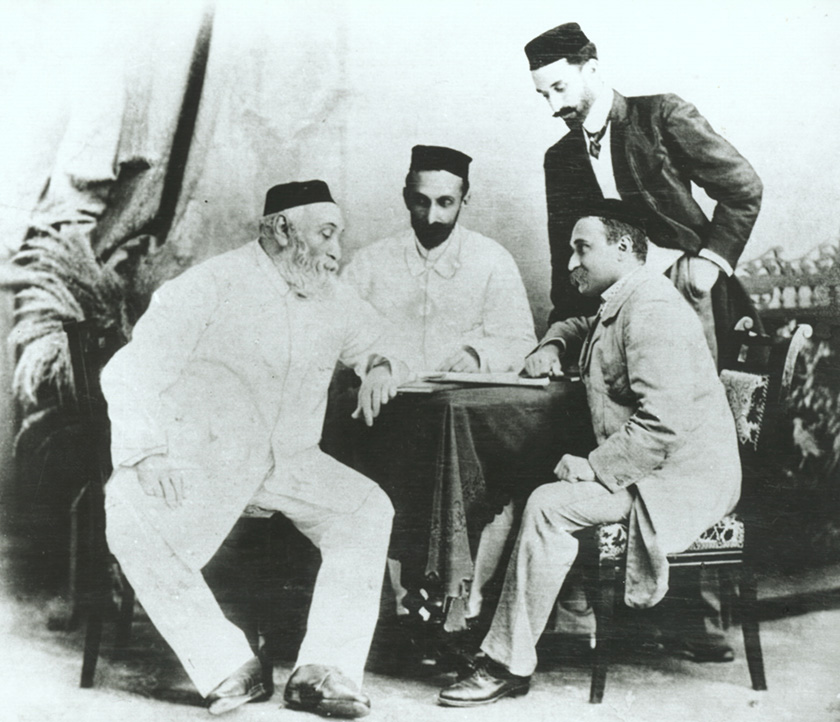
Fortified by such encouragement, Mr Tata had frequent interviews with Lord Northcote. The results were so satisfactory that the preliminaries of the scheme were soon in order. Activity was needed, for a rival syndicate, the Pioneer, had in hand a somewhat similar project, though the electricity was to be generated by steam-power. Mr Tata, as his elder son has said, ‘laboured to establish the principle that the Government and the Municipality should not grant any monopoly for the sale of electrical energy to the Pioneer or any other company that might be formed’. At the same time the syndicate was enlarged, Mr Gostling and Mr Miller each brought in a partner, and Mr Tata ensured the continuity of family interest by the addition to the syndicate of his son, Dorabji, who devoted himself to the work, and eventually carried it to a successful conclusion.
Unfortunately Mr Tata did not live to see the launching of the hydro-electric project, which in his days was planned on a scale far smaller than was at length attained. At the time of his death little had been done, except the preliminary spade work, but the prestige of his name, and the tactful way in which he enlisted the sympathy of the India Office, did much to lighten the labours of those who followed him.
Source: Jamsetji Nusserwanji Tata: A Chronicle of his Life