February 2026 | 291 words | 1-minute read


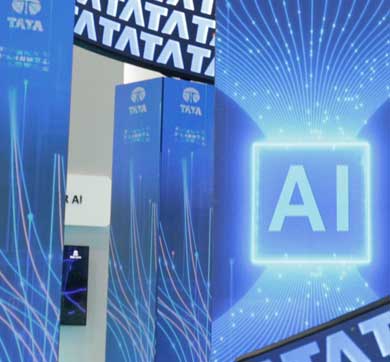
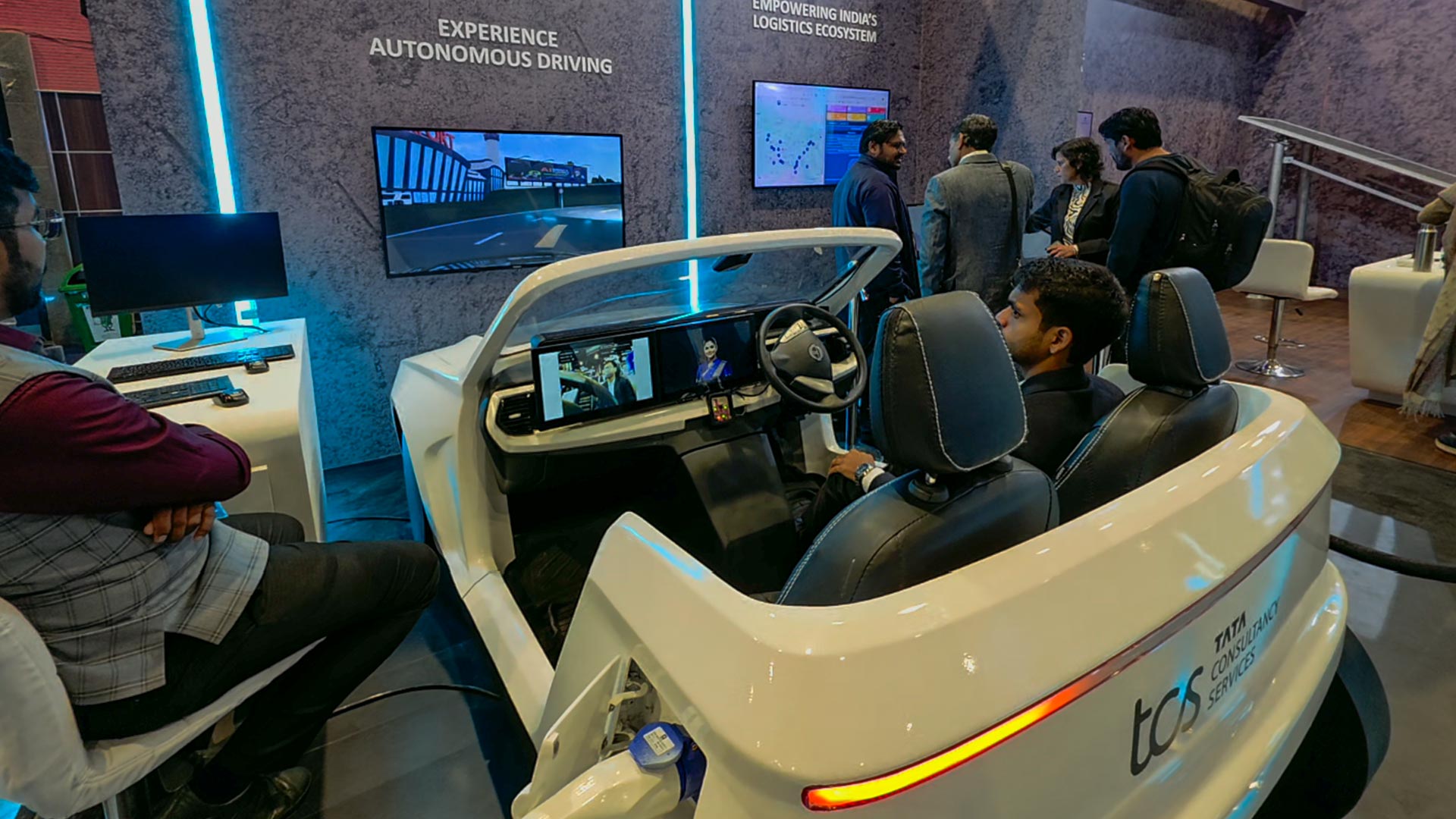
At first glance, the gleaming autonomous vehicle parked in the Intelligence in Action – Mobility zone of the Tata AI Pavilion feels almost like an arcade attraction, complete with a simulation scenario.
It’s no surprise the booth has been drawing crowds, with people lining up for a turn behind the wheel. Except here, it’s not the visitor but the AI that’s actually in the driver’s seat.
This demo car, built not as a prototype but a showcase platform, brings to life the advanced ADAS and AI capabilities that Tata Consultancy Services (TCS) has been developing since 2014. The company is currently experimenting with Level 4 of the automation curve, wherein the vehicle operates completely autonomously under certain conditions. It can reach safe state without the intervention of a human driver. For instance, the moment the system detects that the driver is asleep, the car shifts to a safe lane and comes to a stop. Installed inside the vehicle are foundation models, end-to-end architectures to navigate complex scenarios. On the screen, a real-world driving scenario unfolds, demonstrating how AI has the potential to improve safety, responsiveness, and intelligence on the road.
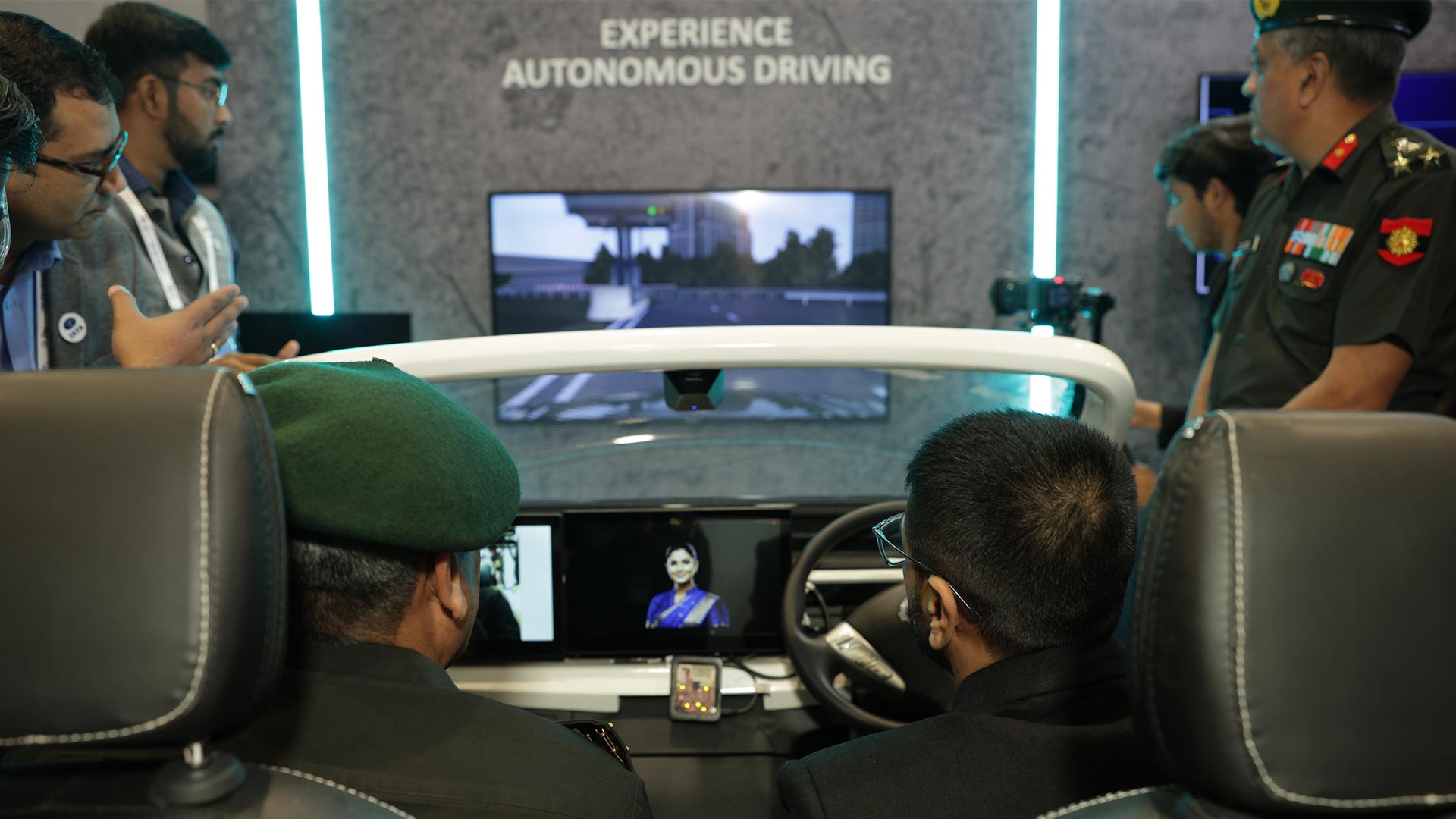
Alongside the autonomous vehicle, the zone features Tata’s next‑generation in‑car assistant, iRA.AI, which uses voice-driven intelligence to personalise and elevate the driving experience. The pavilion also showcases intelligent logistics and fleet management solutions, showcasing how AI is already transforming transportation networks across India, from route optimisation to fleet safety to seamless vehicle ownership.
The exhibit presents a vision of the road ahead where mobility is not just connected, but truly intelligent.
- Anju Maskeri