February 2026 | 797 words | 2-minute read


People. Planet. Progress. Anchored in these three principles, the India-AI Impact Summit 2026 — the world’s largest AI summit — envisioned a future where “AI advances humanity, fosters inclusive growth, and safeguards our shared planet”. The vision came alive with the Tata stories at the summit
World’s first large-scale AI immersion for rural women
1,553 rural women from 8 states. 1 room. 2.5 hours. 4,727 AI tasks completed. The Tata AI Sakhi Immersion Program, held at the Bharat Mandapam in New Delhi, became the largest single-session AI skills immersion ever conducted for rural women.
The women, who were mobilised by Tata Consultancy Services (TCS), Tata Steel, Tata Power and Tata Chemicals from their existing CSR initiatives, with support from Tata Sons, were divided into three cohorts — artisans, digital entreprenuers (basic), and digital entrepreneurs (advanced). Together, they completed 4,727 AI tasks — roughly 3 per participant in under 2.5 hours.
The numbers tell the real story. 447 traditional artisans used AI to generate design ideas, product photos, and innovation concepts for crafts like Pattachitra, Madhubani, and Dokra. 940 women from self-help groups used AI to identify objects, navigate government schemes, create marketing materials, and draft business communications. 166 advanced digital entrepreneurs — women earning ~₹20,000/month — explored AI for self-learning and business growth. Basic Digital Entrepreneurs hit 97% task completion while the advanced cohort hit a 98% completion rate. And doing all of these using their own phones and own languages, unlocked a whole new world of possibilites.
India’s largest untapped talent pool
The energy of innovation continued with the Tata Bharat YUVAi Hackathon — the world’s first large-scale AI hackathon designed specifically for non-developers. “Something happened that has never happened before anywhere in the world,” noted TCS, the force behind the initiative.
1,800+ college students — studying subjects like Sanskrit, Zoology, Nursing, Agriculture, Criminology, Pharmacy, and Commerce — walked into Bharat Mandapam, sat down in front of laptops, and built working software applications. Not one of them had ever written a line of code, and they didn’t need to here either. Using voice-first AI tools that work in nine Indian languages, these students went from identifying a real-world problem to holding a working digital prototype in their hands — in roughly 90 minutes.
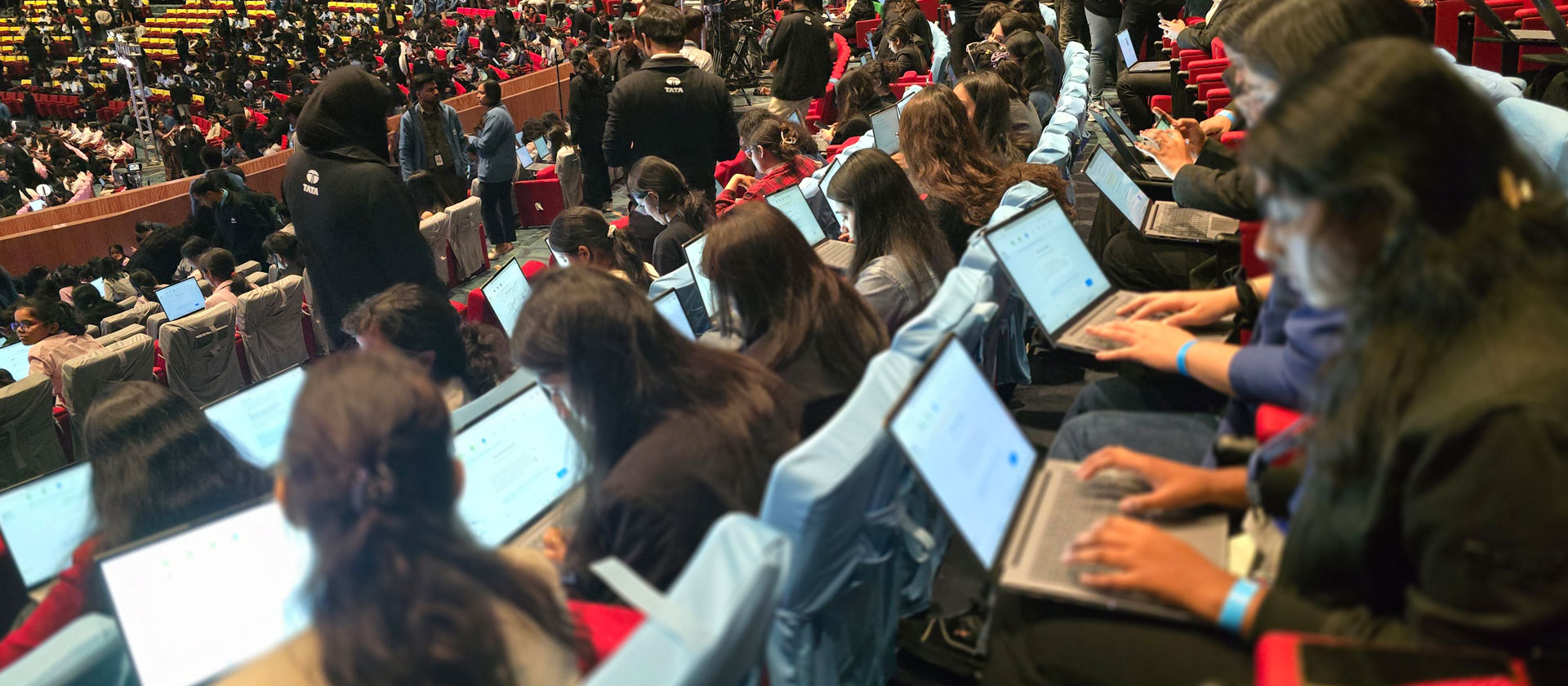
Approximately, 1,500 functioning applications were built in that single session with 58.4% choosing “people” challenges (healthcare, education, livelihoods), followed by “planet” (22.9%) and “progress” (18.7%). Healthcare was the top challenge picked followed by education-linked challenges. Students, elderly people, and farmers were the most frequently identified beneficiaries across all prototypes, reflecting deep empathy for India’s most underserved populations.
Designed as a scalable national movement, the Tata Bharat YUVAi Hackathon has positioned AI not as a tool for the technically trained few, but as a lever for the many — unlocking India’s next million digital entrepreneurs.
The Weft & Warp of Code
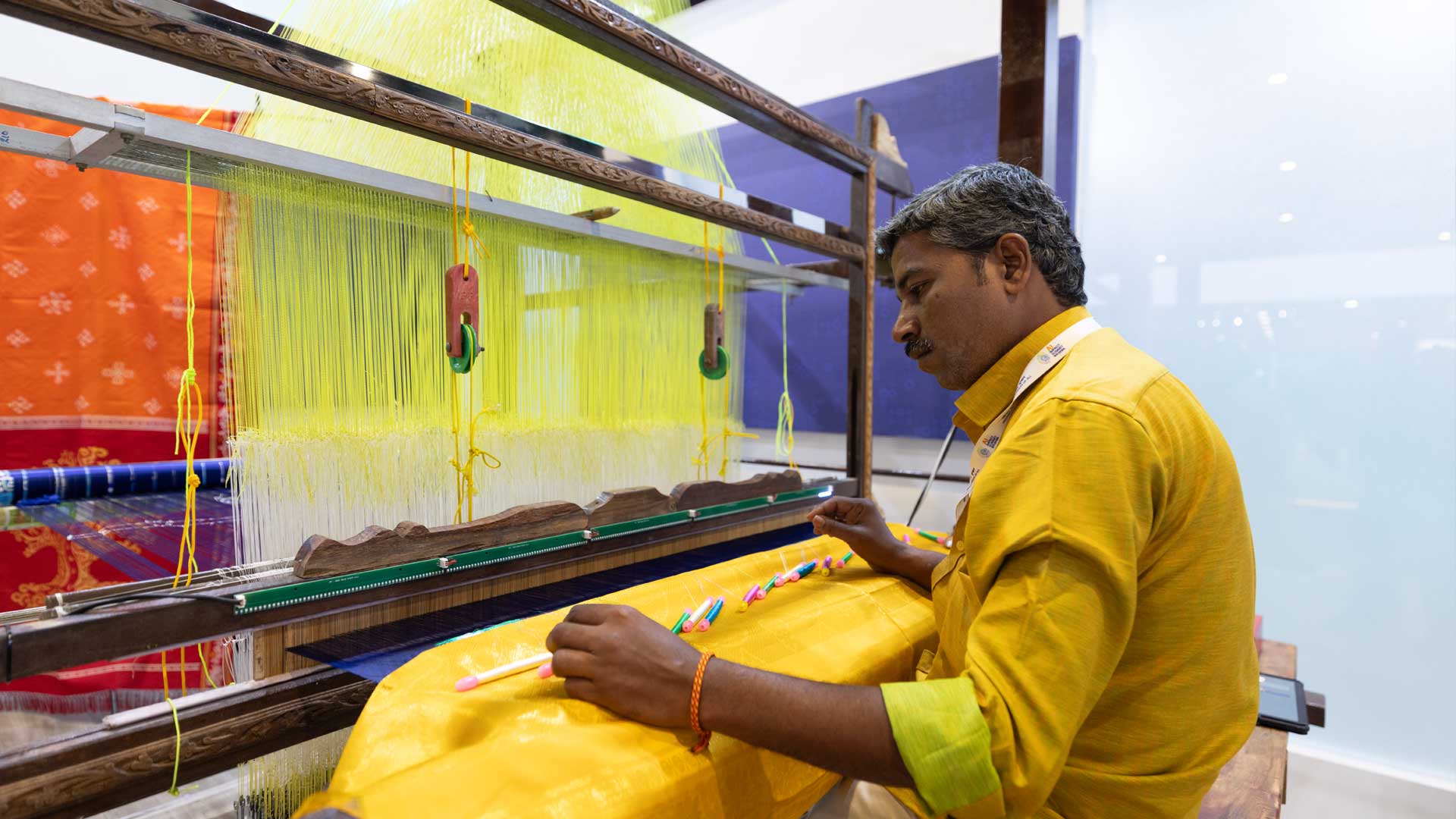
In the heart of the summit — the Expo — a digital handloom platform by TCS breathed new life into centuries‑old traditions.
In India, weaving is is a lifeline for millions of families. But with artisans struggling to earn their livelihood, they find their younger generation drifting away from the craft. It led TCS to ponder: How can technology stand beside tradition, not replace it?
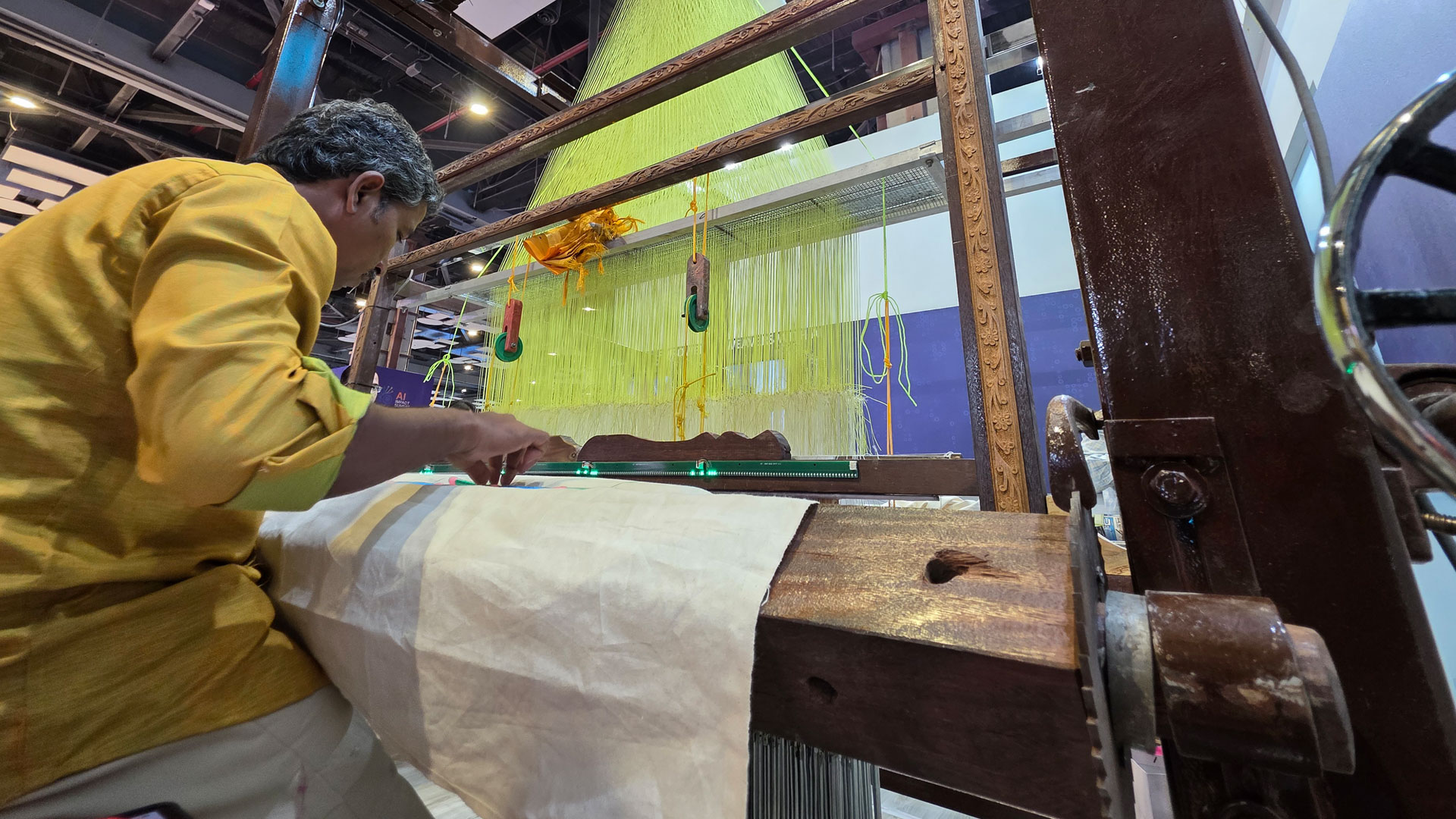
The answer was the TCS Intelligent Design Platform, which uses AI as a creative partner for designers, allowing faster design exploration, real-time 3D and AR previews, and absolute certainty before a single thread is woven. And at the loom, the LED Weaver Assist guides artisans step by step, making even complex designs achievable with confidence and consistency.
The result is faster design cycles, global-scale personalisation, and handlooms that remain deeply authentic.
Healthcare at Population Scale
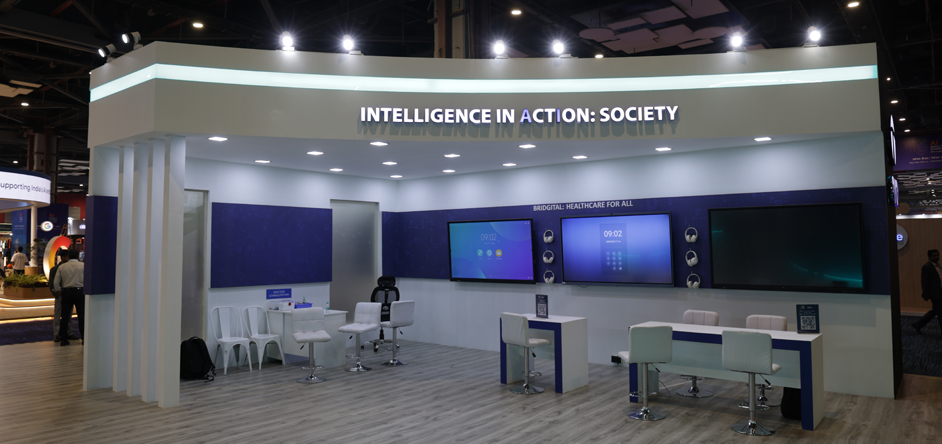
The Tata Pavilion also showcased the Digital Nerve Centre AI platform (DiNC.AI), a public health command center by the Tata Group, where AI is helping transform healthcare by enabling proactive, continuous, connected, patient-centric and closer-to-patient care delivery, at population scale,
This is healthcare shifting from reactive to proactive, from hospital-bound to life-integrated, from episodic to continuous and answering that critical question for a country as large as India: What if care could think ahead for millions at once?
Intelligent India, Inclusive World
Parallely, through the Public Services Masterclass, which included a vibe coding session, TCS demonstrated how equipping communities and leaders to use AI for citizen services can lead to inclusive governance and social transformation.
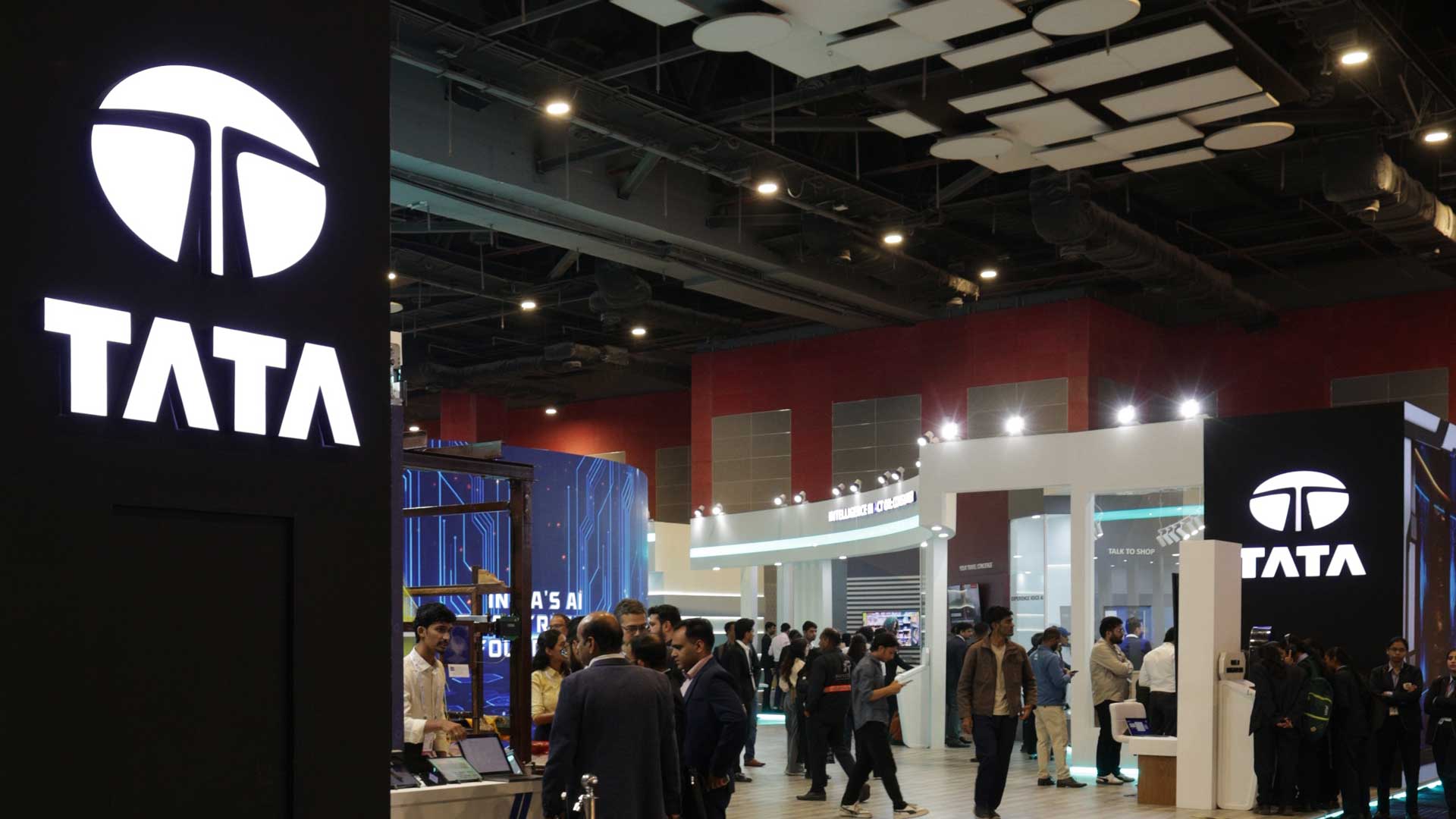
From artisans to students, from healthcare to governance, the Tata Group showcased the untapped potential of an AI-first world where technology is as smart, as it is humane — because when AI serves people and planet, progress becomes inevitable.
- Monali Sarkar