Jaguar Land Rover, part of Tata Motors since 2008, is Britain’s largest automotive manufacturer which designs, manufactures and sells some of the world’s best-known premium cars.
JLR’s Reimagine strategy aims to deliver a sustainability-rich vision of modern luxury by design.
JLR is transforming its business, targeting carbon net zero across the supply chain, products, and operations by 2039. JLR has set a roadmap to reduce emissions across operations and value chains by 2030 through approved, science-based targets. Electrification is central to this strategy and before the end of the decade our Range Rover, Discovery, Defender collections will each have a pure electric model, while Jaguar will be entirely electric.
At heart JLR is a British company, with two design and engineering sites, three vehicle manufacturing facilities, an engine manufacturing centre, and a battery assembly centre in the UK. It also has vehicle plants in China, Brazil, India, Austria, and Slovakia, as well as seven technology hubs across the globe.
Jaguar Land Rover is a wholly owned subsidiary of Tata Motors Limited, part of the Tata group.
Business Highlights
FY25/26 was characterised by both anticipated and unexpected challenges, as well as operational progress and delivery of JLR’s Reimagine strategy, and the continued development of its distinct modern luxury brands.
At the beginning of the financial year, JLR faced the introduction of incremental US tariffs on its UK and EU exports to the US, which had an immediate and ongoing financial impact on the business.
Initially tariffs on cars imported from the UK and the EU to the USA rose to 27.5%. Following negotiations, they now remain at 10% and 15% for the UK and EU respectively, representing an ongoing headwind for JLR’s business.
In the second quarter of the fiscal year, JLR experienced a cyber incident that disrupted its operations. As part of its immediate response to the incident, it proactively shut down its systems as a precautionary measure. It worked at pace to restart its global operations safely and securely and by early October production resumed, returning to normal levels in mid‑November. The weeks of lost production, and the time it then took to normalise global distribution, had a financial impact on quarters two and three. JLR’s performance improved in quarter four, demonstrating the underlying robustness of its business and its ability to recover from setbacks.
Despite these challenges, JLR made strong strategic and operational progress during the financial year as it continued to transform its manufacturing facilities for the production of its new electric models and delivered numerous achievements across its world class brands.
RANGE ROVER
In its 55th anniversary year, Range Rover continued to grow as a luxury brand, featuring in the Top 100 Global Brands for the second consecutive year. Range Rover’s efforts in the global leadership space flourished, with continued sponsorship of The Championships, Wimbledon, as well as presence at key cultural events such as Milan Design Week.
The year saw numerous new vehicle launches, including a new Range Rover and Range Rover Sport SV line‑up, and a suite of London‑themed editions across the range. Development of Range Rover Electric, which is set to be revealed later in 2026, continued at pace.
During the year, Range Rover Bespoke continued to deliver masterfully crafted one‑of‑ones and exclusive editions tailored for different regions. The Range Rover SV Masāra and Range Rover SV Saturio were launched in India and Mexico respectively – each featuring unique design elements and finishes only available through Range Rover Bespoke. These were followed by the one‑of‑a‑kind Range Rover SV Asilomar, featuring a distinctive bespoke duo tone exterior inspired by Monterey Bay.
Following the successful launch of the Range Rover Bespoke personalisation service for Range Rover SV clients, this year the offer was extended to include Range Rover Sport clients. The service provides a dedicated expert to guide clients through the immersive, step‑by‑step process of personalising their vehicle.
The Range Rover SV Black made its global debut at Goodwood Festival of Speed, followed by a North American debut at Design Miami. A celebration of the timeless luxury appeal of an all‑black specification, it is the darkest, stealthiest Range Rover ever created and features pioneering sensory audio which is now also available across the new Range Rover SV line‑up: SV Serenity and SV Intrepid.
Range Rover Sport SV, now available as a core model, was augmented by the Range Rover Sport SV Carbon and Range Rover Sport SV Black – each with its own distinctive design specification.
Range Rover also unveiled a new motif to adorn its vehicles as part of an immersive exhibition to celebrate 55 years of Range Rover at Milan Design Week. The distinctive body side motif is a symbol inspired by the detailing of the original wordmark created in 1970, giving Range Rover a sophisticated emblem for its discerning modern luxury audience.
The motif first appeared this year on the new Range Rover London Collection, Range Rover’s first luxury lifestyle range consisting of eight limited‑edition fashion and lifestyle pieces inspired by its signature modernist design ethos.
DEFENDER
Defender went from strength to strength in FY25/26, as it continued to be JLR’s bestselling model and launched a number of high‑profile partnerships and editions that underscore the brand’s unique tough luxury principles.
The International Defender Awards were launched to champion and support local
conservation and humanitarian causes, with six award winners each receiving a £100,000 bursary and a Defender 110 to support their humanitarian and conservation missions. Winners included the Thousand Year Trust (UK), Next Commons Lab (Japan), Salviamo l’Orso (Italy), Skin Check Champions (Australia), Pollusub from The Blue Odyssey Initiative (France) and the Litterboom Project (South Africa).
Defender showed its unrivalled capability and durability at the World Rally Raid Championship (W2RC), winning the 2026 Dakar Rally in the Stock class. Defender Dakar D7X‑R vehicles placed first and second, representing an outstanding accomplishment for the team in its debut year in the world’s toughest off‑road endurance race. Defender also achieved an overall Stock class win at the Rally‑Raid of Portugal. The team will compete in the W2RC through to 2028.
Another highlight of the year was Defender’s sponsorship of the Women’s Rugby World Cup in September. To celebrate the affiliation, Defender’s Trailblazers Campaign staged a filmed reenactment of the moment 10‑year‑old Emily Valentine became the first recorded women’s rugby player to score a try. Young female players from Enniskillen Rugby Club, where the first try was scored, took part in the reenactment.
Defender was also the official automotive partner of Oasis Live ’25, supporting the British rock band as they performed on 41 stages across the world. The tie up reinforced Defender’s affinity with the world of music, alongside the brand’s return to Worthy Farm as it continued its role as the official vehicle partner of Glastonbury Festival. Model updates focused on customer‑led enhancements across the 90, 110 and 130, refining design, technology and capability. Highlights include new front and rear lighting, fresh colours and wheels, a larger 13.1‑inch touchscreen, updated interior finishes, and Adaptive Off‑Road Cruise Control for improved all‑terrain performance.
The return of the Defender Trophy also saw the adventure‑ready Trophy Edition launched in two bold heritage colours: Deep Sandglow Yellow and Keswick Green. With demand continuing to rise, Defender OCTA introduced new colours and materials, while OCTA Black presented a striking all‑black flagship, featuring over 30 Gloss or Satin Black exterior elements, exclusive interiors and enhanced personalisation options.
Bringing Defender full circle, the brand unveiled new Classic Defender editions in a celebration of its rich heritage, including the Classic Defender V8 Soft Top, the Churchill Edition, a Muromachi Edition, and Defender OCTA colour options for Works Bespoke Classic Defender models
DISCOVERY
In FY25/26, Discovery continued to champion its spirit of exploration with the introduction of two new special editions, Tempest and Gemini. Tempest represents the most luxurious Discovery ever created, distinguished by its matte finished bodywork, elevated material choices and a flagship specification designed for effortless long‑distance touring.
Discovery Gemini, meanwhile, offers a modern tribute to the original 1989 Discovery, with exclusive design cues, curated colour choices such as Sedona Red, and thoughtful detailing that celebrates more than three decades of Discovery ingenuity. Together, these editions strengthen Discovery’s position as the ultimate companion for families who value comfort, capability and connection on every journey.
Discovery Sport also evolved with the introduction of new Metropolitan and Landmark Editions to enhance personalisation and celebrate Discovery Sport’s rich heritage. The Landmark name pays homage to the brand’s more than 35‑year legacy of family adventure. Discovery Sport is a versatile vehicle for families featuring a sliding and reclining second row of seats, a load area of up to 1,794 litres, and up to 24 seat configurations to choose from.
The in‑cabin comfort offered by Discovery Sport was increased this year with the availability of Cabin Air Purification Plus to ensure optimal air quality in the car, alongside a suite of new accessory packs tailored to the rhythms of family life.
For beach days, a dedicated pack introduced in Discovery Sport features a centre armrest cooler for food and drink on the move, tailored sunshades to help keep the cabin cool when parked, and a collapsible load area organiser to tidy away sandy essentials.
And for winter adventures, the Snow Trip Pack showcases Discovery Sport’s capability in colder climates, enabling up to four pairs of skis or two snowboards to be transported with ease using a special carrier and cross bars. Meanwhile, rubber floor mats protect the cabin from wet boots and the Snow Traction System provides added reassurance in slippery conditions, helping families reach the slopes with confidence.
JAGUAR
2025 marked the final chapter for outgoing Jaguar models, with production concluding for the Jaguar F‑PACE at Solihull, UK, and for the E‑PACE, XEL and XFL in China for China, manufactured under JLR’s CJLR joint venture. These were heartfelt moments for the many JLR employees and suppliers instrumental in the success of Jaguar to date.
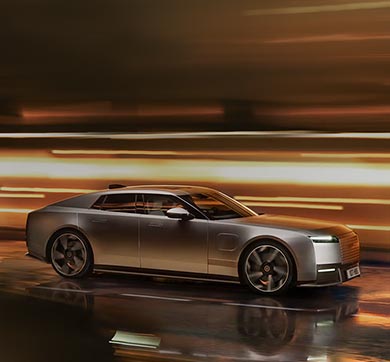
And while the curtain fell for outgoing Jaguar, new Jaguar continued its global brand repositioning with the design vision concept, Type 00.
Set against the backdrop of the sparkling Mediterranean sea, Type 00 arrived in Monaco on a floating ocean terrace, after its viral sighting on the streets of Paris. The design vision concept appeared in French Ultramarine ahead of the Monte Carlo Formula E race weekend, before making its Asian debut in Japan as the centrepiece in a curated Tokyo art immersive space alongside the modernist artist YOSHIROTTEN.
Type 00 also appeared at Goodwood Festival of Speed in the UK before concluding its global tour at Pebble Beach Concours in the USA.
Highlighting the brand’s rich heritage, Jaguar brought together the first Jaguar‑namebearing vehicle, the 1935 SS Jaguar and Type 00 for their first joint appearance in London to mark 90 years of originality. To celebrate the occasion, Type 00 was unveiled in a new colour, London Red.
Cementing its place in the UK’s capital, Type 00 was also placed on display in Jaguar’s first Knightsbridge Brand Store in London’s luxury fashion district throughout December. The store windows displayed the chronology of Jaguar’s icons; SS 1, E‑type, XJS and the Type 00 design vision concept, honouring the brand’s heritage while previewing its future.
Prototypes of the all‑electric luxury four‑door GT were put through the latest round of winter testing, taking on extreme temperatures as low as minus 40°C in the Arctic Circle. Undergoing the most rigorous global validation programme in Jaguar history, 150 prototypes have covered hundreds of thousands of miles across hot desert highways, frozen lakes and advanced virtual environments.
Global media had the opportunity to experience the new Jaguar in person during passenger rides in a prototype car at JLR’s design and engineering headquarters in Gaydon, UK, before getting behind the wheel on the frozen lakes of Arjeplog, Sweden. The media response to the vehicle was overwhelmingly positive.
OPERATIONAL DEVELOPMENTS
At the beginning of the financial year in April, the world was faced with the sudden introduction of US trade tariffs. The new tariffs had an immediate and significant impact on JLR’s exports to the US and it took immediate action, including, with stock in the market, temporarily pausing shipments to the US as it assessed the implications of this change. It was grateful to the UK and US governments for agreeing the UK‑US trade deal at speed last summer and pleased the EU‑US trade deal was ratified on 25 September.
The US automotive import tariffs remain at 10 per cent and 15 per cent for the UK and EU respectively, representing a continued headwind for JLR’s business. However, the negotiated trade deals gave it certainty, as well as the confidence to continue investing £18bn over five years (from FY23/24) to deliver its strategy.
In May, JLR was proud to receive the grant of a warrant from Her Majesty Queen Camilla as part of her latest announcement of grantees. This appointment followed the grant of a warrant from His Majesty King Charles III in 2024 and reaffirmed the Group’s long‑standing relationship with the Royal Household.
Last year was a moment of great significance when JLR’s CEO of three years, Adrian Mardell, confirmed in August that he would be retiring at the end of 2025. Adrian led the company to a significant financial turnaround, including delivering 11 consecutive profitable quarters between Q3 FY23 and Q1 FY25/26, the best full year profits in the company’s history in FY23/24 and FY24/25, and eliminating £5.1bn of net debt by the end of FY24/25.
The Board announced the appointment of PB Balaji as the new CEO of JLR from November. Prior to this role, Mr Balaji was the Chief Financial Officer (CFO) of Tata Motors Group and served as a Non‑Executive Director of the Company. PB Balaji is a global finance professional with almost three decades of experience in the corporate sector spanning the FMCG and automotive industries, and brings with him a wealth of experience and a deep understanding of JLR.
In the second quarter of the financial year, JLR experienced a cyber incident. As part of its immediate response to the incident it proactively shut down its systems as a precautionary measure. Production was paused for five weeks before restarting on 8 October and returning to normal levels in mid‑November.
As part of its response to the incident, JLR followed a controlled, phased restart of operations, with support from dedicated teams working around the clock alongside cyber security specialists. This process focused on restoring customer‑facing systems to minimise client car delivery delays and maintain repairs and servicing. It then restarted the systems used to wholesale vehicles and JLR’s Global Parts Logistics Centre to help keep customers’ cars on the road and fast‑tracked the introduction of a supplier financing scheme to provide qualifying JLR suppliers with cash upfront during the production restart phase.
The incident had a significant financial impact on JLR, but the business has recovered safely and it is committed to learning from the experience.
NEXT GENERATION MODELS AND INDUSTRIALISATION
The development of JLR’s next generation vehicles, including Range Rover Electric and Jaguar, continued at pace this year, as the models were put through their paces in virtual laboratory and physical testing settings. Using the latest test equipment and laboratories to carry out millions of kilometres of simulated testing, JLR can conduct far more rigorous and repeatable evaluations to support the delivery of the highest‑quality finished products to clients.
The Range Rover Electric programme reached another milestone when the global media were invited to drive prototype vehicles at JLR’s Eastnor Castle offroad experience centre in Herefordshire, UK, as well as experience passenger rides on the frozen lakes of Arjeplog, Sweden.
Journalists were impressed by the car’s off‑road ability, aided by its advanced Intelligent Driveline Dynamics (IDD) technology, which can distribute rear torque from 100 per cent to zero by controlling motor speed within 50 milliseconds, responding up to 100 times faster than internal combustion engine (ICE) vehicles to handle slippage. The car’s advanced on‑board thermal management system, which reduces heating energy consumption by up to 40 per cent, also excelled in these challenging conditions.
Work to ready the production lines for Range Rover Electric at Solihull in the UK is now substantially complete, while work on the new Jaguar production lines at the same facility are at an advanced stage. Teams at Halewood also finalised the production lines to manufacture medium sized pure electric SUVs on the EMA architecture, with more than 200 test builds of those models now complete. These vehicles will be built alongside internal combustion and plug‑in hybrid models at the Merseyside plant, highlighting JLR’s flexible powertrain strategy.
Meanwhile production lines at the Electric Propulsion Manufacturing Centre in Wolverhampton in the UK, where the electric drive units and battery packs will be constructed, are now complete. While preparations for manufacturing EVs near completion, JLR took steps to protect its vehicle supply chains with the appointment of 50 specialists focused on the resilience of supply chains amid ongoing geopolitical uncertainty.
JLR also forged a partnership with charging software company EV.Energy to trial a new smart charging solution on JLR’s electrified cars. During the pilot, EV.Energy’s software platform will integrate with JLR’s connected vehicle platform to intelligently schedule charging at grid‑friendly times that prioritise renewable energy for participating clients.
INNOVATION
JLR continued to innovate, developing partnerships with forward‑thinking start‑up companies to support the delivery of the Reimagine strategy. This year, InMotion Ventures, JLR’s corporate venture capital arm, which invests in promising start‑ups to support the delivery of Reimagine, made 10 investments. This included three in new portfolio companies: Matta, which develops AI systems to improve manufacturing processes; Parable, which employs an AI system to observe and improve enterprise‑wide productivity; and SirenOpt, a manufacturing intelligence platform enabling real‑time inspection, quality control, and process control capabilities for manufacturing.
Through in‑house incubator company InMotion Venture Studios, JLR continued to grow its startup luxury car subscription services The OUT and PIVOTAL by expanding the companies’ fleets and client bases as JLR trials new models of ownership.
As part of its Open Innovation strategy, JLR also began a trial of drone technology at its Electric Propulsion Manufacturing Centre (EPMC) in Wolverhampton, dramatically reducing machinery and site inspection time by up to 95 per cent. The pilot is an important step forward in operational efficiency and employee safety, aligning with JLR’s vision for its factories of the future.
FREELANDER
In 2024, JLR announced a new collaboration with its joint venture partner, Chery, reviving the Freelander brand under which a new family of electrified vehicles would be developed on a flexible Chery architecture. Chery is bringing advanced Chinese technical expertise in electrification to the partnership, while JLR is bringing its expertise in world‑class design, with a dedicated Design Hub opened in Shanghai to provide design direction to Freelander. The design Concept 97 was revealed on 31 March 2026 and will be part of a portfolio of products that captures the original spirit of Freelander, while embracing the innovation in electrification that defines the Chinese market.
SUSTAINABILITY AND COMMUNITY
JLR’s circularity plans as part of the sustainability strategy bore fruit in its manufacturing facilities this year as it delivered over £100 million value from reuse and refurbishment initiatives. It redeployed equipment across UK and European plants, installing second‑life robots and recycling 18,600 tonnes of metal, cutting waste as facilities are transformed for parallel EV production.
JLR also became the first global OEM to adopt new Pirelli P Zero tyres containing more than 70 per cent renewable and recycled materials, and FSC™ (Forest Stewardship Council™) certified natural rubber. Combining materials with reduced environmental impact without compromising on quality and performance standards, the new tyres are available as standard on select new Range Rover models where a 22‑inch wheel is specified, ahead of a wider roll‑out across other brands.
The Group continued to forge its renewable energy strategy to help reduce its emissions and reliance on grid energy, improving resilience to cost fluctuations, grid instability, and disruptions. As part of this focus, JLR rolled out large‑scale solar installations to help power its global operations, including its Gaydon headquarters, Electric Propulsion Manufacturing Centre and JLR’s joint venture production facility in China.
The JLR Foundation, launched in 2025, awarded its first grants to seven carefully selected charities in the communities in which JLR operates. Each one aligns with its mission to empower young people to reach their full potential through the development of essential skills and career prospects.
PEOPLE
JLR announced new enhanced family‑friendly policies, offering up to 64 weeks of paid leave for new working parents (maternity, adoption, surrogacy plus neonatal care), alongside inclusive policies for menopause and wellbeing.
Following the successful launch of JLR’s School Partnership Programme in 2023, the company launched Create Possible, a free online education programme for students aged 11‑14 and their teachers to help tackle classroom challenges and support efforts to close the UK’s STEM skills gap. The initiative follows a survey of 1,000 pupils aged 11–14, which revealed misconceptions and barriers around STEM subjects. Over a quarter (26 per cent) of students believe STEM is “just for boys”, while only 1 per cent think it’s “just for girls”. Encouragingly, 75 per cent of girls say they would consider a career in STEM, compared to 88 per cent of boy