February 2026 | 1262 words | 4-minute read


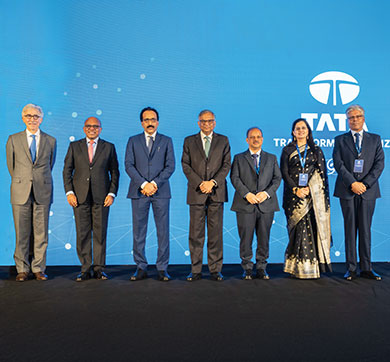
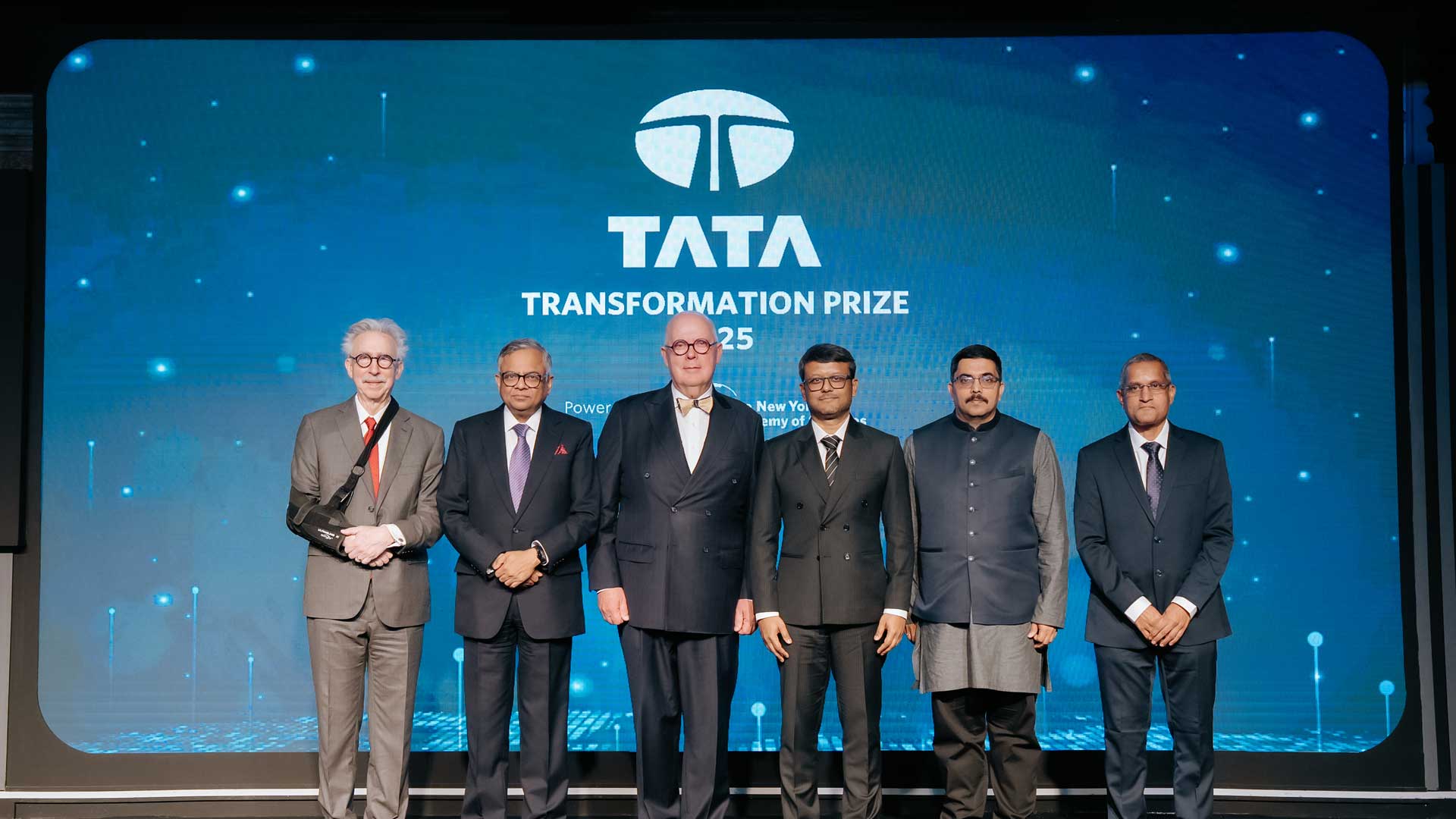
India faces urgent challenges: feeding ~167 crore people by 2050 on shrinking farmland, expanding industry sustainably, and providing advanced healthcare that most citizens cannot afford. On December 5, three Bengaluru-based scientists, Dr Padubidri V Shivaprasad, Dr Balasubramanian Gopal, and Dr Ambarish Ghosh, were awarded the 2025 Tata Transformation Prize for groundbreaking research that addresses these interconnected issues.
Each of the three winners received ₹2 crore (~$228,000) to advance their breakthroughs — spanning epigenetically engineered rice, microbial chemical factories, and cancer-targeting nanorobots — into real-world solutions. Selected from 212 nominations across 27 states, they were evaluated by a distinguished jury from leading academic, industrial, and government institutions across India, the US, Europe, Asia, and Australia. They included experts from IBM Research, Biocon, Gates Foundation, the University of Messina in Italy, Murdoch University in Australia, the Indian Institute of Management Bangalore, the National Institute of Advanced Studies, and CSIR – Central Drug Research Institute.
In its third year, the Tata Transformation Prize, a collaboration between Tata Sons and The New York Academy of Sciences, advances the Group’s vision to encourage scientific ingenuity for social benefit. “Giving scholars what they require for freedom of exploration, asking challenging questions and going wherever the truth takes them is akin to planting a seed and tending to it,” said N Chandrasekaran, Chairman, Tata Sons. “Nature will do what it will and we will do what we must.”
Mr Chandrasekaran emphasised that their achievements stem from years of dedication, saying, “Their work holds significance for India and for humanity at large as humankind searches for ways to adapt to our rapidly changing environment. How we protect our food sources, how we devise better methods to produce what we need, and how we cure ourselves in gentler ways are matters that concern all of us. These are not easy questions to answer and the results we see today are born of years of persistence. Their efforts are in keeping with the traditions of Indian scientific progress: of frugal achievement that holds us in wonder, of self-reliance and ingenuity that transcends tight budgets.”
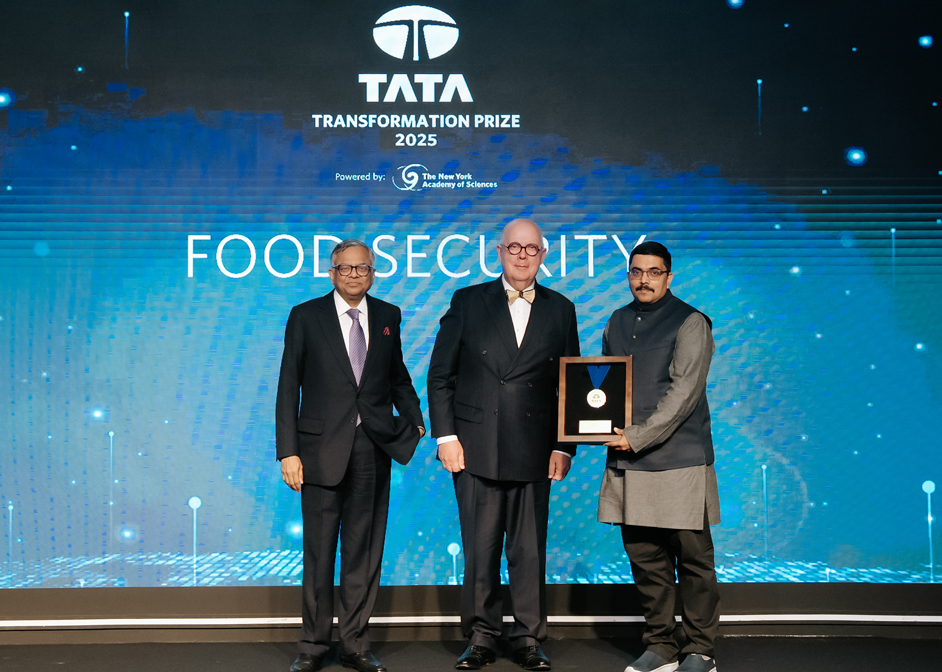
Food Security winner: Dr Padubidri V Shivaprasad, National Centre for Biological Sciences
“I am fascinated by plants; they have sophisticated lives,” says Dr Padubidri V Shivaprasad. “I used to roam around the forest, look at plants and try to understand why they do what they do.” This curiosity led Dr Shivaprasad to set up a lab that “focuses on how plants live their lives, how they cope with the stresses, how they manage to produce the things that we need, that is seeds, grains and fruits.” The importance of his research is highlighted by some worrying statistics. “Nearly 80% of our population lacks access to safe, nutritious and healthy food,” he says. “The second most important thing, which is probably a more global issue, is climate resilience.”
Dr Shivaprasad’s lab focuses on an interesting concept: the ‘de-domestication’ of rice. For centuries, humanity has selectively bred rice to gain higher yield and increased growth, which in turn has caused many strains of rice to lose their hardy, stress-resistant traits. The lab works to undo some of this damage through epigenetic engineering (switching genes on and off) and small RNA–based modifications (reducing unwanted gene activity). These precise alterations in the genome can reintroduce important characteristics into the rice, like the ability to withstand drought, pests, and other harsh conditions.
“The goal of our proposal is to make the cultivated rice more resilient and more nutritive by bringing back key elements from the landraces [traditional varieties] that are locally adapted, that can also manage the climate vagaries,” he says. The implications extend beyond crop resilience to reduced dependence on fertilisers and pesticides, lowering farming costs and improving nutrition for crores of Indians.
Sustainability winner: Dr Balasubramanian Gopal, Indian Institute of Science
Dr Balasubramanian Gopal won the Tata Transformation Prize for developing a green chemistry platform that addresses an urgent environmental crisis. “We have one-seventh of the world’s population, which lives in less than a 30th of the world’s land mass,” he explains. “If you now have chemical industries, which have a large toxic impact on the environment, it is simply not sustainable.”
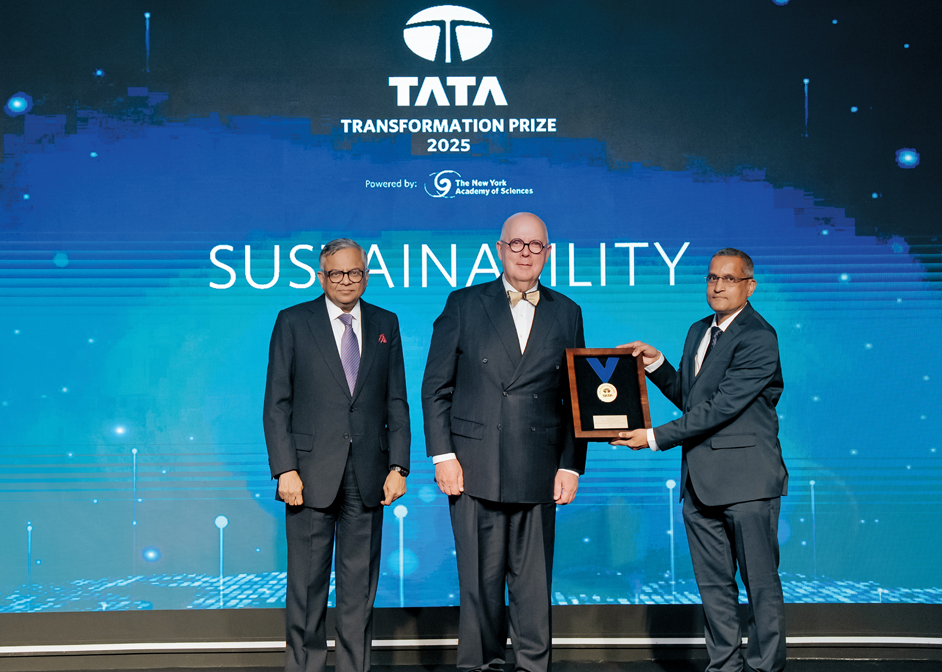
According to Dr Gopal, green chemistry offers a way to reduce the environmental impact of the biomanufacturing sector. “Green chemistry refers to a variety of processes by which you perform the same chemical method, except that you don’t have those toxicities involved,” says Dr Gopal. The transformation relies on efficient enzymes, biological catalysts that offer a cleaner alternative to traditional, harsh chemical synthesis methods.
Putting this idea into action, Dr Gopal’s platform uses bioengineered E. coli bacteria to make key chemicals used in pharmaceuticals, cosmetics, and agriculture. His team uses experimental biology and AI tools to quickly develop efficient enzymes and improve production — without any antibiotics or harmful additives. “There was a point when 70% or more of pharmaceutical ingredients were being imported,” says Dr Gopal. “What we are doing in our own small way is to create a platform technology that can be used to make a diverse set of products. We anticipate that we may tip the scale from being a net-net importer into a net-net exporter.”
For Dr Gopal, winning the prize represents something meaningful beyond financial support. “What this prize does for our lab is a certain recognition that what you do in your test-tube would actually make a difference and that’s a big deal, because it brings in a certain sense of purpose,” he says.
Healthcare winner : Dr Ambarish Ghosh, Indian Institute of Science
“What was once considered science fiction is now a reality,” declares Dr Ambarish Ghosh. “Nanobotics is going to impact healthcare not just in India but across the world.” Dr Ghosh’s pioneering work in cancer treatment fuels his confidence.
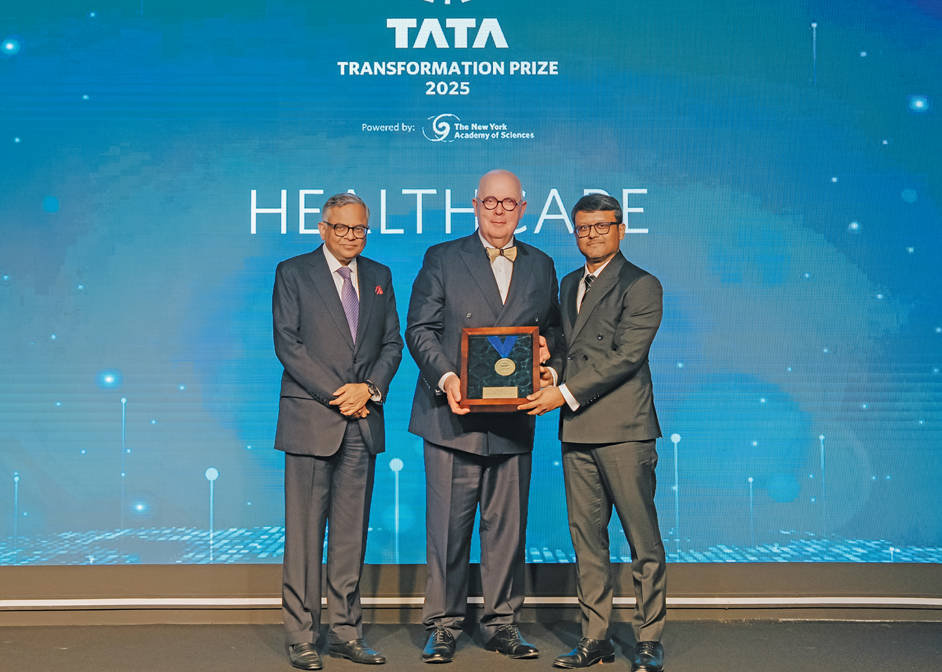
“The most standard way of treating cancer is chemotherapy,” says Dr Ghosh. “Now, one of the biggest challenges is that when you administer a drug it goes everywhere. It attacks the cancer but in parallel it causes havoc, attacking all the normal cells.” This unpredictability pushed him to research better cancer therapies. His solution? Using magnetic nanorobots to deliver drugs directly to the problem. “Just imagine you have these tiny little vehicles that are carrying your drugs, swimming through your blood vessels or drilling through your tumours and going to the cell that’s of interest,” he explains. “We have developed techniques where we can move these objects in a very, very controlled manner. This approach is radically different from what has ever been tried before.”
It would also result in targeted, less invasive cancer treatment with reduced side effects. Dr Ghosh and his team are developing this platform with a focus on affordability and ease of use. Their work has the potential to not only revolutionise cancer care but also make advanced therapies accessible to low- and middle-income segments, significantly improving patient outcomes and equity in healthcare.
As India aims to become a developed nation by 2047, investments in scientific research will be crucial. The challenges facing the country, and the world, demand the transformative thinking shown by this year’s winners. Their work proves that viewing problems through a radically new lens — whether it’s by making rice wild again, turning bacteria into factories or building microscopic robots to navigate human cells — can unlock solutions.
- Kermin Bhot