November 2026 | 872 words | 3-minute read


Disasters alter more than landscapes; they disrupt the invisible structures that hold communities together. For children, this means a loss of safety, emotional continuity and the familiar anchors of everyday life.
The trauma brought on by Cyclone Ditwah will take a long time to recede from the memories of those who experienced the disaster. This tropical cyclone rained down devastation upon Sri Lanka and South India in late November and early December 2025. In the aftermath of the cyclone, floods and massive landslides hit the hapless citizens of Sri Lanka.
Tata, as you know, is almost a household name in Sri Lanka. I remember, as a small child, I thought of the name of the bus was Tata and I thought 'bus' and 'Tata' were interchangeable. It's different now, but Tata remains a well-known and trusted brand here, and we are very grateful for your input and collaboration. As has been mentioned, India has become a steadfast and important partner for Sri Lanka. Over the past two years, our relationship has remained remarkably resilient, anchored in shared interests, shared values, and how we see the future of our two countries. - H E Dr Harini Amarasuriya, Hon'ble Prime Minister of Sri Lanka
Moved by their plight and guided by the Tata philosophy of community service, the Tata Group, under the ONE Tata banner, decided to craft a disaster relief response for the most vulnerable among the affected communities. Shrirang Dhavale, AVP and Head, Social Sustainability, Tata Sustainability Group (TSG), says, “We referred to the humanitarian priorities plan made by the government of Sri Lanka, in collaboration with the United Nations (UN). This reflection led us to a need spelt out by the education ministry of Sri Lanka.”
This relief project, ‘Hope in a Backpack’, was a ONE Tata response that included various Tata companies, namely, Air India, Tata Communications, Tata Consultancy Services, Tata Motors CV, Tata Motors PV, Tata Power, Tata Steel, Titan Company, IHCL and TajSats. The Tata team worked in coordination with Sri Lanka’s Disaster Management Center (Ministry of Defence), Ministry of Education, Government of Sri Lanka, DIMO, Tata Motors’ partner in Sri Lanka, and ChildFund Sri Lanka.
Hope in a Backpack
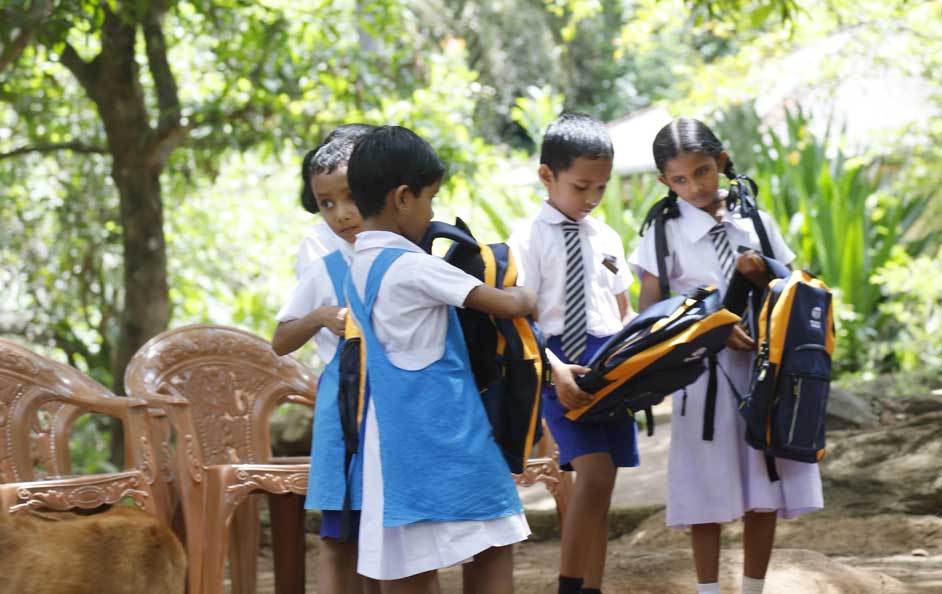
Hope in a Backpack sought to give schoolchildren in the most affected and vulnerable communities a chance to regain a sense of normalcy. For students who had lost their belongings in the landslides and floods, the backpack represented tangible hope that no matter what, the routine of their school days and the prospect of building their own future remained firmly in their grasp.
The backpack was filled with supplies that would help the children to make a fresh start. The kit for Primary school students consisted of nine exercise books, stationery material such as crayons, pencils and erasers, a water bottle and a bag. The kit for Secondary school students consisted of fourteen exercise books, stationery material such as pencils, erasers, sharpeners and a Geometry box, a water bottle and a bag.
In all, 276 schools located in the worst affected and most disadvantaged communities were identified. Mr Dhavale says, “One of our values is Reaching the Unreached. That’s how we chose the districts of Badulla, Nuwara Eliya and Kandy, the worst affected, for our outreach efforts.” Targeted distribution was also done in Kegalle and in the flood-affected areas of Colombo.
Coordinated effort
The decision about which districts to focus on was taken by the Tata team, based on the poverty index, the damage assessment of houses (whether fully or partially damaged) and the report on casualties. The education departments of the respective districts selected the schools and the students eligible for the distribution.
Since the need had to be addressed at short notice, TSG enlisted the support of its procurement cadre. Shiva Mishra and Sachin Kadam, procurement officers of the ONE Tata Disaster Response Cadre from Tata Motors and TajSats respectively, sourced samples. These were then shared with the Sri Lankan embassy in Mumbai for approval. Changes were made in the kit as per their recommendations. After this, began the task of procuring each item, and then shipping it to Sri Lanka.
To our brothers and sisters in Sri Lanka, with whom we share history, culture, and mutual respect, this response by several of our Group companies, through their volunteers, speaks of the courage to navigate difficult conditions without any expectation.- Chacko Thomas, Group Chief Sustainability Officer, Tata Sons
Ipsita Das, DGM, Social Sustainability, TSG, says, “We put together student learning kits for 27,000 students from 276 schools across some of the country’s most severely affected districts. By supporting children’s return to a learning environment, the initiative aimed to restore normalcy during a time of deep uncertainity.” The students consisted of 19,000 primary students and 8000 secondary students.
Helping a neighbour
As the Companies Act 2013 mandates that companies incur CSR expenses within India alone, the entire contribution made by companies towards this effort had to come from companies’ business. This was done to help Sri Lanka, a neighbouring country, to recover from the most severe disaster it faced since the tsunami that hit the Indian Ocean in 2004. The team is now working on rehabilitation plans, specifically with reference to disaster risk reduction to help rebuild Sri Lanka.
The team is now working on rehabilitation plans, specifically with reference to disaster risk reduction to help rebuild Sri Lanka.
Task well done
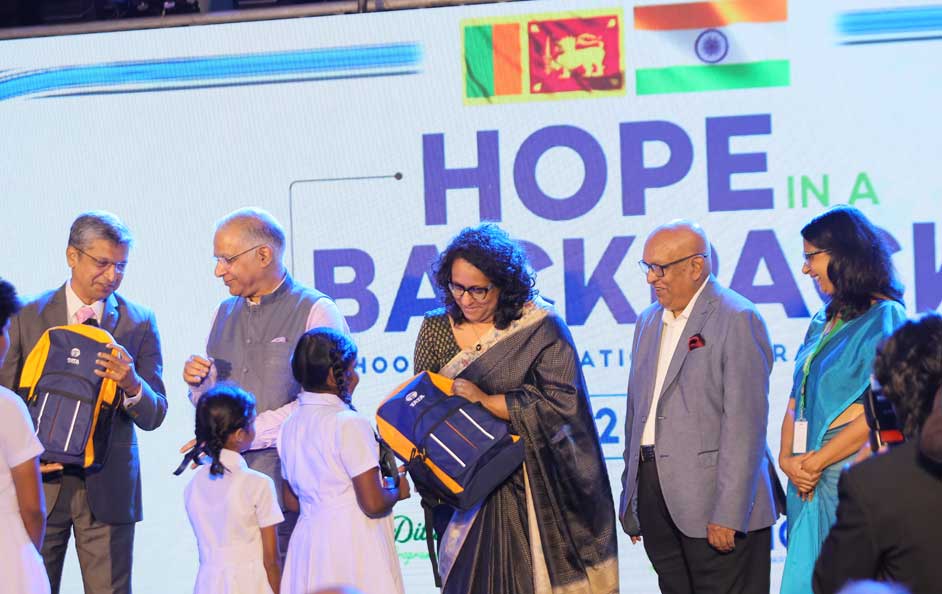
The initiative was widely appreciated by the Sri Lankan government at an event held to mark its successful completion. Dr Harini Amarasuriya, Prime Minister of Sri Lanka; Santosh Jha, High Commissioner of India to Sri Lanka; Ranjit Pandithage, Chairman, DIMO, and Chacko Thomas, Group Chief Sustainability Officer, Tata Sons, were among the dignitaries present.
Speaking about the initiative, Shailesh Chandra, MD, TMPV, said, “Relief efforts must go hand in hand with restoring education. For a child who has endured the upheaval of a disaster, returning to school is not simply about resuming lessons — it is about regaining a sense of safety, belonging, and possibility. For the Tata Group, this initiative is not only about repairing what was lost, but about safeguarding the promise of what lies ahead — a future where every child can learn, grow, and thrive despite adversity.”
This, in essence, is exactly what the relief effort has been able to achieve. Through the Hope in a Backpack initiative, the Tata Group has given 27,000 children hailing from the worst hit districts a backpack full of reasons to look forward to the future.
- Cynthia Rodrigues