December 2025 | 1369 words | 5-minute read


Tata Sampann, launched in 2015, has emerged as a leading brand in premium pantry staples, focusing on quality, authenticity, and convenience. It offers pulses, besan, spices, dry fruits, and nuts. The brand had a 29% revenue surge to ₹1,109 crore in FY25, accounting for 6.3% of Tata Consumer Products’ revenue. Tata Sampann’s success is driven by mindful processing, rigorous quality checks, and strategic category expansion into pulses, dry fruits, chutneys, and cold-pressed oils. Emphasising digital-first marketing and innovation, the brand sustains double-digit growth, reshaping Indian kitchens by balancing traditional authenticity with modern convenience and premiumisation.
Tata Sampann, launched in 2015, has transformed essential pantry staples in India, focusing on quality, authenticity, and convenience. Traditionally, pulses have been a cornerstone of Indian cuisine, yet most are sold loose and unbranded. Tata Sampann identified this gap, becoming one of the first national brands to offer packaged pulses, later expanding into besan, spices, dry fruits, and nuts.
In FY25, the brand’s revenue surged 29% to ₹1,109 crore, contributing 6.3% to Tata Consumer Products’ (TCP) ₹17,618 crore revenue. Over five years, Tata Sampann maintained a robust 31% annual growth, driven by mindful processing and stringent quality checks—70% of pulses entering its warehouses are rejected for not meeting standards. The brand’s portfolio includes unpolished pulses, high-curcumin turmeric, and recently added whole spices and pure saffron, catering to regional tastes and health-conscious consumers.
Innovation is central; products like Easy Cook Ragi Atta and Kabuli Chana simplify cooking, aligning with consumer needs for convenience. Premiumisation underpins growth, with GI-tagged Gulbarga Tur Dal and value-added chutney dips. Digital-first marketing and e-commerce strategies have propelled sales, with online channels and modern trade now accounting for over 60% of revenue. Tata Sampann’s vision is to become India’s leading food master brand, focusing on consumer-centric offerings, trend alignment, distribution expansion, and marketing innovation. As Indian kitchens prioritize nutrition and authenticity, Tata Sampann’s evolution from basic spices to holistic food solutions is reshaping cooking habits, blending tradition with modern convenience.
Tata Sampann, launched in 2015, has rapidly become a prominent brand in India’s packaged food sector, transforming everyday kitchen essentials into premium, trusted products. The brand first entered the market with pulses—a staple of Indian cuisine and a category largely dominated by unbranded products. Recognizing the opportunity to provide high-quality, unadulterated pantry staples, Tata Sampann established itself as one of the first national brands in packaged pulses, later expanding into spices, besan, dry fruits, nuts, and more.
In FY25, Tata Sampann achieved a remarkable 29% revenue growth, reaching ₹1,109 crore and contributing 6.3% to Tata Consumer Products’ (TCP) total revenue of ₹17,618 crore. Over the past five years, the brand has maintained a robust 31% annual growth rate, cementing its role as a key growth driver for TCP. This success stems from a strategic focus on segments with lower branded penetration, such as pulses and spices, rather than crowded categories like rice and refined flour.
Tata Sampann’s differentiation lies in its unwavering commitment to quality, authenticity, and convenience. Leveraging the trust of the Tata name, the brand ensures that its products—such as unpolished pulses and spices retaining their natural oils—deliver both wellness and taste. Rigorous quality checks mean that 70% of pulses arriving at its warehouses are rejected for not meeting exacting standards. For instance, its turmeric powder retains at least 3% curcumin, valued for health benefits, and its unpolished toor dal preserves protein content by avoiding artificial processing.
Recent years have seen Tata Sampann expand into adjacent and premium categories. Its dry fruits and nuts portfolio achieved ₹150 crore turnover in four years, while besan crossed ₹100 crore in FY25. The brand has also introduced products like daliya, vermicelli, makhana, and ready-to-use chutney dips in innovative packaging. Regionalization is another strategic move, with offerings like Poha Indori Style and Hing tailored to local tastes. Tata Sampann’s foray into the saffron segment addresses adulteration concerns by providing hand-picked, lab-tested saffron.
Health and wellness trends have prompted TCP to launch cold pressed oils under Tata Simply Better, starting with extra virgin olive oil and expanding to coconut, mustard, sunflower, groundnut, and sesame oils—quickly becoming the fastest-growing new category. Premiumisation is integral to Tata Sampann’s strategy, with even base products like GI-tagged Gulbarga Tur Dal positioned as premium offerings.
Innovation is a cornerstone, with an 8% innovation-to-sales ratio in FY25, outpacing TCP’s overall rate. New products, such as Easy Cook Ragi Atta and Easy Cook Kabuli Chana, offer convenience by eliminating traditional preparation steps. Digital-first marketing and tailored SKUs have driven strong online sales, with e-commerce and modern trade accounting for over 60% of sales and digital campaigns comprising 80% of marketing spend.
Looking ahead, Tata Sampann aims to become India’s leading food master brand by aligning offerings with consumer needs, staying on trend, expanding distribution, and evolving its marketing model. As Indian households increasingly value nutrition, authenticity, and convenience, Tata Sampann’s transformation from basic spices to comprehensive food solutions is reshaping culinary habits, blending tradition and modernity for a healthier, more convenient future.


- 0.5×
- 0.75×
- 1×
- 1.25×
- 1.5×


For centuries, one dish has ruled the tables of royalty and citizenry alike — simmering quietly in a pot, exploding into a riot of flavours when tempered with spices. The humble dal, a dish made from dried and split lentils, needs no introduction. Pulses are a mainstay of Indian meals — the country is the world’s largest producer, importer and consumer — and it is in this category that Tata Sampann first chose to make a mark in 2015.
Ten years on, Tata Sampann has become a brand to reckon with, offering a range of premium pantry staples, including pulses, besan, spices, dry fruits and nuts. In FY25, the brand’s revenue surged 29% to ₹1,109 crore, accounting for 6.3% of Tata Consumer Products’ (TCP) ₹17,618 crore revenue. This isn’t a flash in the pan. Over the last five years, Tata Sampann has sustained a 31% annual growth rate, driven by its expanding portfolio of trusted pantry staples focused on quality, authenticity and convenience — cementing its role as a key growth driver for TCP.
Branding the basics
According to global research firm IMARC Group, India’s pulses market was 36MT in 2024 and is projected to grow to 60MT by 2033. Yet, a minuscule percentage is branded. The rest? A sea of loose, unbranded products fuelling kitchens across the country. This gap represented a business opportunity — to provide high-quality, unadulterated options from a brand that consumers could trust — and Tata Sampann became one of the first national brands to enter the packaged pulses category.
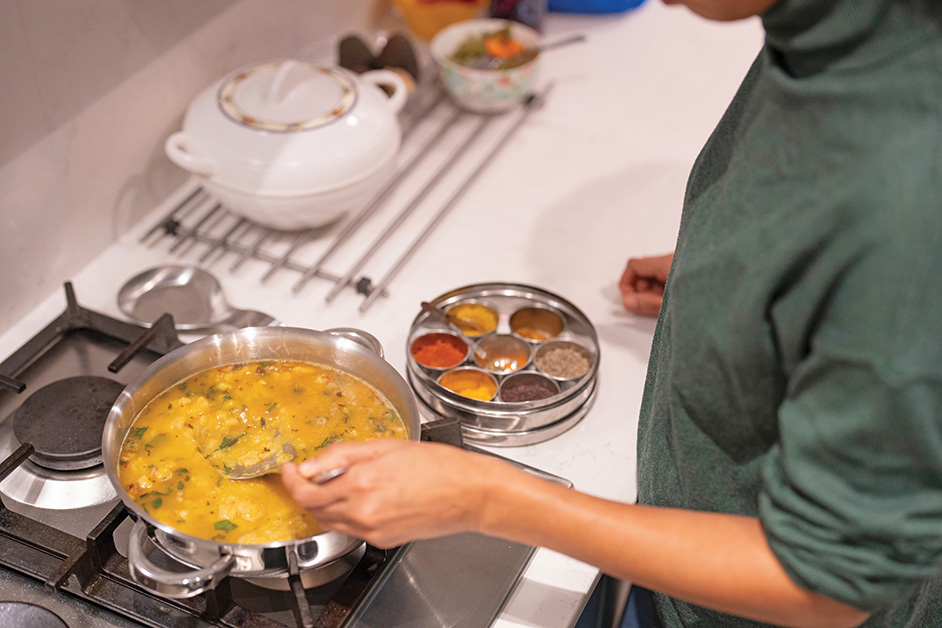
Right from the outset, Tata Sampann strategically decided to avoid centre of plate, crowded categories, such as rice and refined flour. Instead, the brand focused on segments with lower penetration, like pulses, spices and other pantry staples like poha and besan which offered greater growth potential.
“In India, nutrition is highly available but not accessible,” says Deepika Bhan, President of Packaged Foods (India), TCP. “Tata Sampann is a visionary brand that addresses an honest consumer need — for quality-assured products. It has been able to succeed and grow because it identified the right consumer need and innovated.”
Quality you can taste
A sharp focus on quality, authenticity, and convenience, combined with an astute understanding of consumer preferences, sets the brand apart in a competitive market. It has leveraged the trust associated with the Tata brand to carve a niche for itself — rooted in the philosophy that wellness and taste should go hand in hand.
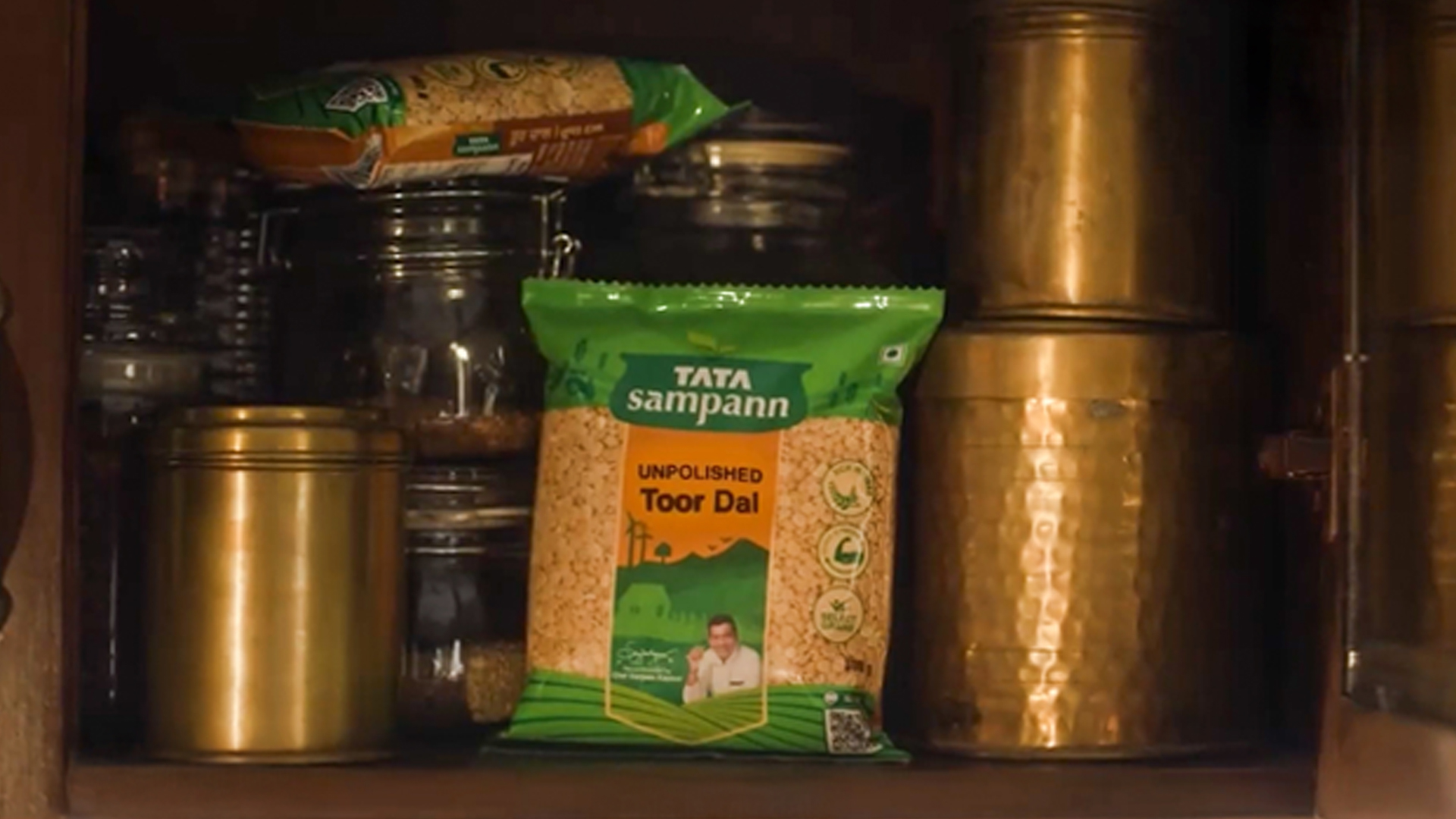
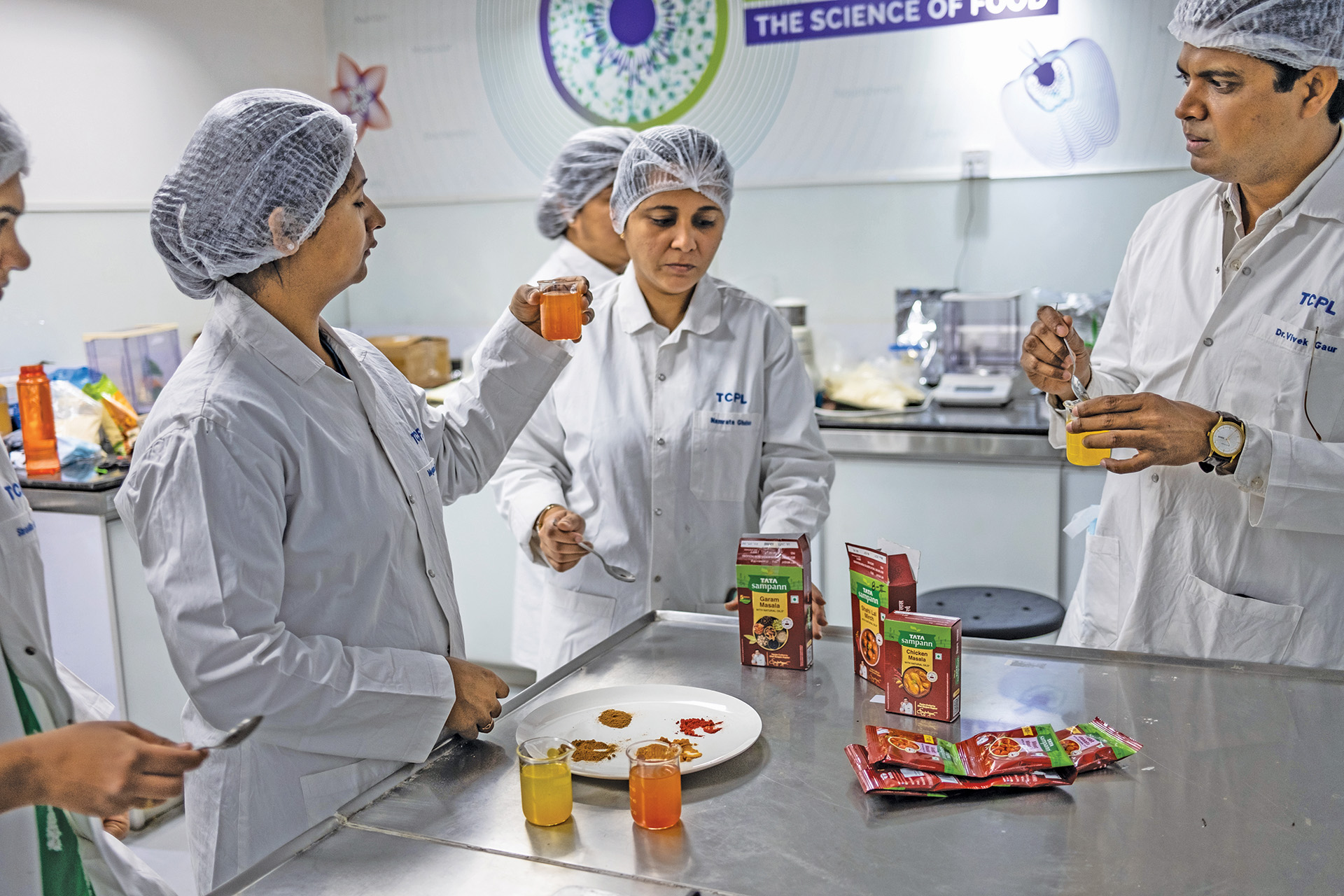
Tata Sampann offers a range of pantry staples, like unpolished pulses for wholesome nutrition and high-quality spices that retain their natural oils. “Tata Sampann’s mantra is really mindful processing,” explains Ms Bhan. “We go to great lengths to bring power back to Indian food by ensuring that we source the best quality produce and retain its goodness by carefully processing the ingredients.” So, the brand’s unpolished toor dal retains its protein content by not undergoing any artificial polishing, while special care is taken to retain at least 3% curcumin — known for its anti-inflammatory, antioxidant, and antimicrobial properties — in its turmeric powder. In FY2024-25, Tata Sampann introduced whole cumin, coriander, and fennel seeds to its portfolio, offering Indians high-quality, unadulterated spices.
The brand upholds the highest standards of consistency and quality through rigorous checks that follow strict parameters, going the extra mile to ensure excellence in every product. A staggering 70% of pulses that arrive at its warehouses fail to meet the brand’s exacting standards and are rejected outright.
Smart category expansion
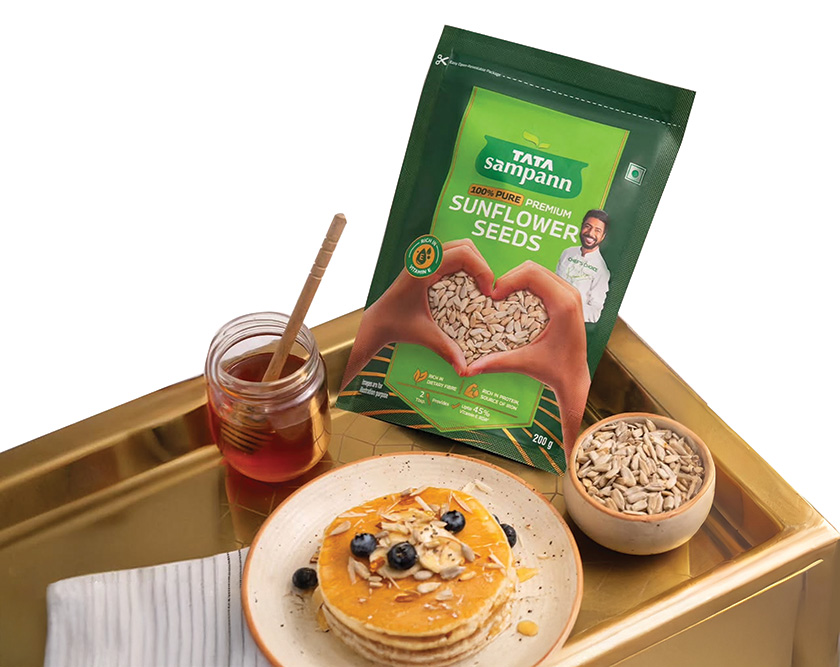
In the last few years, Tata Sampann has rapidly extended its product range and entered new categories. These include premium dry fruits and nuts, and seeds — catering to the growing appetite for value-added, nutritious snacking options. In the four years since its launch, the brand’s dry fruits portfolio achieved a turnover of ~₹150 crore, while its besan offering crossed ₹100 crore in gross sales in FY25.
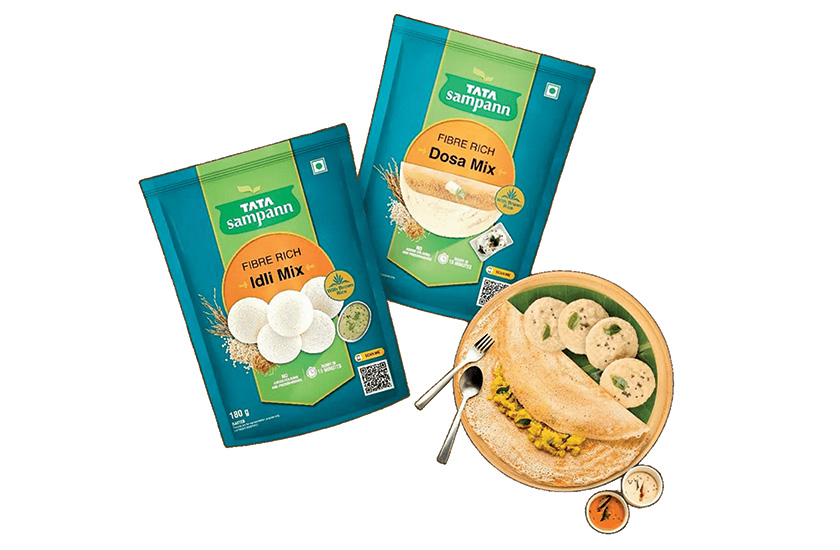
Tata Sampann also grew by launching products in adjacent categories, like daliya, vermicelli, makhana, and ready-to-use chutney dips, like Meethi Imli Khajur, Teekhi Imli Saunth, and Chatpati Dhaniya Pudina, packaged in spill-proof containers for easy storage and use. Tapping into regionalisation, it introduced Poha Indori Style for central India, and Hing to cater to the south Indian palate. The brand also forayed into the high-value saffron segment, which is often plagued by adulteration, offering consumers hand-picked pure saffron that undergoes stringent quality checks at an external laboratory.
As health and wellness increasingly influence purchasing decisions, more families are becoming mindful of what goes on their plates. Tapping into this powerful consumer shift, TCP recently introduced a range of cold pressed oils in 2023 under the brand name ‘Tata Simply Better’. Cold pressing is not merely a method of extraction, it offers a choice that aligns with consumers’ growing preference for wholesome choices. Free from additives or preservatives, these oils are crafted from high-quality, single-origin ingredients. Tata Simply Better entered this category with extra virgin olive oil and swiftly expanded its portfolio to include virgin coconut oil, mustard oil, hexane-free sunflower oil, groundnut oil, and sesame oil. The cold pressed oils range quickly became the brand’s fastest-growing new category.
Premium by design
Premiumisation has played a pivotal role in Tata Sampann’s growth, driven by consumers’ willingness to pay for pantry staples from a brand they trust. “Even the base categories on Tata Sampann are premium. For example, Gulbarga Tur Dal, which is GI tagged. Our chutney dips and Easy Cook Ragi Atta cater to the growing need for convenience,” explains Ms Bhan.
Innovation unleashed
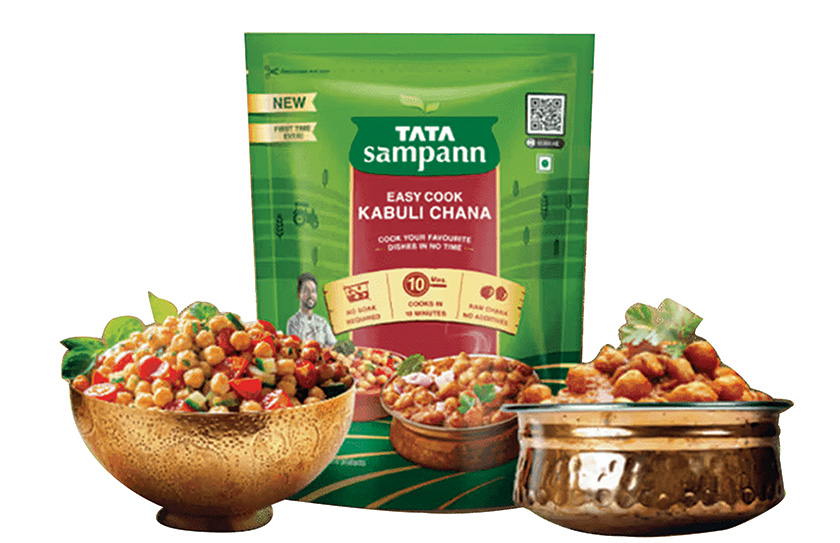
A strong focus on new product development has been a key ingredient driving Tata Sampann’s growth. In FY25, its innovation-to-sales ratio was 8%, ahead of TCP’s 5.2%. It has continued to strengthen its R&D capabilities and consolidate its market presence by introducing value-added, differentiated products such as its Easy Cook Ragi Atta and Easy Cook Kabuli Chana. The atta eliminates the need for hot water while kneading, while the chickpeas can be cooked without pre-soaking — a game-changer for busy households. “A lot of our R&D effort is quality oriented,” says Ms Bhan. “We are currently working on building greater expertise in recipe-based products.”
Channels of the future
Tata Sampann has gained considerable market share by adopting a digital-first marketing approach and responding to evolving customer and online channel demands, including creating tailored SKUs, introducing small packs that have an increased shelf life. Consistent, targeted digital campaigns have helped build the brand and bring new customers into the fold. In FY25, e-commerce (including quick commerce) and modern trade contributed to >60% of sales — with spices seeing strong growth.
This success is underpinned by the brand’s improved digital customer engagement, powered by data-led marketing efforts. “Over 80% of our spend is in the digital-first world,” says Ms Bhan. “We ensure the online playbook is perfect so that we have strong conversion outcomes.”
Cultivating tomorrow
According to Ms Bhan, there is a clear vision to build Tata Sampann into “India’s leading food master brand.” What will take it there? “Number one is ensuring that our offerings are highly in sync with consumer needs,” she says. “Second is being on trend with consumers. The third part of our growth strategy is actually just distribution expansion reach. The fourth is really going to be the marketing model because we do want to change consumer habits. These are our four large pillars of growth.”
As nutrition, authenticity, and convenience are increasingly prioritised across Indian kitchens, Tata Sampann’s transformation, from offering basic spices to comprehensive food solutions, appears well-timed. With its focus on premiumisation and innovation-led portfolio expansion, the brand is working to maintain a delicate balance between traditional authenticity and modern convenience, and in the process, reshaping the way India cooks and eats, one meal at a time.
—Sharmistha Choudhury