January 2026 | 952 words | 3-minute read


Tata Motors’ approach to its new model line-up is clear — challenge every car segment with a diverse range of offerings, building almost everything its engineers can conceive.
Given the huge popularity of the Harrier, the company’s next move wasn’t a surprise — an electrified version of the car, in tune with evolving buyers’ needs.
Design and engineering
Introduced at an entry-level pricing of Rs 21.49 lakh, the Harrier.ev is more than an electric adaptation of the internal combustion engine (ICE) version — it represents a significant step up in Tata Motors’ SUV line-up. It is positioned as a standout product, and a prime example of that effort is the much-talked-about Quad-Wheel-Drive (QWD) system. It marks the brand’s return to all-wheel-drive capability, made possible by a dual-motor set-up that significantly enhances performance.
The Harrier.ev is positioned as a performance SUV, and after spending a day behind the wheel, it’s clear that this claim goes beyond marketing hype.
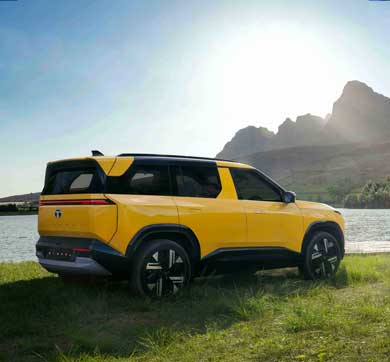
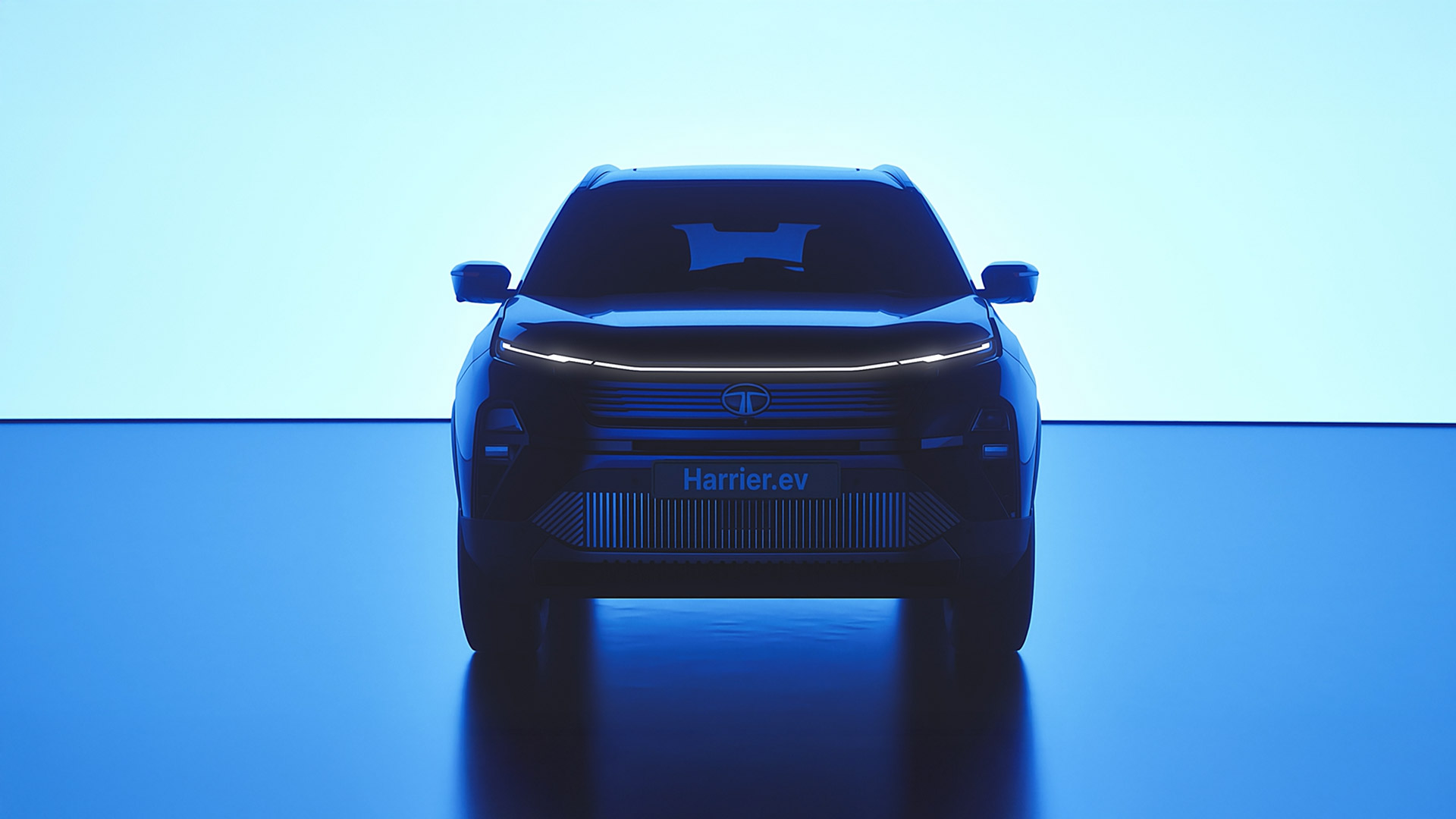
Looking at the exterior, you might mistake it for a regular Harrier, until you notice the exclusive paint theme, different licence plate and other unique bits. The front has a redesigned, closed-off grille with sleek horizontal strakes, a reworked bumper and a revised air intake design. It has new aero-optimised, 19-inch alloy wheels, a subtle EV badge on the front doors, and a ‘Harrier.ev’ badge on the tailgate.
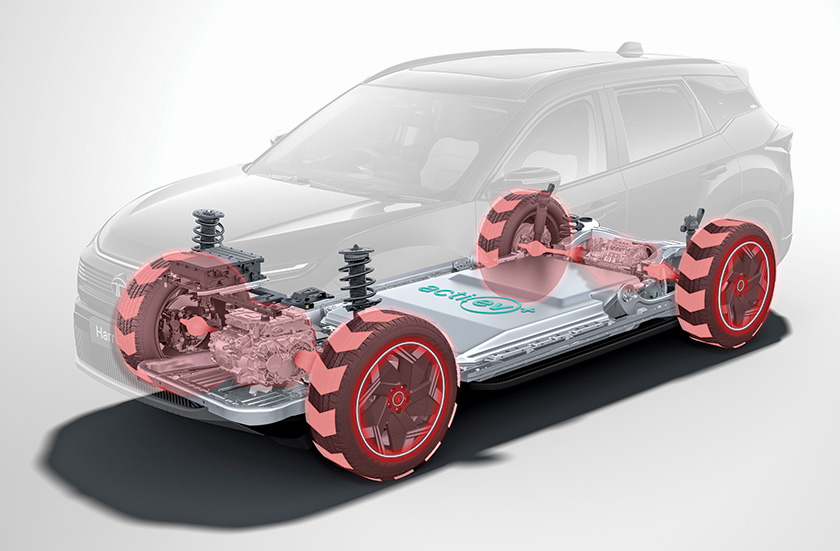
But more than the skin, the internals deserve a detailed discussion. While it retains the body shell of the ICE version, the underlying Omega Arc platform has been extensively re-engineered. The SUV is offered in two drivetrains. The standard variants have a rear-wheel-drive set-up powered by a permanent magnet synchronous motor, while the higher-spec versions have an all-wheel-drive layout, thanks to the addition of a front-mounted induction motor.
How about the interiors?
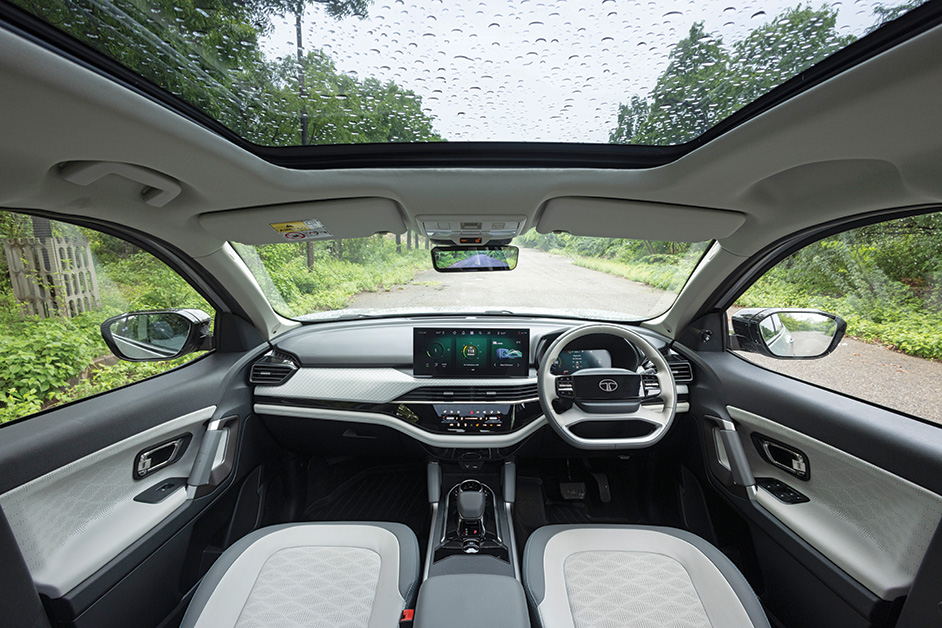
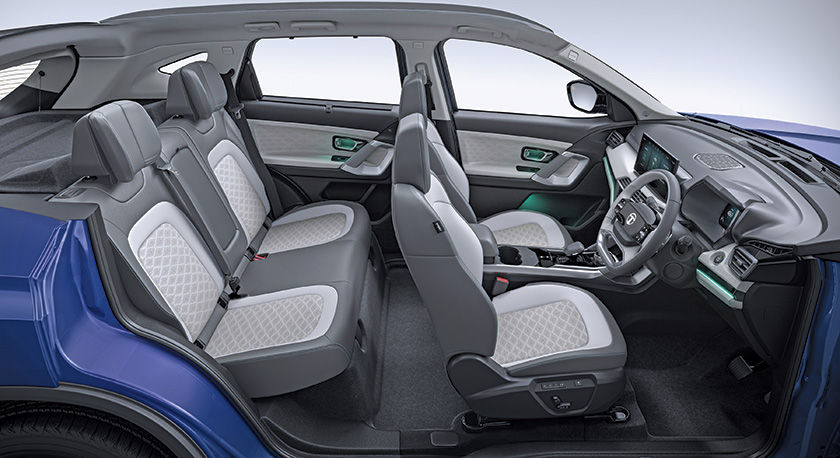
The cabin layout is familiar, but the premium feel is enhanced. It adopts a refined grey-and-white colour palette and the front seats are electronically adjustable, well-cushioned, ventilated, and provide ample support for everyday drives. However, the lack of adjustable recline options in the rear seats may limit comfort.
The cabin’s impressive features make it one of the most tech-laden and modern in its segment. At the heart of the dashboard is a crisp 14.5-inch Neo QLED infotainment display, paired seamlessly with a 10.25-inch digital instrument cluster. Both deliver smooth performance and are quite responsive.
The Harrier.ev also has Level 2 ADAS; however, special mention must be made of the 540-degree surround view system, the digital interior rear-view mirror, and connected car features with over-the-air update support. There’s also a Summon Mode for remote manoeuvring out of tight parking spaces using the key fob. Functionally innovative, its operation isn’t entirely seamless.
The infotainment system is complemented by a premium JBL sound system with Dolby Atmos — a segment-first offering. Enhancing space and comfort are a panoramic sunroof and a hands-free powered tailgate.
How does it drive?
Tata Motors’ cars usually do not disappoint when it comes to on-road manners and the Harrier.ev is no different.
The car is offered with a choice of two battery packs, 65kWh and 75kWh, with the latter claiming a range of up to 627km and QWD. The primary motor at the rear is a 238bhp permanent magnet synchronous unit, while the front has a 158bhp induction motor. They generate an impressive, combined torque output of 540Nm, offering strong and confident performance across varied conditions. The charging options include a standard 7.2kW AC charger — ~10.7 hours to go from 10% to 100% — and a 120kW DC fast charger that takes 25 min to go from 20% to 80%.
The first thought when you press the accelerator — fast. It’s not just impressive figures on paper, the real-world performance is genuinely aggressive. Tata Motors claims a 0-100 km/h time of 6.3 sec, which is remarkably quick for a vehicle of this size.
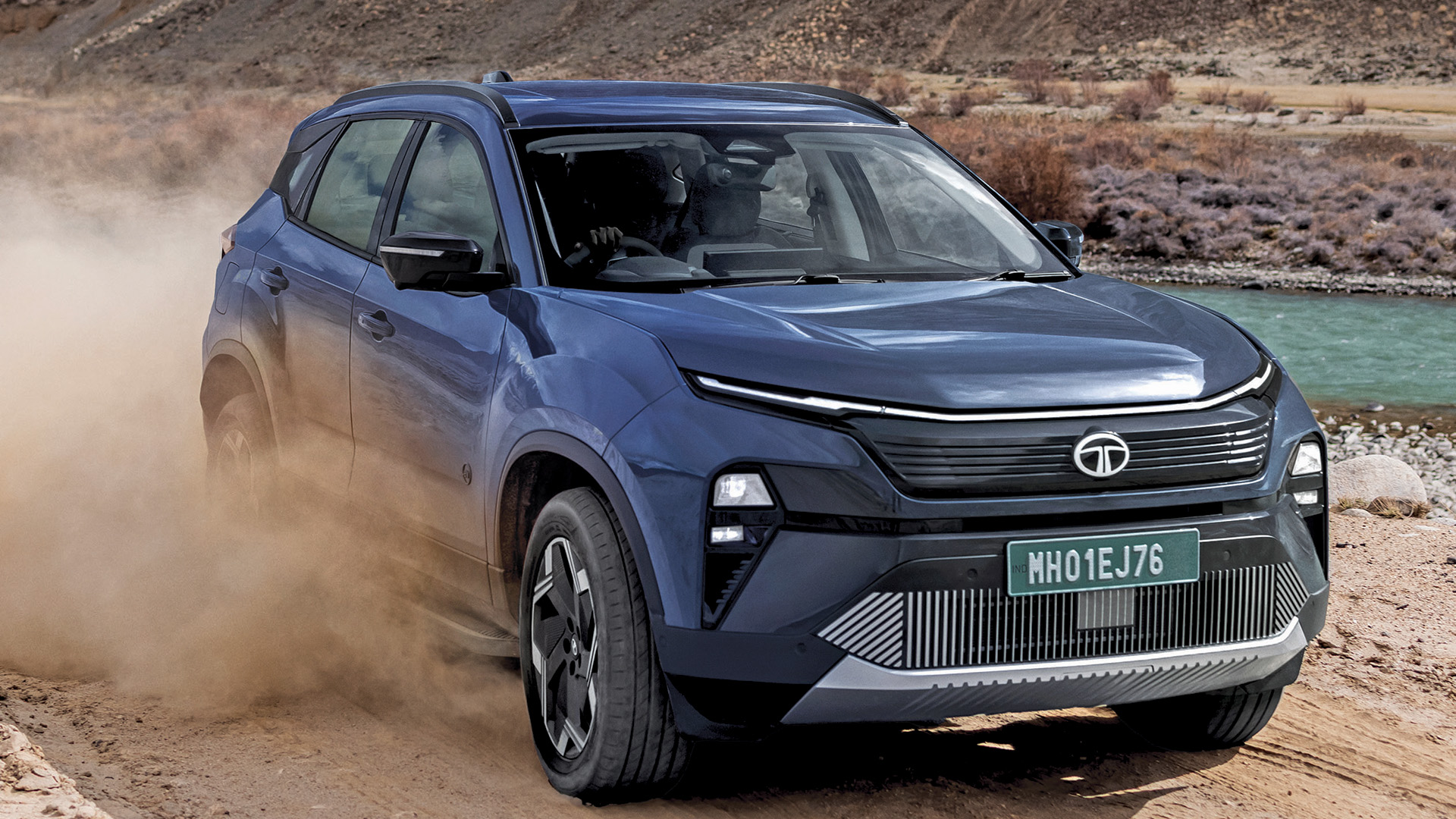
The power delivery is smooth, with a progressive build-up rather than a sudden surge. In addition to Eco, City, and Sport modes, there is also Boost for sportier acceleration and Drift for playful manoeuvres on loose surfaces by disengaging traction control. The SUV also has paddle shifters to adjust the level of regenerative braking across three settings.
On regular roads, the car surges forward with confidence and feels firmly planted despite its tall stance. The handling is well-tuned, with the SUV maintaining composure even during high-speed cornering. Body roll is minimal, but what truly stands out is the suspension set-up — it’s impressively calibrated to glide over road imperfections with minimal fuss.
While the on-road performance is commendable, the braking performance leaves something to be desired. The brake pedal feels soft and lacks feedback, often requiring more pressure.
The final word
The car is priced competitively, from Rs 21.49 lakh for the Adventure 65kWh variant to Rs 28.99 lakh for the top-spec Empowered QWD 75kWh version.
If Tata Motors could address quality consistency and improve fit and finish, this product would truly shine the way it’s supposed to. However, this is still one of the finest Tata Motors SUVs. Its commanding road presence and level of visual appeal are hard to match in its segment. It’s also engaging to drive and backed by a comprehensive list of features — making it a compelling choice.
The author, Prashant Singh, is Editor of HT Auto, with 12+ years of experience at leading media houses.